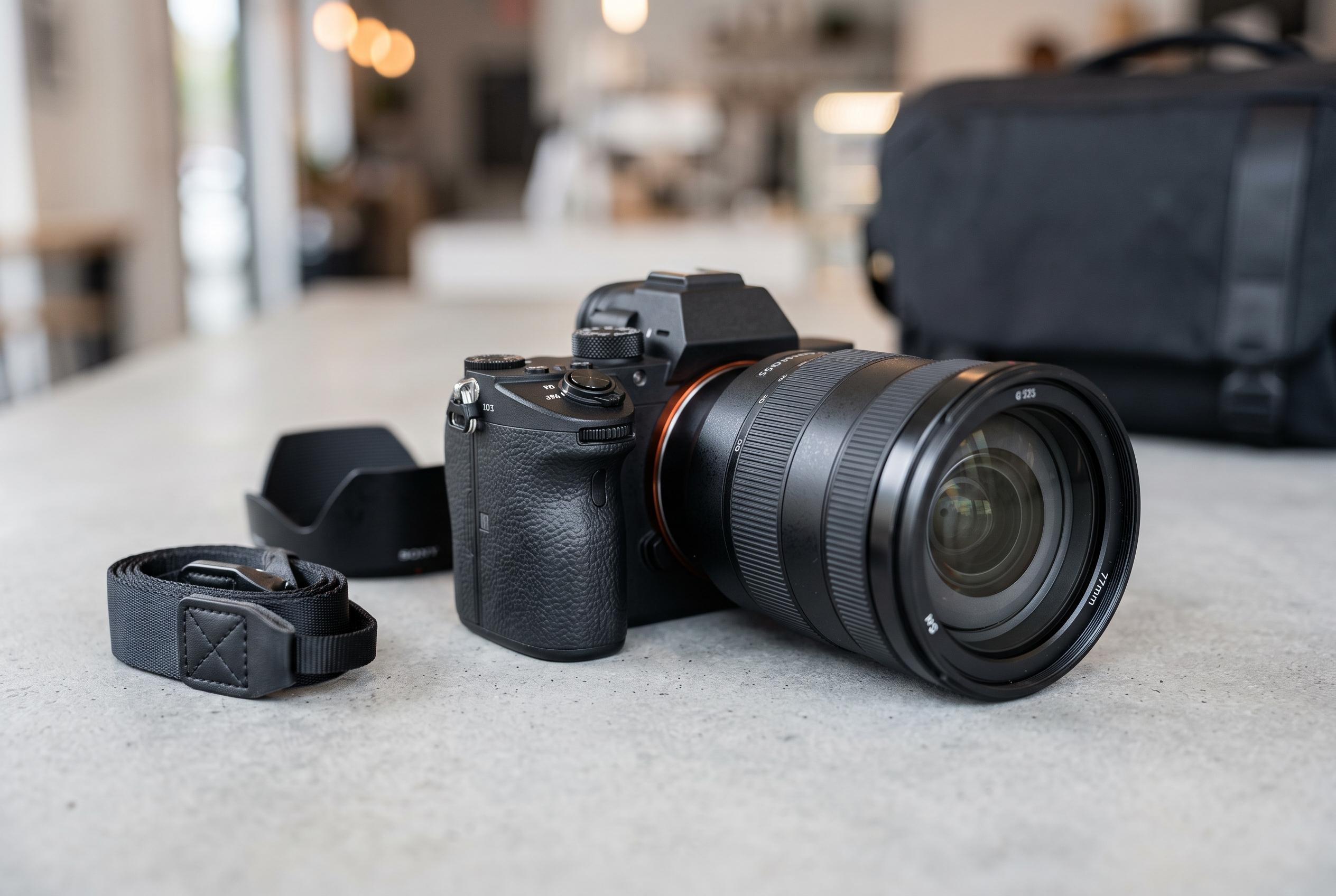

Jason Row highlights how the Sony FE 24-105mm f/4 G OSS, offering versatility and practical features, has become his preferred choice despite not being a G Master or opening to f/2.8, emphasising the importance of portability, modern software, and realistic expectations in contemporary photography.
For two years, Jason Row barely mentioned the Sony FE 24-105mm f/4 G OSS. In a new walk-through of Tynemouth, at the mouth of the River Tyne, he finally explains why the lens has stayed on his camera for so long: it fits the way he actually works. The argument is not that the zoom is perfect, but that its compromises are practical ones. It is not a G Master, it does not open to f/2.8 and it is lighter than the larger professional zooms many photographers feel they ought to carry.
Row’s point is also optical, not just economic. He argues that depth of field is shaped by distance as much as aperture, so a slower zoom can still deliver strong subject separation when used thoughtfully. By moving back and shooting at 105mm, he shows how compression can narrow the visual gap between an f/4 zoom and a faster 24-70mm f/2.8 lens. In low light, he leans on noise reduction software rather than chasing the extra stop in glass, saying modern tools such as DxO PhotoLab and Lightroom can recover a surprising amount of image quality.
That logic fits broader testing of the lens. CameraLabs describes the Sony FE 24-105mm f/4 G OSS as a versatile general-purpose zoom for full-frame Sony cameras, with a constant aperture, weather sealing and optical stabilisation. ePHOTOzine’s performance review found excellent central sharpness at 24mm and 35mm, with consistently strong results through much of the zoom range. B&H highlights the lens’s useful focal span and well-corrected optics, while Photography Blog notes its minimum focus distance, dust and moisture resistance and 9-blade diaphragm for smoother out-of-focus areas.
The video also shows how body features have changed the value equation. Row uses the Sony a7R V’s 61-megapixel sensor and in-body stabilisation, along with AI-assisted denoising, to make a mid-range f/4 zoom more capable than similar lenses were a few years ago. He also maps a custom button to APS-C crop mode for video, effectively extending the lens’s reach, and says the zoom is a little heavy for gimbal work but still more practical than hauling a larger kit. His wider point is blunt: for many shooters, the best lens is the one they are willing to carry when the light improves.
Row extends that argument into budget and buying behaviour. He says he chose less expensive lenses where they made sense, including a Sigma telephoto over Sony’s own option, because a lot of photographers do not have the money for a drawer full of premium glass. The lens, in his view, is not a compromise to be apologised for. It is a reminder that sharpness, portability and consistency often matter more than status. If the final print looks good, he suggests, the badge on the barrel has done its job.
Disclaimer: This content is intended for informational purposes only. Readers are advised to exercise their own judgement, conduct due diligence, or consult a qualified expert before acting on any information provided.