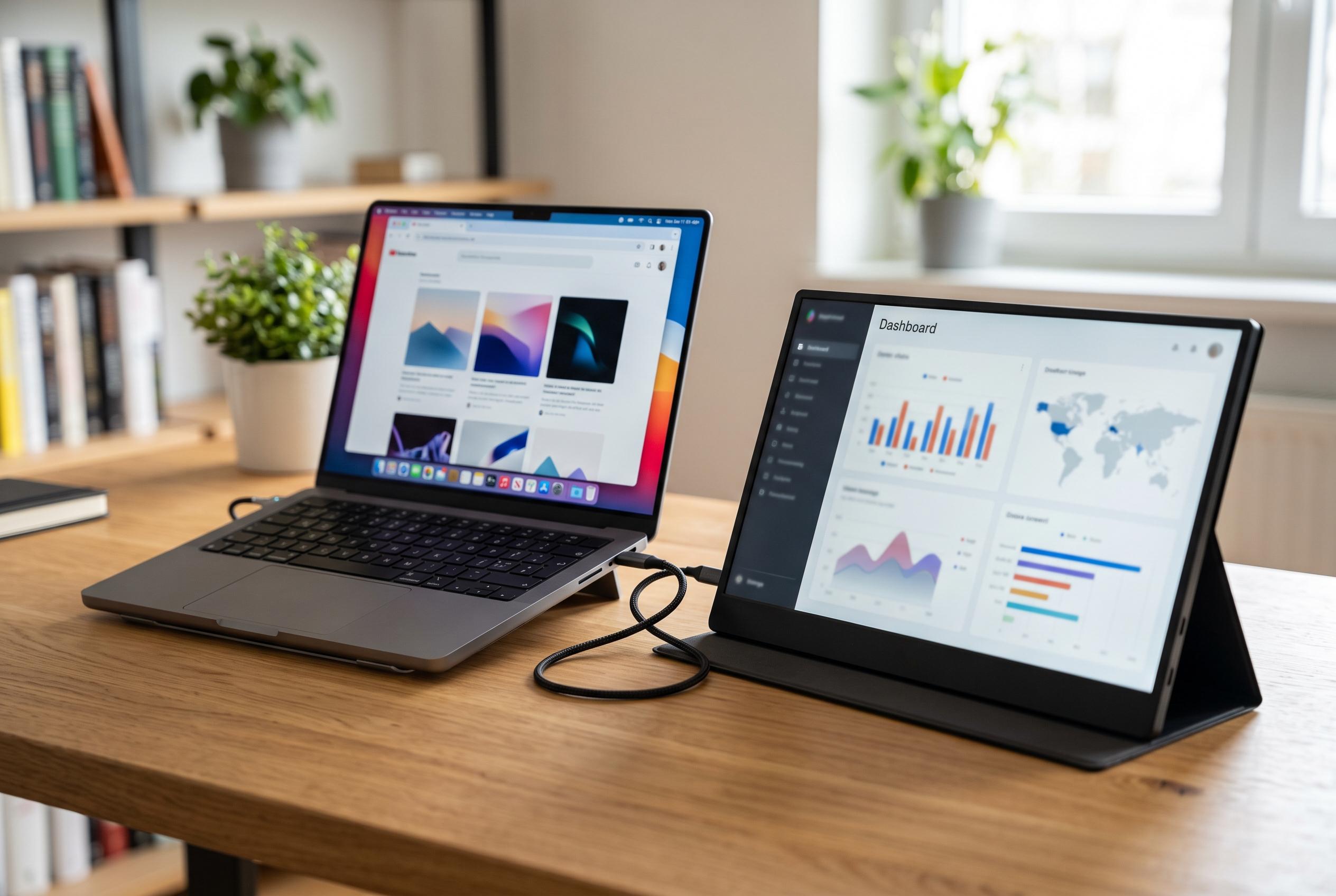

Market for portable monitors is diverging into specialised categories, with top models balancing resolution, speed and portability, driven by consumer needs for tailored features rather than brand recognition.
Portable monitors have become a practical way to add screen space without carrying a full desk setup, but the best choice depends on how the display will be used. A recent buyer’s guide from Digitech Bytes places the ForHelp 15.6-inch model at the top of its list, citing its mix of resolution, slim construction and general-purpose appeal. The same guide also points to cheaper options such as the KYY display for cost-conscious buyers and the InnoView model for users who want gaming-friendly features such as HDR and speakers.
That broad ranking reflects a market where portability, connectivity and panel quality still matter more than brand recognition. Tom’s Hardware’s 2026 round-up similarly groups portable monitors by use case, including productivity, gaming and wireless use, which underlines how sharply these products now split into specialist categories rather than one-size-fits-all devices. For many buyers, the main decision is whether they want a simple secondary screen for work, or a panel that can also cope with travel, consoles and entertainment.
Among current stand-out models, TechRadar says the Arzopa Z3FC offers a notably strong balance of image quality and speed. It is a 16.1-inch 1440p IPS monitor with a 180Hz refresh rate over USB-C, 144Hz over HDMI, FreeSync support and 400 nits of brightness. TechRadar also notes dual USB-C ports, a mini HDMI input, a kickstand and an aluminium-alloy frame, but says its colour accuracy and HDR performance are not aimed at professional creative work.
At the budget end, TechRadar’s assessment of the KYY K3 is more modest but still positive. The publication says the 15.6-inch Full HD panel weighs 1.8 pounds, measures just 0.3 inches thick, and includes dual USB-C ports, mini HDMI, built-in speakers and a magnetic smart cover that doubles as a stand. Its main weakness is colour performance: TechRadar says it covers only 64% of sRGB and 49% of AdobeRGB/P3, which makes it a poor fit for colour-critical work but a sensible buy for office tasks, travel and casual media use.
Other buying guides broadly agree on the same trade-offs. PriceHacker highlights slim USB-C models priced from about $90 to $300 and stresses factors such as build quality, display sharpness and mounting options, while PicksLab also favours lightweight USB-C screens from brands including ASUS, Lepow, ARZOPA and ViewSonic. In practice, that means the best portable monitor is less about headline specifications than about matching the panel to the laptop, the workload and the level of portability required.
Disclaimer: This content is intended for informational purposes only. Readers are advised to exercise their own judgement, conduct due diligence, or consult a qualified expert before acting on any information provided.