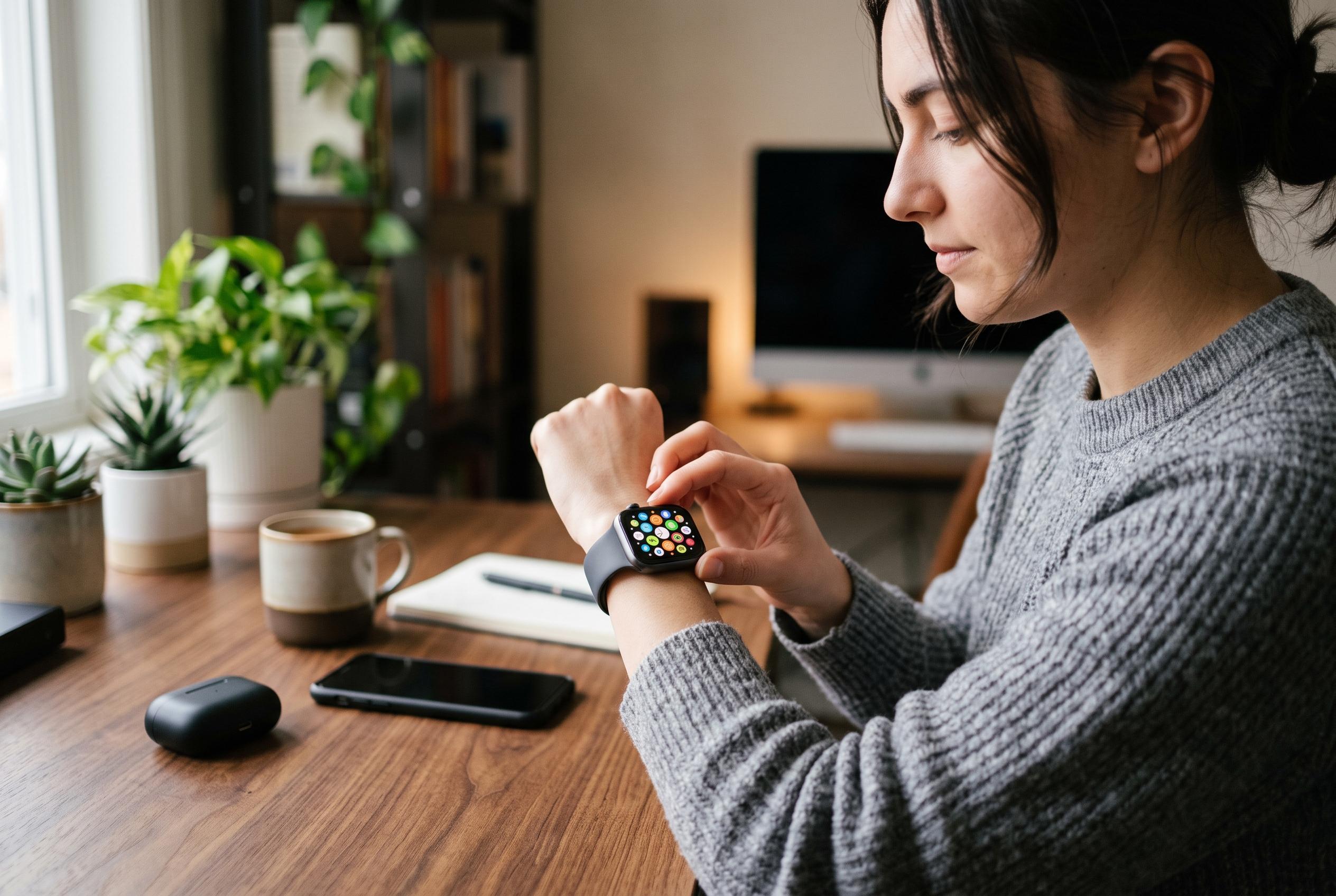

Xiaomi’s €99.99 Redmi Watch 6 adds a brighter 2,000-nit display and refined controls, but GPS limitations, slow charging and shorter battery life keep it from being a major upgrade.
Xiaomi’s Redmi Watch 6 arrives as a modest update to the company’s budget smartwatch line, but it does enough to feel more polished than its predecessor. Launched in China in October 2025 and already on sale in France, the watch sits just below the €100 mark and keeps the same broad formula as the Redmi Watch 5. Xiaomi has paired the familiar 2.07-inch square AMOLED display with a brighter panel rated at 2,000 nits, while trimming the case slightly and shaving off a little weight. The result is a watch that looks restrained rather than ambitious, but one that aims to improve the basics rather than reinvent the category.
The hardware is close to the formula Xiaomi has been refining for several generations. The body measures 46.45 x 40.03 x 9.94mm and weighs about 31g without the strap, according to Xiaomi’s own specifications. It uses an aluminium alloy case, a plastic underside for the sensors and a 5ATM water-resistance rating, which makes it suitable for swimming but not for high-pressure water sports. Xiaomi has also changed the control layout, adding a second physical button and shifting the crown, a decision that should make the interface easier to operate in day-to-day use. The TPU strap is simple to remove and comfortable enough for long wear.
The display is one of the Redmi Watch 6’s strongest selling points. Xiaomi says the panel reaches 2,000 nits, and in practice it remains readable even in direct sunlight. Frandroid found the automatic brightness adjustment responsive, although the screen occasionally dipped too low for comfort in bright conditions. The watch supports an always-on display, and users can schedule reduced interaction during the night to avoid unwanted wake-ups, though there is no full sleep mode that bundles all of those settings together. Ten watch faces are included out of the box, with many more available through Mi Fitness.
Xiaomi continues to rely on HyperOS rather than Google’s Wear OS, which keeps the software light and fairly snappy, albeit with a small amount of lag between touch input and action. The watch cannot install third-party apps, but it does offer a tidy set of built-in tools, from notifications and weather to step counts, heart rate, sleep and stress data. Mi Fitness acts as the main control centre, and the app is notably straightforward, even if it occasionally presents features reserved for more advanced Xiaomi wearables. The device also includes 512MB of storage, mainly for watch faces and offline sport routes, rather than for music or app support.
Fitness tracking is where the Redmi Watch 6 matters most. Xiaomi equips it with single-band GNSS and support for multiple satellite systems, while the company’s official materials emphasise broader positioning compatibility than on many basic watches. In Frandroid’s testing, GPS lock-on was slow, often taking around three minutes, but once fixed it proved accurate on open routes, only to struggle in dense urban environments where the recorded path could drift badly. Heart-rate tracking performed much better. Compared with a Polar H10 chest strap, the watch stayed close during steady running and handled interval sessions surprisingly well once the first minute of effort had passed. It also supports more than 150 sport modes, together with SpO2, sleep and stress tracking, VO2 max estimates and recovery guidance.
Battery life is respectable rather than class-leading under heavy use. Xiaomi claims up to 24 days in light use and seven days with the always-on display enabled, using the 550mAh battery shared with the previous model. Frandroid’s test, which included continuous heart-rate tracking, SpO2 monitoring, sleep and stress tracking, always-on mode and several walking and running sessions, produced six days of runtime. That is slightly below Xiaomi’s claim for intensive use, and less impressive than the Redmi Watch 5’s result in similar testing, but still serviceable for a budget watch. Charging remains an awkward point, with a proprietary USB-A cable and a full recharge taking about 1 hour 50 minutes. The watch also lacks Wi-Fi, NFC and eSIM support, so calls work only when paired with a phone over Bluetooth 5.4, and contactless payments are not available. At €99.99 in France, available in black, grey and blue, the Redmi Watch 6 is a sensible, if cautious, upgrade that improves screen quality and usability more than it expands the feature set.
Disclaimer: This content is intended for informational purposes only. Readers are advised to exercise their own judgement, conduct due diligence, or consult a qualified expert before acting on any information provided.