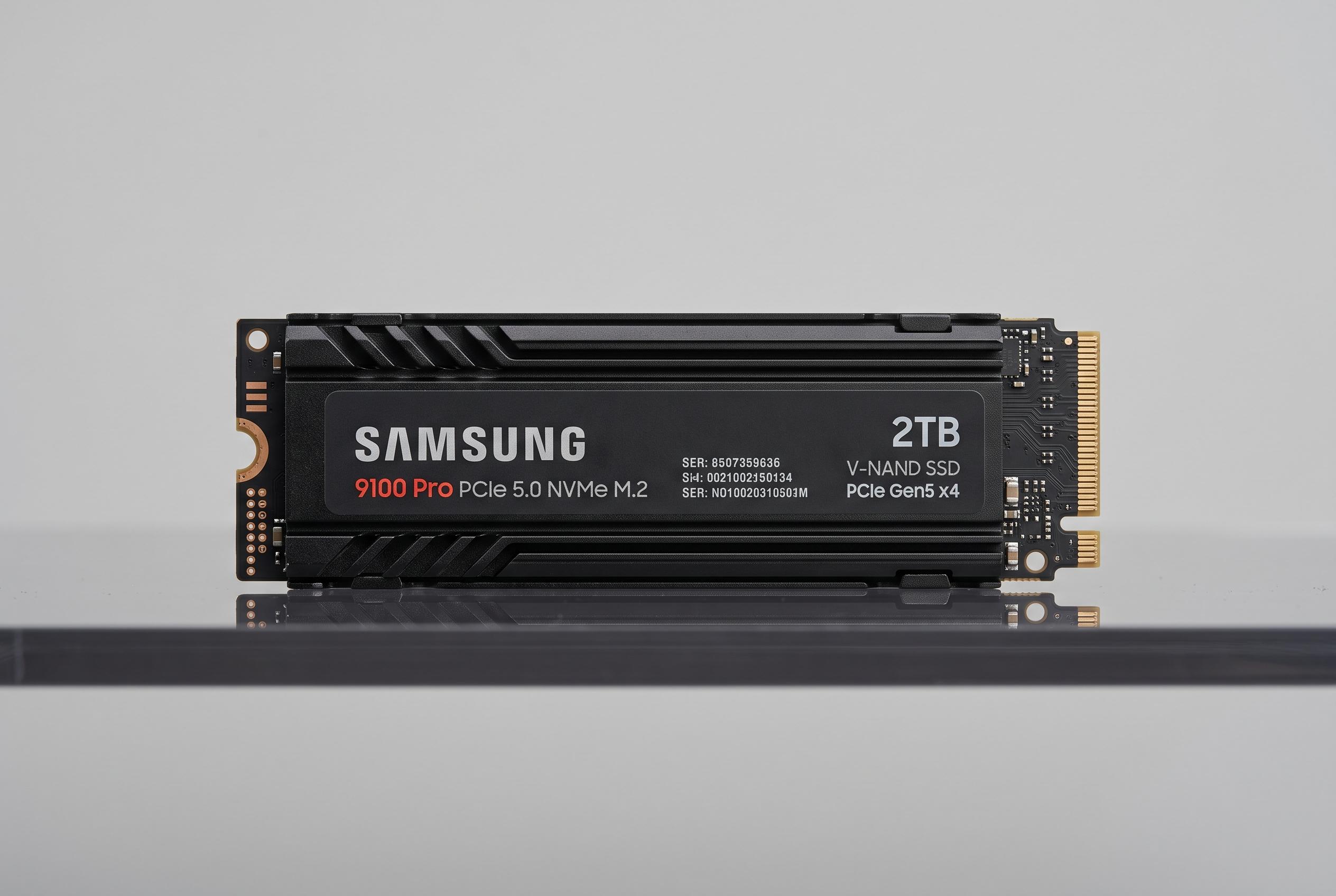

Samsung’s new 9100 Pro PCIe 5.0 SSD demonstrates unprecedented speeds tailored for high-end gaming and workstation PCs, though its steep price restricts mainstream appeal.
Samsung’s 9100 Pro is a clear sign that consumer storage is still being pulled towards the needs of high-end gaming and workstation PCs. In the 2TB version with a factory-fitted heatsink, the drive aims to deliver the kind of sustained speed that modern titles and content-creation workloads increasingly expect, even as SSD prices remain under pressure. The drive sits in Samsung’s new PCIe 5.0 class and is rated for sequential read speeds of up to 14,700MB/s in the 1TB and 2TB models, according to Tom’s Hardware, making it one of the fastest consumer drives on paper.
That headline figure comes at a steep cost. The review sample was positioned as premium hardware rather than a mass-market upgrade, and Samsung’s own pricing tiers place the 2TB heatsink model at around AUD$1000, with the 4TB version and 8TB version climbing sharply higher. TechRadar and Tom’s Hardware both frame the 9100 Pro as a drive for users with demanding workloads, not as a broad-value recommendation for ordinary desktop builds.
In practical use, the drive is built for systems that can actually exploit PCIe 5.0 speeds. The review unit was tested in an MSI MEG Z890 Unity-X motherboard with an Intel Core Ultra 9 285K, where CrystalDiskMark recorded a peak read speed of 12,046.63MB/s and a peak write speed of 12,551.21MB/s. That is below the quoted maximum, but still firmly in top-tier territory. Samsung’s factory heatsink also avoids the thermal uncertainty that can come with some board-mounted solutions.
Gaming-focused benchmarking paints a similarly strong picture. Using UL Solutions’ 3DMark storage test, which measures real tasks such as launching, installing, saving and streaming game data, the 9100 Pro scored 3,780, roughly twice the result of the older Samsung 970 Evo Plus and the budget Kingston NV2 tested alongside it. The benchmark also showed lower access time and much higher effective bandwidth, which supports the claim that the drive can improve responsiveness in storage-sensitive games and DirectStorage-style workloads.
Even so, the broader market context matters. Tom’s Hardware describes the 9100 Pro as very good, but not transformative enough to ignore price, while PCGamesN says its gaming performance is exceptional yet not easy to justify for most users when cheaper SSDs remain available. That tension is the core of the 9100 Pro’s appeal: it is an elite drive for buyers who want the fastest plausible consumer storage, but it is also a reminder that storage has become a budget-defining part of a PC build.
Disclaimer: This content is intended for informational purposes only. Readers are advised to exercise their own judgement, conduct due diligence, or consult a qualified expert before acting on any information provided.