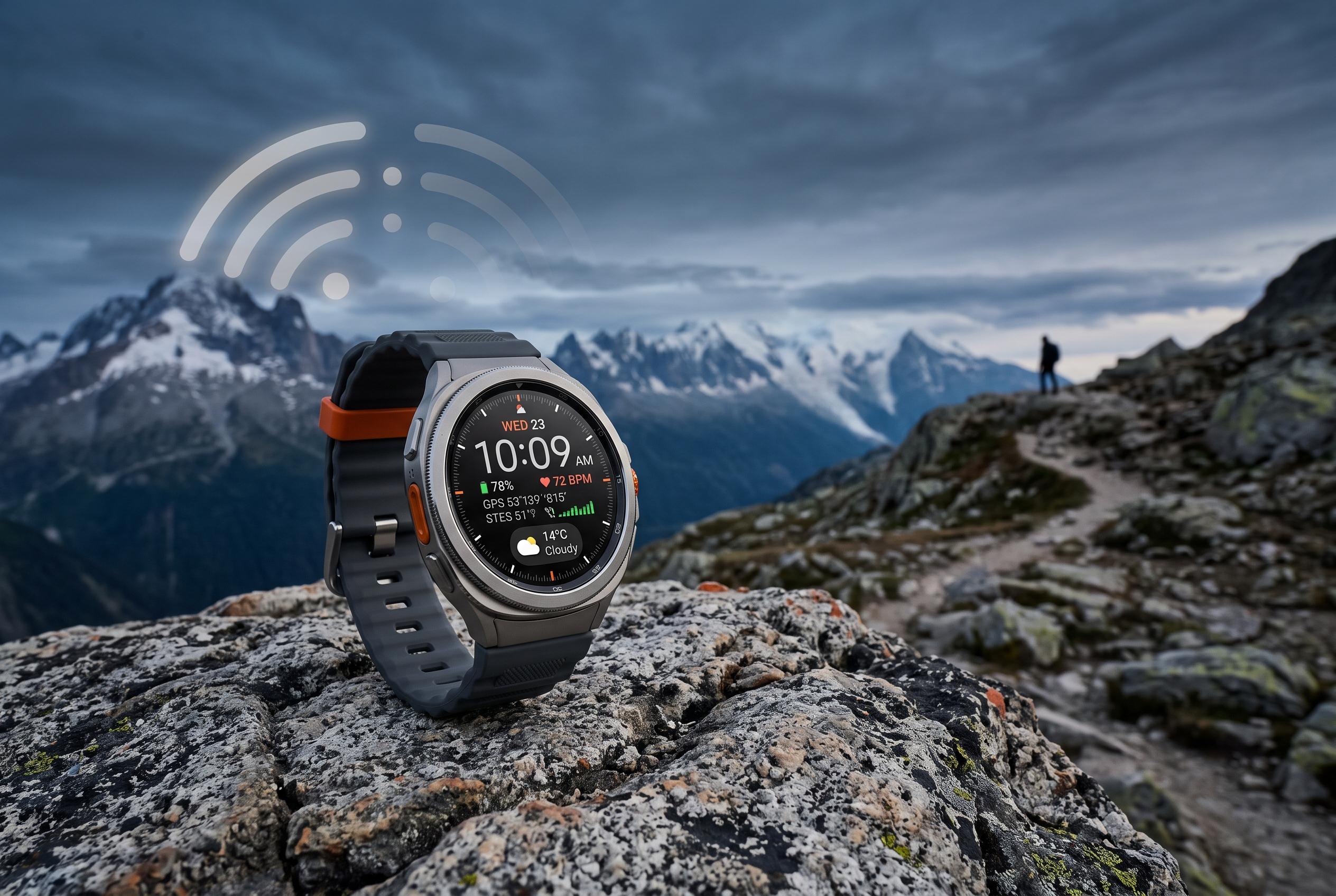

Samsung’s Galaxy Watch Ultra 2 emerges as a versatile, rugged smartwatch prioritising standalone connectivity and outdoor durability, reshaping the wearable market’s divide between full-smartwatch and passive health devices.
Samsung’s Galaxy Watch Ultra 2 is the clearest answer yet to a simple split in the wearable market: either you want a full smartwatch that can operate on its own, or you want a quieter device built mainly for passive health tracking. According to Samsung and reporting from SamMobile, the Ultra 2 pushes hard on the former, with a 1.52-inch Super AMOLED display rated up to 5,000 nits, eSIM support, a thinner titanium case, and an 800mAh battery that Samsung says is 35% larger than before. It is also positioned as a more rugged model, with IP69K resistance and dive-oriented features for outdoor use.
That matters because the device is not trying to compete only on sleep or recovery analytics. The broader comparison with Oura Ring 4 and Whoop Band 5.0 is really about behaviour. A ring or strap disappears into daily life, but it depends on a companion phone and offers little immediate visibility of live data. Samsung’s watch, by contrast, can show workout metrics at a glance and can stay connected without a handset nearby. For runners, swimmers and users who want one device to cover notifications, calls, fitness and safety tools, that distinction may outweigh the extra bulk and shorter battery life.
Accuracy is more complicated. In the comparison described by Adam Lobo, the Galaxy Watch Ultra 2, Oura Ring 4 and Whoop Band 5.0 were broadly aligned on sleeping heart rate and blood oxygen readings, but they differed on when sleep ended and how long light or restless periods should count. Samsung’s watch recorded a shorter total sleep time, while Oura and Whoop continued logging time in bed for longer. That difference is important: it suggests the devices are not simply measuring the same thing with different names, but applying different thresholds to awakenings and sleep onset. On strength training, the Samsung watch also produced a much higher calorie estimate than Whoop, which may be useful for some users and misleading for others.
The result is a product that is easy to recommend only if the buyer knows what they are paying for. Samsung’s case is strongest when the watch is treated as a premium all-in-one tool, not as a specialist recovery tracker. Oura remains the cleaner option for comfort and unobtrusive overnight wear, while Whoop retains an appeal for users focused on strain and recovery trends rather than display-driven convenience. But for those who want a bright screen, cellular independence and a feature set that stretches from workout coaching to dive support, the Galaxy Watch Ultra 2 is the most ambitious of the three.
Disclaimer: This content is intended for informational purposes only. Readers are advised to exercise their own judgement, conduct due diligence, or consult a qualified expert before acting on any information provided.