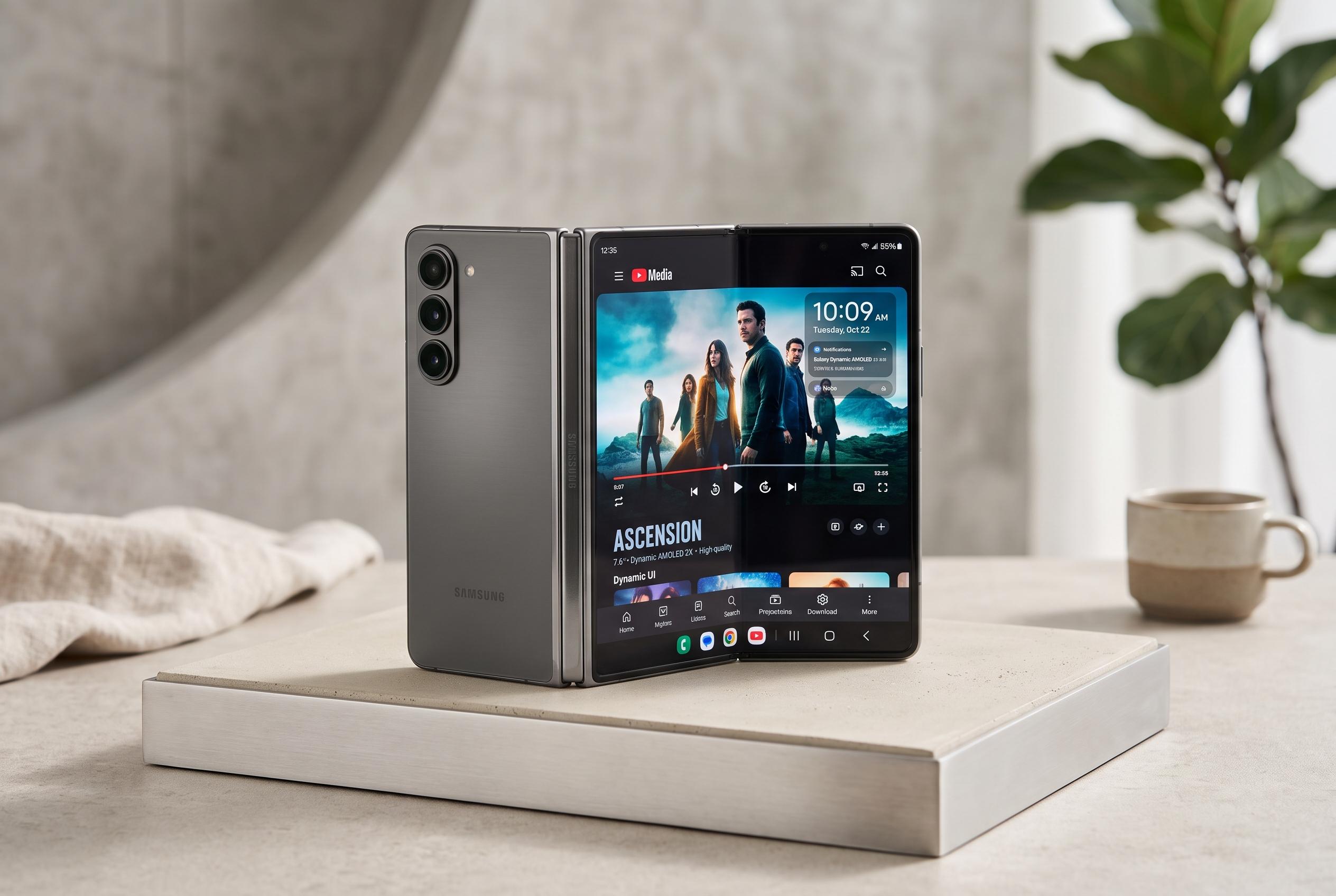

Samsung’s Galaxy Z Fold 8 emerges as a mature, versatile foldable device blending phone and tablet functionalities, with significant improvements in media-focused design and multitasking capabilities, challenging both traditional smartphones and tablets for premium users.
Samsung’s Galaxy Z Fold 8 is shaping up as one of the clearest examples yet of a foldable trying to do two jobs at once. In hands-on reporting for Geeky Gadgets, Terren Rule described it as a device that can replace both a phone and a small tablet for some users, thanks to a wider outer screen for quick interactions and a larger inner panel for work, reading and video. That basic appeal is echoed by Android Central and TechRadar, which both frame the Fold 8 as a bridge between pocketable portability and book-style utility.
What distinguishes this generation is not just the folding mechanism but the way Samsung has tuned the device around media use. SamMobile reported that the Fold 8 arrives with a shorter, wider shape, a lighter build and a form factor designed to make it more comfortable for watching video and reading in landscape. The same report says Samsung has paired that redesign with the Snapdragon 8 Elite Gen 5 chipset, a 4,800mAh battery and upgraded cameras, putting the phone squarely in competition with other premium foldables and, more broadly, with Apple’s tablet and phone range.
In everyday use, the Fold 8’s strengths are in multitasking and display quality. Rule’s review noted support for three apps at once, plus floating windows, which makes the device unusually capable for mobile productivity. TechRadar similarly praised the foldable’s performance, its bright AMOLED panel and 120Hz refresh rate, and its usefulness for streaming and reading. Android Central also pointed to the device’s vivid screens and strong performance, suggesting that Samsung has finally made the inner display feel genuinely practical rather than merely novel.
The compromises remain important, however. Rule found that the phone can run hot during extended sessions, particularly in warm conditions, which can lead to screen dimming and interrupt gaming or video playback. Camera performance is described as adequate for general use, but not on the level of flagship rivals with stronger telephoto hardware. Android Central likewise said the camera system is underwhelming for a device at this price point and noted the lack of S Pen support, while Rule highlighted the absence of magnetic accessory compatibility, which may frustrate users who depend on mounting or charging accessories.
Battery life appears to be one of the Fold 8’s stronger areas. Rule said it can comfortably last a full day under moderate to heavy use, and PhoneArena’s 72-hour test suggested the device holds up well in routine daily use. That makes Samsung’s new foldable more credible as a primary device, especially for buyers looking to reduce the number of gadgets they carry. Even so, the comparison with Apple’s ecosystem remains a sticking point: Rule said Samsung has improved cross-platform file sharing, but the Fold 8 still lacks the seamless integration Apple users may expect from HomePods or Apple TV.
Storage choice is also more consequential here than on a standard phone. The base 256GB model may be enough for lighter users, but the larger 1TB option is better suited to a device meant to serve as both phone and tablet, particularly if it will be used for games, media and offline files. Taken together, the reviews point to a foldable that is more mature, more usable and more focused than earlier attempts. It is not a perfect substitute for a dedicated phone and tablet, but for buyers who value versatility, the Galaxy Z Fold 8 looks like Samsung’s strongest case yet for the all-in-one foldable.
Disclaimer: This content is intended for informational purposes only. Readers are advised to exercise their own judgement, conduct due diligence, or consult a qualified expert before acting on any information provided.