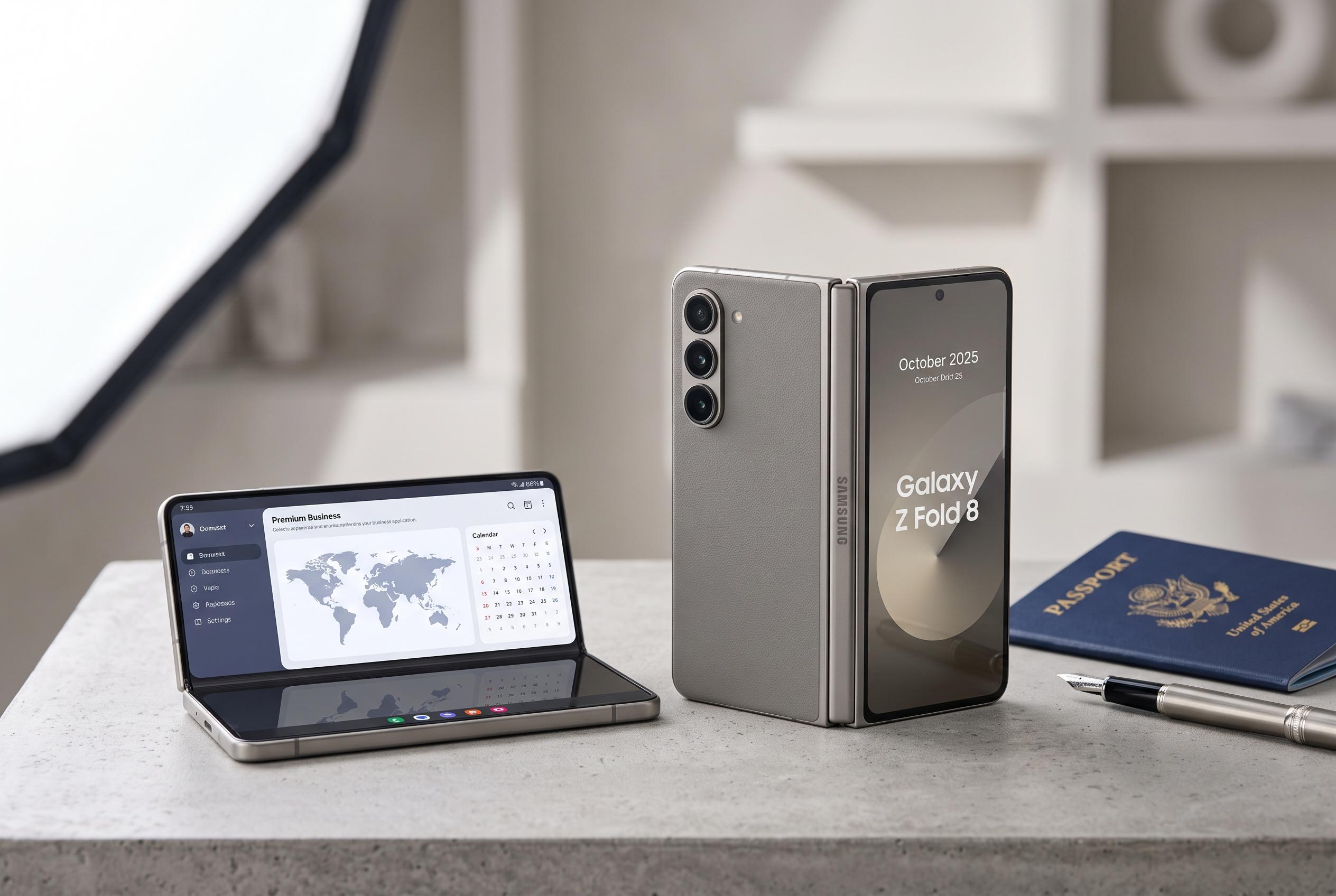

Samsung’s Galaxy Z Fold 8 introduces a new passport-like shape, enhanced durability, and software upgrades, marking a significant shift as foldables move from novelty to mainstream contender, just as Apple prepares to enter the market.
Samsung’s Galaxy Z Fold 8 arrives at a moment when foldables are shifting from novelty to serious product category. The device’s passport-like shape gives it a different logic from the taller book-style foldables that defined the category for years, and Android Central said that wider, shorter chassis makes the phone more pocketable and easier to use one-handed. That matters because the Fold 8 is not just competing with other Android rivals; it is also arriving into a market where Apple’s long-rumoured entry is now part of the conversation.
Samsung’s hardware case is strong. The phone is very slim for a foldable, with a 4,800mAh battery built around silicon-carbon chemistry and charging rated at 45W wired and 20W wireless, according to Android Central. Tom’s Guide reported that the outer display is 5.5 inches in a 10:16 format, while the main panel reaches 3,000 nits of peak brightness, the highest yet on a Samsung phone. SamMobile added that the cover screen uses Gorilla Glass Ceramic 3, while Samsung’s Flex Titanium display tech is meant to improve crease control and durability.
Durability appears to have been a clear focus. Samsung says the hinge is rated for 500,000 folds and the phone carries an IP48 rating for dust and water resistance, according to SamMobile. The same report said the new hinge removes Flex Mode and supports fewer open angles than earlier models, but also makes the device feel flatter in use and reduces the crease’s visibility. In practice, that means the fold line is still there, but it is much less distracting than on older generations.
Software remains the area where Samsung still has the most room to refine the experience, but it is also where the Fold 8 gains much of its appeal. The phone’s large interior screen is designed for multitasking, and Samsung’s One UI offers extensive customisation through Good Lock and related plug-ins. That flexibility comes with a cost: it can take time to tune the interface, and some apps still do not scale well to the Fold’s unusual aspect ratio. Even so, the system is fast, helped by the Snapdragon 8 Elite Gen 5 for Galaxy and as much as 16GB of RAM in the top configuration.
Camera performance is more mixed. On paper, the Fold 8 offers dual 50-megapixel rear cameras, 8K video at 30fps and 4K at up to 120fps, plus 10-megapixel selfie cameras on both displays. In use, the review found the results less convincing than the specs suggest, especially in low light and video. That leaves the Fold 8 as a device that is easy to admire and, at times, difficult to fully justify. But as Top Gear noted, once the price is pushed down through trade-in offers and launch promotions, it starts to look like one of the most usable foldables Samsung has made so far.
Disclaimer: This content is intended for informational purposes only. Readers are advised to exercise their own judgement, conduct due diligence, or consult a qualified expert before acting on any information provided.