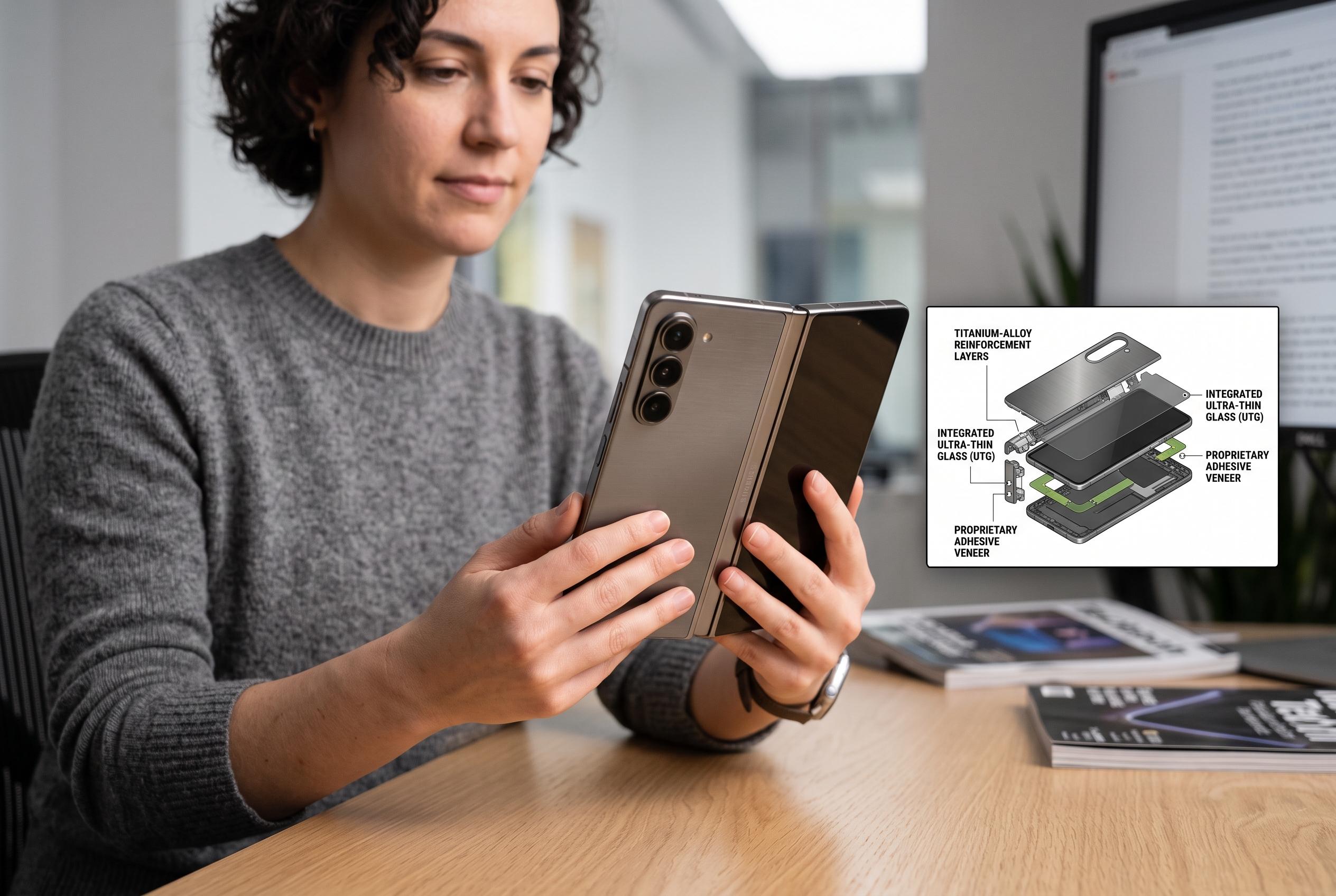

A detailed teardown of Samsung’s Galaxy Z Fold 8 uncovers the use of titanium-alloy layers for improved durability, although repairability remains challenging due to intricate design features and high repair costs.
A teardown of Samsung’s Galaxy Z Fold 8 suggests the company’s new foldable is built with more going on under the bonnet than its slimmer profile suggests. Zack Nelson, the creator behind the JerryRigEverything YouTube channel, examined the handset after its durability test and found that Samsung has indeed placed titanium-alloy layers behind the flexible AMOLED panel, even if the material looks far less dramatic than the marketing implies. The result is a device that appears more compact and wider than earlier models, but also one that remains extremely difficult to open up and repair.
The video also reinforces a familiar truth about foldables: they remain inherently intricate machines. Nelson was unable to remove the glued-in main display without damaging it, underlining how unforgiving the design can be for anyone attempting a home repair. Once the cover screen and rear panel were stripped away, he reached a hinge assembly made up of multiple modular parts rather than a single unit, which helps explain both the engineering challenge and the repair cost.
Battery access was easier than the display work, thanks to pull tabs, but the cells are still lithium-ion batteries despite Samsung’s use of a silicon-carbon anode. That detail matters because it shows how much the Fold 8 still relies on conventional battery chemistry even as the company markets newer structural materials elsewhere in the device. SamMobile has also reported that Samsung pairs the Fold 8 with Gorilla Glass Ceramic 3 on the outer screen, Flex Titanium display technology and an IP48 rating for dust and water resistance, while the hinge is rated for 500,000 folds.
Taken together, the teardown and durability reporting point to a clear conclusion: Samsung has improved the Fold 8’s resilience in meaningful ways, but foldables remain a compromise between advanced engineering and practical serviceability. Samsung says its Flex Titanium layer is intended to stiffen the panel and reduce the crease, and SamMobile reported that the new hinge makes the screen feel flatter and the crease less visible in normal use. Even so, the device still carries the classic weaknesses of the category, including a scratch-prone plastic top layer over the internal display and repair work that can become expensive very quickly.
Disclaimer: This content is intended for informational purposes only. Readers are advised to exercise their own judgement, conduct due diligence, or consult a qualified expert before acting on any information provided.