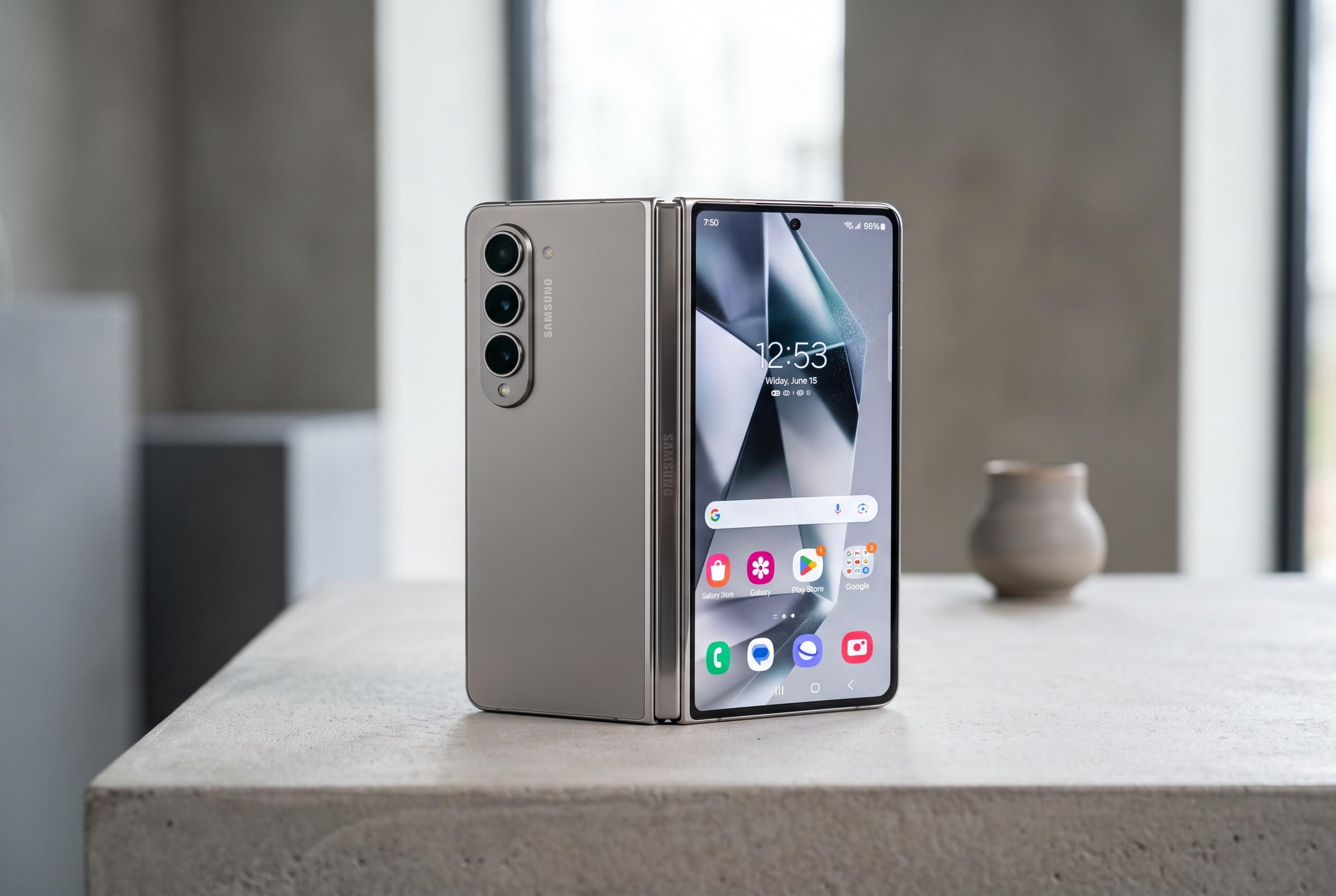

The Samsung Galaxy Z Fold 8 Ultra, priced at $2,099.99, emerges as the flagship foldable with significant upgrades in display technology, camera system, and processing power, redefining premium foldable smartphones.
Samsung’s 2026 foldable line-up gives buyers more choice than ever, but the Galaxy Z Fold 8 Ultra is the clear statement piece. At $2,099.99, it sits above the standard Z Fold 8 and the smaller Z Flip 8, and it is aimed squarely at users who want the biggest screen, the strongest cameras and the fastest performance Samsung can offer. In practice, it is the company’s most capable folding phone, but not necessarily its most compelling value, especially with the Z Fold 8 offering a more unusual wide-format design at a lower price.
The Ultra looks familiar from the outside, and that is part of the point. Samsung has kept the book-style shape, the button layout and the overall premium feel largely intact, while refining the hinge and structure to make the fold flatter and the crease less noticeable. The phone is available in Cream, Graphite, Violet Shadow and an online-exclusive Green Shadow, and it uses tougher materials including Corning Gorilla Glass Ceramic 3 on the front and Gorilla Glass Victus 2 on the rear. It also carries an IP48 rating for dust and water resistance, which leaves it behind the best-in-class IP68 protection on Google’s Pixel 10 Pro Fold but still in line with the stronger end of the foldable market.
The biggest gains are on the inside. Samsung’s 8.0-inch main panel and 6.5-inch cover display both use Dynamic AMOLED 2X technology with 120Hz refresh rates and peak brightness rated at 3,000 nits. The company says the new Flex Titanium structure reduces the crease by 20%, and the display does look cleaner in use, even if the change is subtle. Under the bonnet, the Snapdragon 8 Elite Gen 5 gives the Ultra serious speed, and benchmark results from PCMag show it pulling ahead of both the regular Z Fold 8 and last year’s Z Fold 7. That extra power makes the Ultra particularly well suited to split-screen work, media creation and gaming.
Battery life is also better than before. Samsung has increased capacity to 5,000mAh and switched to silicon-carbon chemistry, helping the phone last more than 16 hours in PCMag’s testing. Charging is faster too, with support for 45W wired charging and 20W wireless charging, plus reverse wireless charging for accessories. Connectivity is equally modern, with 5G, Wi-Fi 7, Bluetooth 6.0 and Ultra-Wideband support. Audio is strong as well, with loud stereo speakers and clear call quality, though there is still no headphone jack.
The camera system is one of the Ultra’s main selling points. Samsung has fitted a 200-megapixel main camera, a 50-megapixel ultrawide lens and a 10-megapixel telephoto camera with 3x optical zoom, while the front and inner selfie cameras are both 10 megapixels. That gives the Fold 8 Ultra a more versatile setup than the standard Fold 8, which drops telephoto support altogether. Samsung also ships the phone with Android 17 and One UI 9, alongside a heavy emphasis on AI features, including Gemini-based tools and Samsung’s own automation options. The result is a foldable that is polished, powerful and genuinely useful, even if its small gains over last year’s model do not fully justify the extra cost.
Disclaimer: This content is intended for informational purposes only. Readers are advised to exercise their own judgement, conduct due diligence, or consult a qualified expert before acting on any information provided.