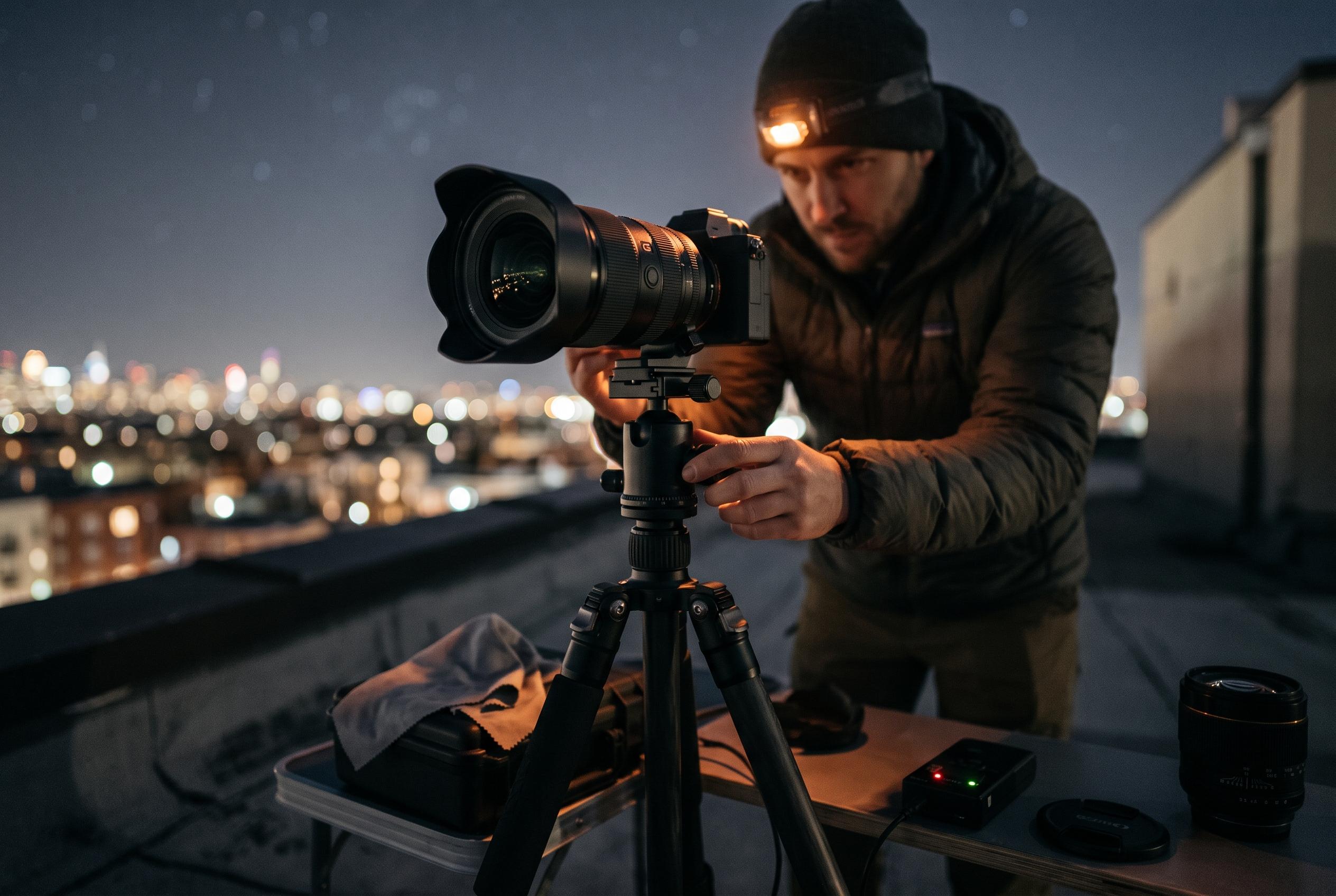

Sigma’s 14mm f/1.4 DG DN Art aims to be a top-tier ultra-wide prime for astrophotographers, but varying sample quality and practical considerations leave its performance as a subject of debate among experts and enthusiasts alike.
Sigma’s 14mm f/1.4 DG DN Art is a niche lens with a very clear brief: it is built for photographers who need the widest possible angle of view without giving up the speed of a fast prime. In practice, that makes it especially attractive for astrophotography, where the combination of a 14mm focal length and an f/1.4 aperture should, on paper, allow more light to reach the sensor and make star fields and aurora work easier in difficult conditions. Yet the question raised by independent testing is not whether the concept is compelling, but whether the lens delivers consistently enough to justify its size, weight and price.
The lens is undeniably substantial. Sigma has given it a weather-sealed body, a tripod collar with an Arca-Swiss compatible foot, a de-clickable aperture ring, manual-focus controls and a rear filter slot rather than a conventional front thread. Sigma’s own product information also emphasises the complex optical design, which uses FLD, SLD and aspherical elements, along with coating intended to reduce flare and ghosting. Reviewers have generally regarded the handling as well considered for serious outdoor use, although the physical burden is obvious: this is a large optic, and it is far heavier than smaller rivals in the same focal-length class.
That balance between ambition and practicality is where opinions begin to diverge. Cameralabs described the lens as the fastest non-fisheye 14mm option available and praised its wide-open performance for stars, while The Digital Picture and Digital Camera World both reported strong sharpness, low flare and effective control of sagittal coma flare. Space.com also highlighted its appeal for low-light work, noting that it is the first 14mm f/1.4 lens and that it is engineered with astrophotography in mind. Taken together, those assessments suggest a lens that can perform at a very high level when the sample is good and the shooting conditions suit it.
Phillip Reeve’s field report, however, adds an important note of caution. In his testing, sample variation was severe enough to become the central issue. He found one copy decentered and the replacement copy worse, to the point where he stopped pursuing further samples. That is significant for a lens of this type, because astrophotography depends on even performance across the frame at wide apertures. He also reported that corners remained weak on the samples he tested, with meaningful improvement only after stopping down, and that field curvature made focusing behaviour more complicated than the optical formula alone would suggest.
That does not mean the Sigma 14mm f/1.4 DG DN Art is a failure. Its flare resistance, sunstar rendering and chromatic aberration control appear strong, and its feature set is unusually complete. But the broader picture is mixed. Some reviewers have found a standout specialist lens with class-leading speed and impressive imaging quality. Others have encountered enough variation and enough practical compromise to question whether the gain over slower, smaller alternatives is worth the penalty. For buyers considering it as a dedicated night-sky tool, the lens looks less like a simple recommendation and more like a gamble that depends heavily on getting a good sample.
Disclaimer: This content is intended for informational purposes only. Readers are advised to exercise their own judgement, conduct due diligence, or consult a qualified expert before acting on any information provided.