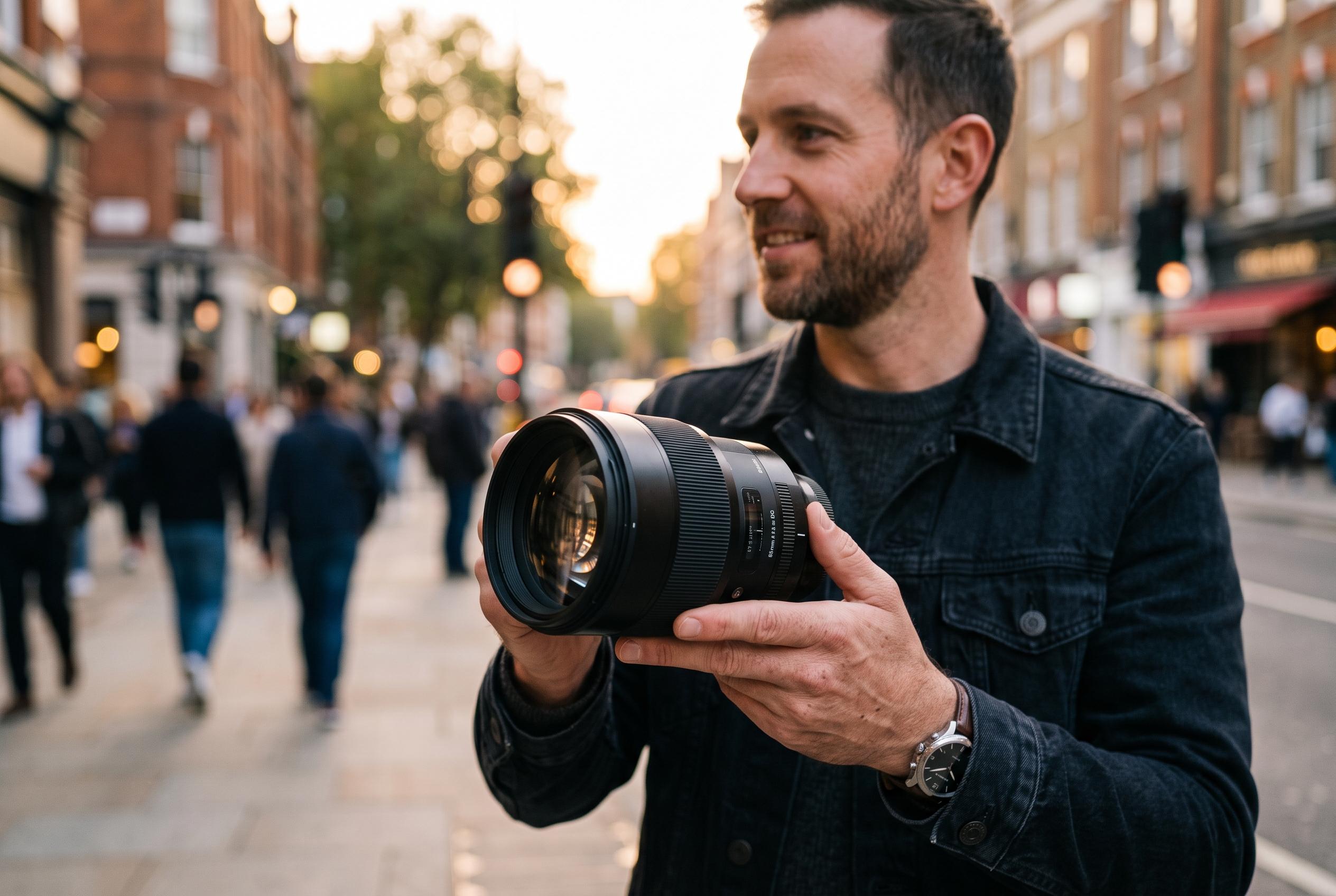

Sigma launches the smallest and lightest autofocus 85mm F1.2 lens for mirrorless systems, combining optical excellence with a compact design catering to professional portrait photographers seeking shallow depth of field without added weight.
Sigma’s 85mm F1.2 DG | Art is aimed squarely at portrait photographers who want very shallow depth of field without the usual penalty in size and mass. According to Sigma’s own specification sheet, it is a full-frame lens for Sony E and L-mount cameras, built around a 17-element optical design with special low-dispersion and aspherical elements, a rounded 13-blade diaphragm and dual HLA autofocus motors. The company says it is the smallest and lightest autofocus 85mm F1.2 lens for mirrorless systems, and it is priced at $1,599.
In practice, DPReview found the lens to feel like a typical high-end Sigma Art optic: solid, deliberate and carefully finished. The aperture ring is clicked by default, but can be de-clicked, and the ring can also be locked in or out of camera-controlled ‘A’ mode. That sort of physical control should appeal to photographers who prefer direct operation over menu-driven adjustments. Even so, the lens remains substantial, and DPReview noted that it was used on a Panasonic S1R, creating a heavy but still manageable combination.
Image quality appears to be the main attraction. DPReview’s sample images suggest strong sharpness across the frame even at F1.2, although the extreme shallow depth of field leaves little room for error. The same samples also show noticeable chromatic aberration and fairly strong vignetting at the widest aperture, though that darkening largely eases by F2.8. The Digital Picture also described the lens as delivering excellent wide-open performance, while Sigma’s optical design is clearly intended to control aberrations and preserve detail at very large apertures.
The broader market context is straightforward. Digital Camera World noted that Sigma is pitching this lens against far more expensive Canon and Nikon 85mm F1.2 rivals, while aiming to undercut them on price and weight. That makes the lens unusually compelling for working portrait photographers who want flagship aperture speed, autofocus and optical quality without moving into the heaviest or most expensive tier of the market. On the evidence so far, Sigma has built a lens that looks serious enough for professional use, yet still more practical than many competitors in the same class.
Disclaimer: This content is intended for informational purposes only. Readers are advised to exercise their own judgement, conduct due diligence, or consult a qualified expert before acting on any information provided.