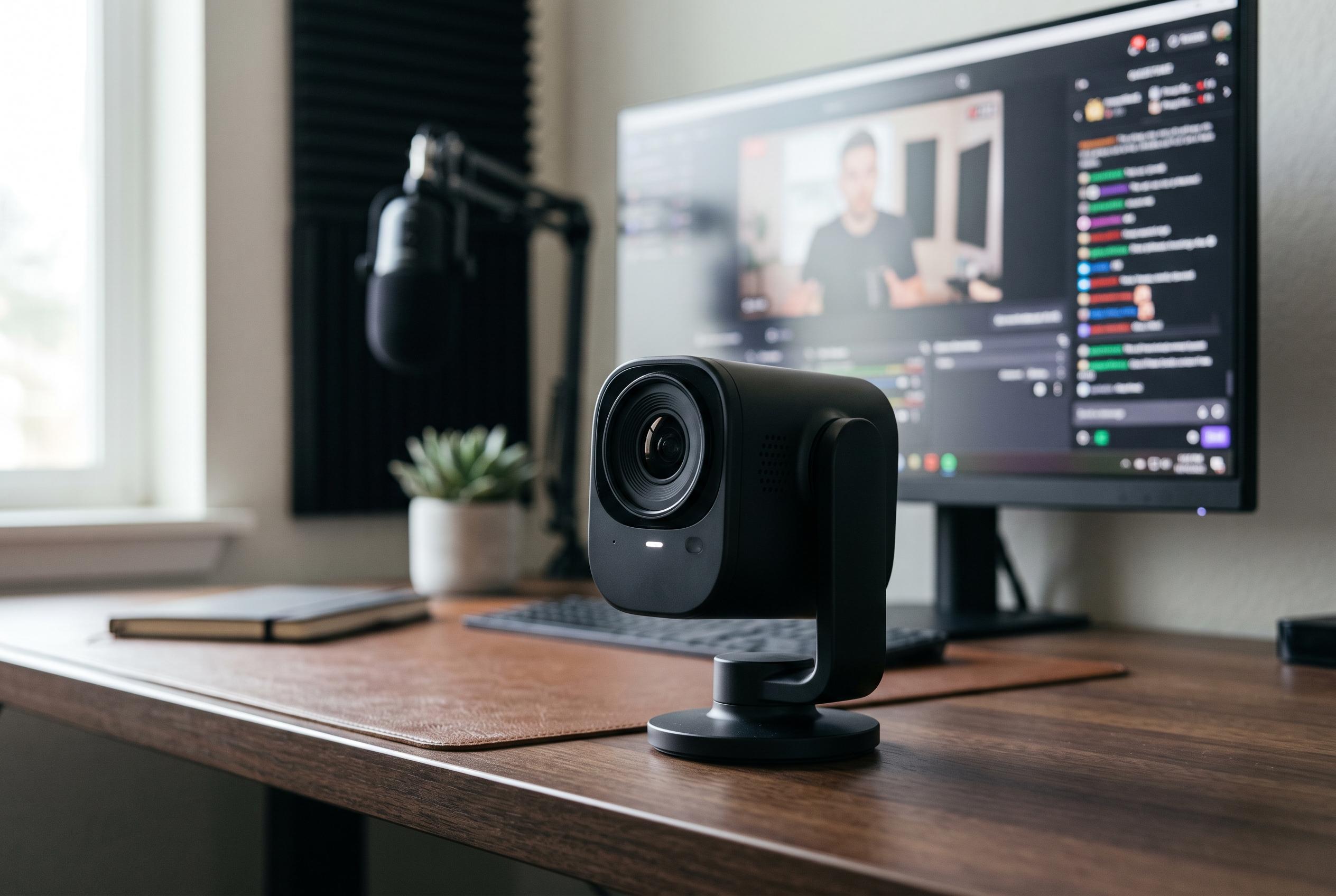

Advancements in camera technology are revolutionising live content creation, favouring automated features and versatile designs over traditional webcams, with options like Logitech’s MX Brio, Insta360 Link 2C, and Sony ZV-E10 leading the charge.
For live creators, the best camera is no longer simply the one that turns the picture on. Modern models are judged on autofocus, low-light handling, framing assistance and how easily they fit into a wider streaming set-up. The basic question has shifted from whether a webcam is sufficient to whether a creator needs a camera that can actively improve the image, or even help manage the shot while they focus on the content.
According to Logitech, the MX Brio is aimed at users who want a premium webcam without moving to a full camera rig. It records in 4K at 30fps or 1080p at 60fps, uses AI-assisted image processing and includes Show Mode for desk-based demonstrations. Logitech also says the webcam offers manual control over ISO, shutter speed and white balance, while its larger pixels are intended to improve performance in poor light. That makes it a sensible choice for regular streamers, product demonstrators and presenters who want more control than a standard plug-and-play device offers.
The Insta360 Link 2C takes a different approach. Rather than relying on manual adjustment, it leans on AI auto-framing, gesture control, natural bokeh and DeskView mode to simplify operation. Retail specifications list 4K HDR capture, a 1/2-inch sensor and support for whiteboard-style presentations, which makes it well suited to teachers, hosts and creators who move between speaking to camera and showing material on a desk. Review coverage has also pointed to its strong image quality and value when discounted, although it is still a better fit for users who will use its automation rather than those who prefer fine-grained manual control.
For creators who have outgrown webcams, the Sony ZV-E10 sits in a different category altogether. Its APS-C sensor, interchangeable lenses and real-time eye autofocus make it more adaptable for long-term use, especially if the same camera will serve both live and recorded work. USB streaming also reduces setup complexity because it removes the need for a capture card in many cases. The trade-off is that it asks more of the user: battery life, heat and the absence of in-body stabilisation mean it is a better tool for committed creators than for occasional streamers.
There is still a strong case for cheaper webcams. The EMEET C960 and S600 offer 4K capture, autofocus and noise-reducing microphones at a much lower cost, while the Logitech C920x remains a dependable 1080p option for users who want little fuss. The broader point is that camera choice should follow use case, not price alone. Lighting, microphone quality and the kind of content being made often matter more than headline resolution, and a stable, clear image is usually worth more than features a creator rarely uses.
Disclaimer: This content is intended for informational purposes only. Readers are advised to exercise their own judgement, conduct due diligence, or consult a qualified expert before acting on any information provided.