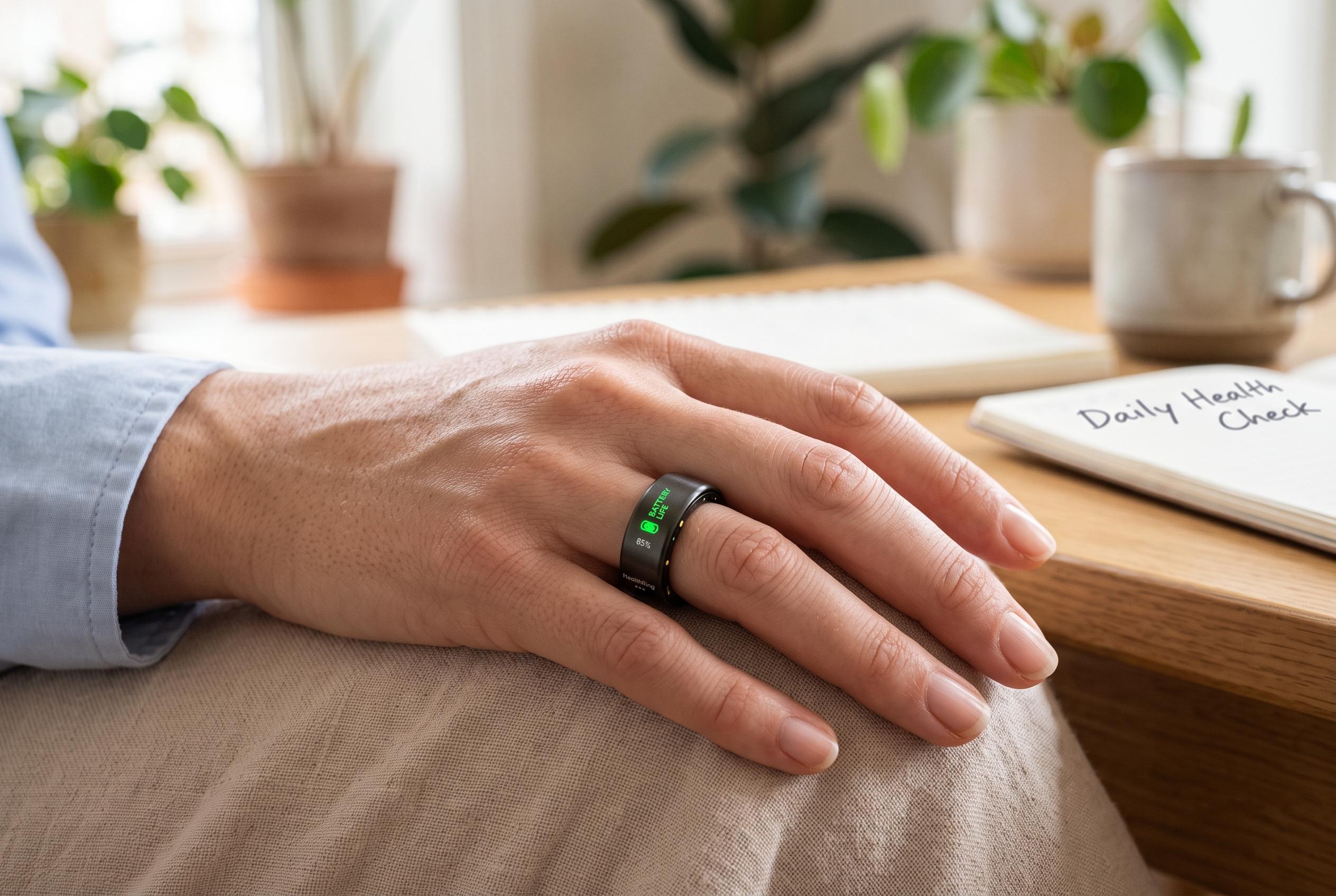

Smart rings are evolving from niche gadgets to mainstream health wearables, with leading models balancing comfort, battery life, and health insights, appealing to diverse users and disrupting traditional fitness tracking devices.
Smart rings are moving from novelty to mainstream wearables, offering a lower-profile alternative to smartwatches for people who want health data without a screen on the wrist. The category has widened quickly, with established names such as Samsung joining specialist brands including Oura and Ultrahuman. Recent reviews from TechCrunch, Tech Advisor and Stuff show that the best models now balance comfort, battery life and useful health tracking rather than simply shrinking a fitness tracker into ring form. The main trade-off remains the same: the smaller the device, the more carefully buyers need to weigh price, battery life and software access.
For most people, the Oura Ring 5 remains the benchmark. TechCrunch says it is 40% smaller than its predecessor and now reaches up to 9 days of battery life, while still offering detailed sleep, activity and vital-sign tracking through its companion app. Tech Advisor also praised its slim profile, improved battery life and polished hardware, though both outlets noted the subscription required for full access. That monthly fee continues to be the ring’s biggest drawback, especially at a starting price of $399.
If a subscription-free option matters more, the Ultrahuman Ring Air is still one of the strongest choices. Stuff described it as a compact ring with sleep and recovery insights that compare well with major fitness brands, while Android Central called it one of the best smart rings for sleep tracking. TechRadar added that it is light and comfortable, but can scratch more easily than some rivals. The clear advantage is that core features do not sit behind a recurring fee, which makes the ring easier to justify for long-term use.
Ultrahuman’s Ring Pro pushes battery life even further, with Stuff reporting up to 15 days on a charge and as much as 45 days when used with its charging case. That makes it a strong option for people who want the least possible charging burden. The trade-off is bulk. It is thicker than most rivals and less discreet on the hand, which makes it a better technical proposition than a fashion one. Stuff also noted the ProRelease safety design, which is intended to make removal easier in an emergency.
At the more affordable end, the Leep Ring 1 offers a simpler answer for buyers who want core sleep and step tracking without the premium pricing. Stuff said the titanium build feels better than its low price suggests, and the fact that there is no subscription strengthens its value case. Samsung’s Galaxy Ring also remains important because it brings the category to a much wider Android audience. Tom’s Guide noted that Samsung’s broader wearable line is increasingly focused on health and wellness features, and the Galaxy Ring fits that shift, even if its limited platform support means it is best suited to Samsung phone users.
The practical lesson for buyers is that smart rings are now good enough to be chosen for specific needs rather than novelty. Oura leads on refinement and insight depth, Ultrahuman offers strong data without a monthly fee, and Samsung provides the most obvious entry point for Android owners. But the category still demands compromise: there is no GPS, workout tracking is limited compared with a sports watch and sizing matters more than it does with a wrist wearable. For sleep-first, low-profile health tracking, though, smart rings are now a serious product class rather than a niche experiment.
Disclaimer: This content is intended for informational purposes only. Readers are advised to exercise their own judgement, conduct due diligence, or consult a qualified expert before acting on any information provided.