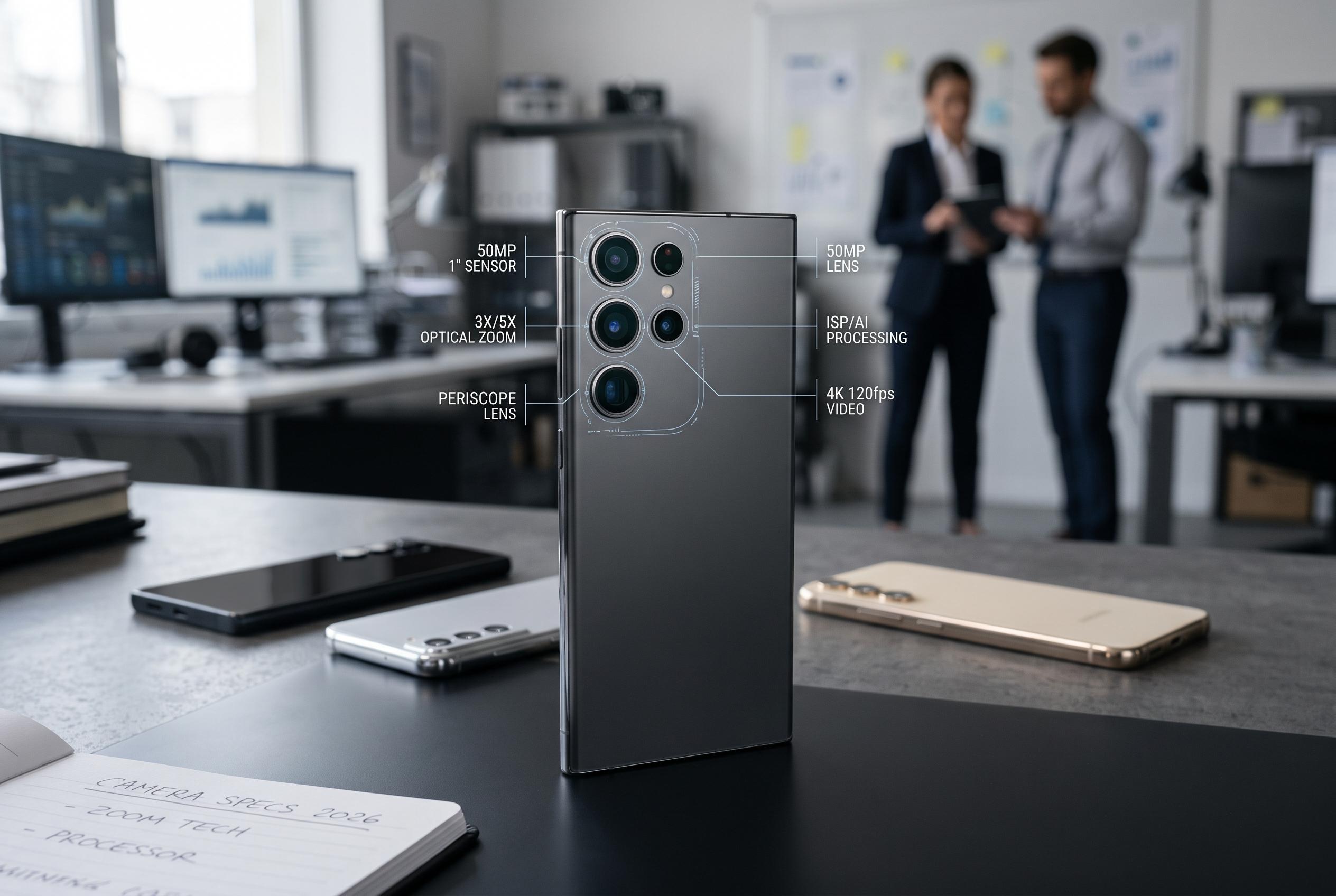

In 2026, the smartphone camera landscape emphasizes balanced sensor quality, processing, zoom capabilities, and video performance, with Apple, Samsung and Google leading the industry in developing versatile, high-quality imaging features for different user needs.
In 2026, the camera race in smartphones is less about a single winning feature and more about how well each phone balances sensor quality, processing, zoom and video. That is why the best choice depends on use case. Apple, Samsung and Google continue to set the pace at the premium end, while Xiaomi and OnePlus remain relevant for buyers who want strong camera hardware without treating photography as the only priority.
Apple’s iPhone 17 Pro Max is among the most convincing all-round options for creators. In September 2025, Apple said the Pro models gained a 48-megapixel Telephoto camera with a sensor 56% larger than before, plus 4x optical zoom at 100mm and 8x optical zoom at 200mm. That matters because zoom quality on a phone is often limited by sensor size and processing, not just lens reach. For users who care most about video, Apple still has a strong case: its Pro line remains the safest recommendation for consistent colour, dependable stabilisation and straightforward results.
Samsung’s Galaxy S26 Ultra is the obvious alternative for people who want more reach and flexibility. Tom’s Guide ranks it as Samsung’s best phone of 2026, citing a 6.9-inch AMOLED display, AI tools, a 200-megapixel main camera, long battery life and 60W charging. For camera buyers, the headline is zoom. Samsung’s Ultra phones are aimed at users who shoot concerts, travel scenes, sports and distant subjects where optical zoom is more useful than digital cropping. That versatility keeps Samsung firmly in the premium camera-phone conversation.
Google’s Pixel 10 Pro XL follows a different logic. Rather than chasing the largest numbers, it leans on computational photography, where software combines and processes multiple frames to improve detail, colour and exposure. For many users, that makes Pixel phones especially good for point-and-shoot photography, portraits and low-light scenes. PhoneArena’s 2026 camera-phone guide also points readers towards sensor quality, processing and night performance rather than megapixels alone, which reflects the Pixel approach well.
There is also a practical reason not to treat megapixel counts as a shortcut. A 200-megapixel main camera does not automatically beat a 50-megapixel one. Larger sensors, better lenses, image stabilisation, autofocus and processing can matter more in real use. That is why some recent buying guides still favour the iPhone 16 Pro Max for overall camera performance, praising its reliable stills and video, even as Apple’s newer model improves the telephoto system. The broader lesson is that real-world consistency still counts more than marketing figures.
For enthusiasts, Xiaomi’s Ultra line and OnePlus’s premium phones remain worth watching. They are usually strongest for buyers who want advanced hardware, manual controls, RAW support and multiple focal lengths, even if they do not dominate the mainstream conversation in the way Apple, Samsung and Google do. TechRadar’s recent coverage of Samsung’s Galaxy Z Fold 8 Ultra also shows how quickly camera capability is spreading into foldables, with a five-camera system that includes a 200-megapixel main camera and a 50-megapixel ultrawide. That does not replace a traditional camera flagship, but it does broaden the field.
The clearest conclusion is also the simplest one. If video matters most, Apple remains hard to beat. If zoom and all-round camera flexibility matter most, Samsung has the stronger argument. If you want fast, smart stills with minimal effort, Google’s Pixel line is the most natural fit. For everyone else, the best camera phone in 2026 is the one whose sensor, lens and software match the kind of images you actually take, not the one with the largest number on the spec sheet.
Disclaimer: This content is intended for informational purposes only. Readers are advised to exercise their own judgement, conduct due diligence, or consult a qualified expert before acting on any information provided.