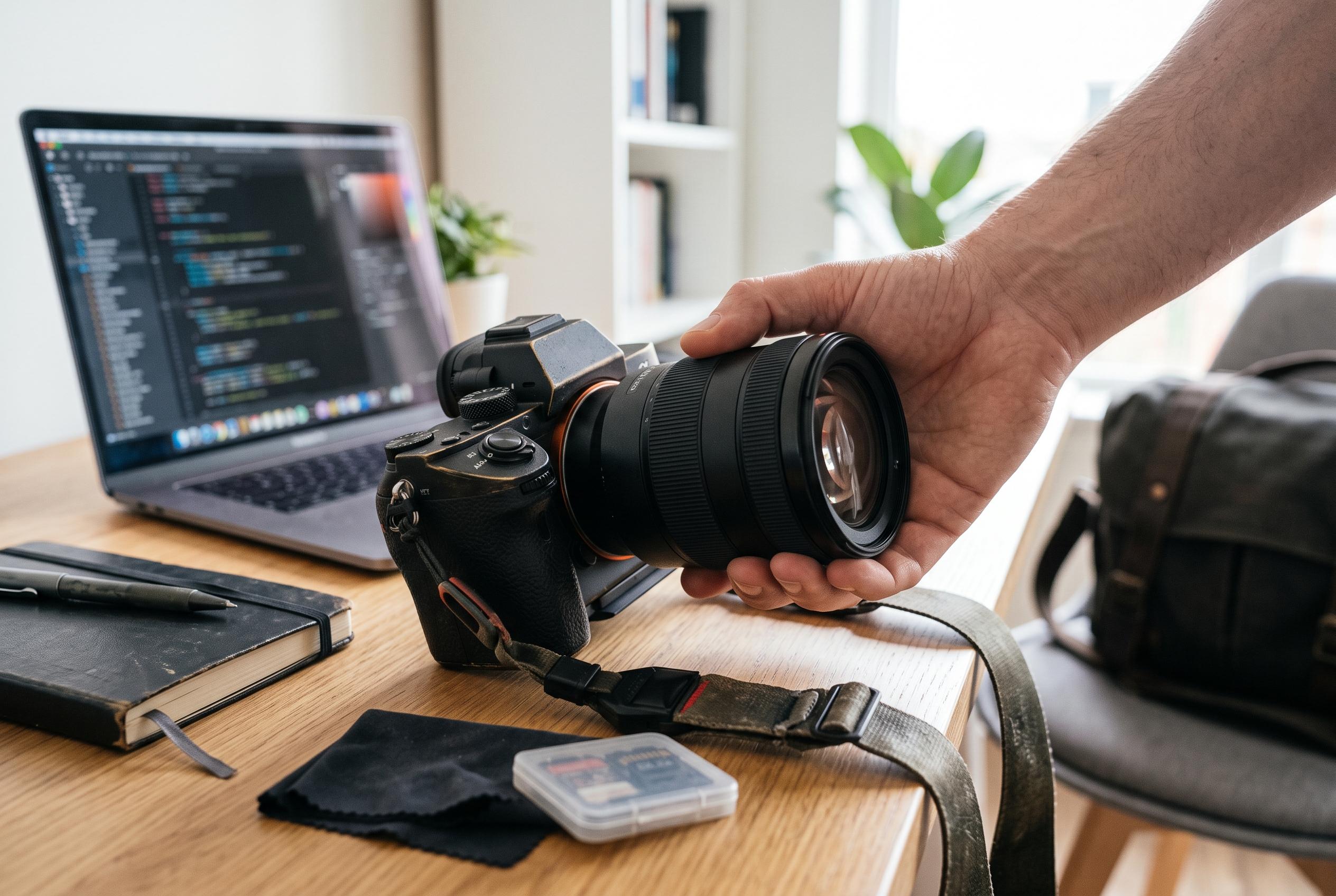

Although nearing the end of its lifecycle, the Sony a7 III continues to offer dependable autofocus, extensive lens support, and value for beginners and system switchers in 2026, despite some ageing features and interface limitations.
By 2026, Sony’s a7 III is no longer a fresh recommendation, but it remains a difficult camera to dismiss. The Phoblographer argues that the model is approaching the end of its useful life for commercial work, yet still makes sense for newcomers who want a full-frame body with strong capabilities and a wide lens choice. That judgement is broadly consistent with later buyer’s guides, which still treat the a7 III as a relevant full-frame mirrorless option rather than an obsolete one.
Its strongest remaining quality is autofocus. The camera’s 24-megapixel sensor and older focusing architecture may lack the machine-learning branding of newer bodies, but the system is still described as highly dependable in real use. The Phoblographer says firmware updates extended its usefulness, including the addition of Animal Eye AF, while reviewers at RTINGS note that the camera’s autofocus was exceptional for its time and remains a key reason it still holds value. Battery life is also still good enough for full-day events, which matters more than headline specs for many users.
Lens support is one of the a7 III’s clearest advantages. Sony’s early decision to open E-mount to third-party autofocus lenses created a large and competitive ecosystem, and that remains true in 2026. Digital Camera World’s recent lens guide for the a7 III highlights affordable, high-performing options from Tamron, Sigma and Viltrox alongside Sony’s own premium FE glass. A separate 2026 lens roundup from Sony Rumors also stresses that buyers should look for fast linear-motor designs, especially if they want to exploit the camera’s phase-detect autofocus with modern zooms and primes. In practical terms, that means the a7 III can still be built into a flexible system without forcing buyers into the most expensive native lenses.
Where the age shows is in handling and image character. The Phoblographer criticises Sony’s older menu layout, describing it as awkward and needlessly dense, and notes that the touchscreen is not used for menu navigation. More broadly, the camera reflects Sony’s long-standing preference for a clean, highly clinical rendering. That can suit photographers who want maximum neutrality, but it also means more time in post-production for those who prefer a richer in-camera look. RTINGS similarly points to the lack of newer convenience features, including a more intuitive interface and stronger weather sealing, as reminders that this is an older design.
For buyers in 2026, the a7 III is best understood as a value purchase, not a future-proof professional platform. The Phoblographer says a new body can still be found for under $1,700, with used prices lower still, which helps explain why it remains attractive to beginners and system switchers. But if the goal is to build a business around the camera, newer bodies are the safer bet. The a7 III is now firmly in the mature, legacy phase of its life cycle: still capable, still well-supported by lenses, and still a sensible entry into full-frame Sony, but no longer the model to buy for the newest features or the smoothest working experience.
Disclaimer: This content is intended for informational purposes only. Readers are advised to exercise their own judgement, conduct due diligence, or consult a qualified expert before acting on any information provided.