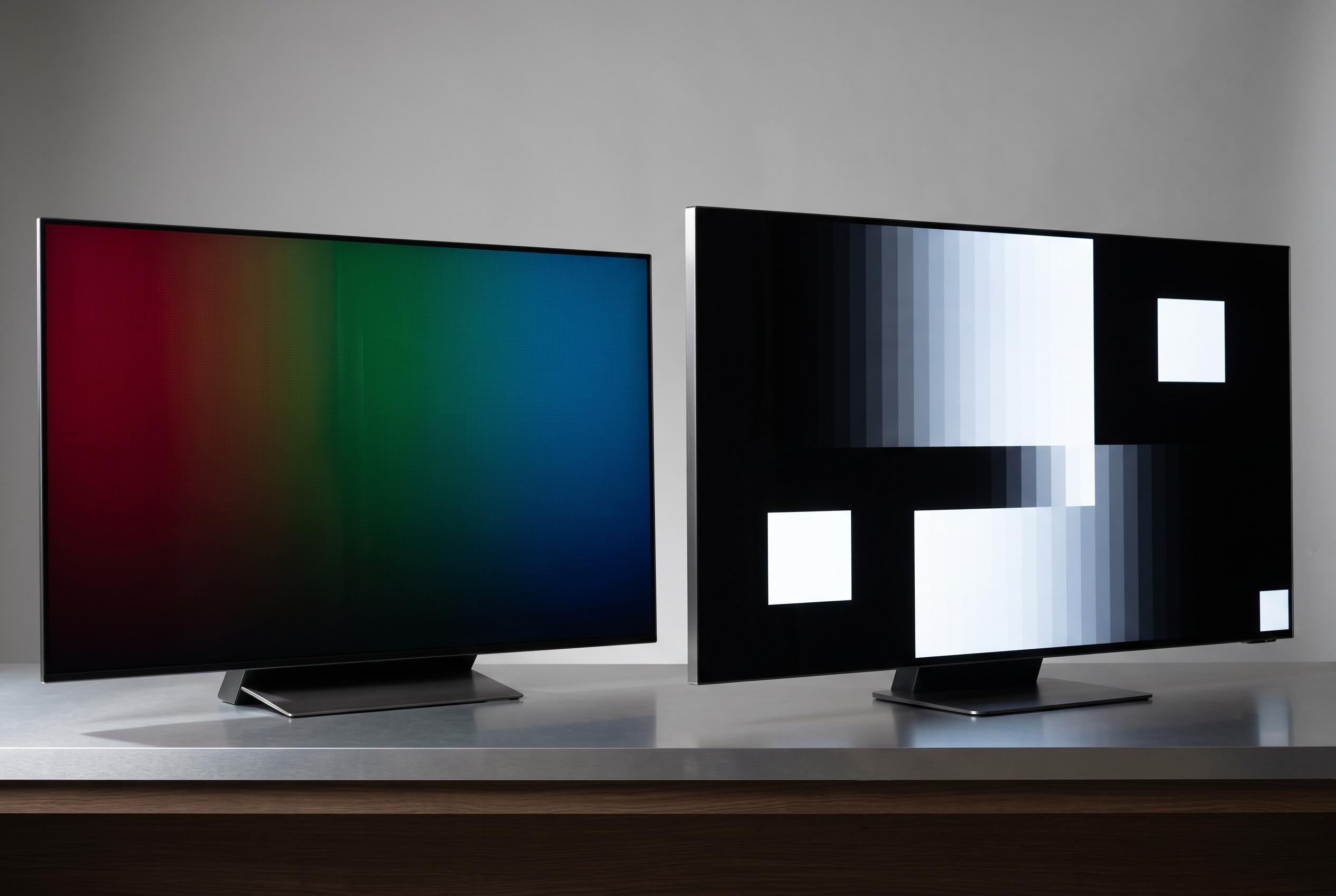

As RGB backlit TVs gain prominence, Sony’s Bravia 7 II offers superior colour depth and cinematic quality, while Samsung’s R95H shines in brightness and contrast, highlighting a nuanced market battle with varied value propositions.
RGB televisions have moved from niche curiosity to one of the most closely watched categories in home cinema this year. With Samsung and Sony both pushing the technology hard, the question is no longer whether RGB backlighting can improve on conventional Mini LED sets, but how the different implementations compare in practice. In side-by-side viewing, the answer is nuanced: Sony’s Bravia 7 II delivers richer, more natural-looking colour, while Samsung’s R95H counters with greater brightness and a more aggressive sense of contrast.
The comparison also matters because the two sets sit in different parts of the market. According to TechRadar, a 65-inch Bravia 7 II is priced at around $2,599 in the US, £1,999 in the UK and AU$3,995 in Australia, while the 65-inch R95H costs about $2,999, £3,099 and AU$5,295 respectively. That makes the Samsung only a modest step up in the US, but a far more expensive proposition in Britain and Australia. What buyers get for that extra money is a flagship Micro RGB model, whereas Sony’s set is positioned as the more accessible of the two.
In colour performance, Sony’s television makes the stronger case for itself. TechRadar’s viewing tests with The Super Mario Galaxy Movie and Speed Racer found the Bravia 7 II produced deeper, bolder colour with a more OLED-like sense of richness, while the Samsung often looked brighter but less saturated. That distinction was especially clear in animated material, where the R95H delivered higher colour luminance, yet the Bravia 7 II preserved more depth and detail in reds, greens and yellows. What Samsung gains in punch, Sony recovers in tone and texture.
The contrast story is more complicated. Both sets handled difficult dark scenes well, including The Batman and Dark City, with strong black levels for backlit televisions and limited blooming when viewed straight on. Samsung’s higher peak brightness gave it a more dramatic look in several scenes, but TechRadar noted that it was also more prone to visible blooming from angle. Sony, by contrast, sometimes showed black crush, losing some shadow detail, though it could also produce the more convincing sense of inky shadow in the right material. What emerges is less a clear winner than a split verdict, depending on the content and viewing position.
Measured brightness gives Samsung the edge in highlight performance. TechRadar recorded HDR peak brightness of 1,960 nits in Movie mode for the R95H, against 1,163 nits for the Bravia 7 II. In Filmmaker and Professional modes, the figures were 1,977 nits and 1,114 nits respectively. Yet Sony posted the higher full-screen HDR brightness in Movie and Cinema modes, which helps explain why it could look more evenly illuminated in some scenes. In practice, Samsung was the more eye-catching set for brilliant specular highlights, while Sony sometimes looked more balanced across larger bright areas.
The Samsung’s matte screen is another practical advantage, particularly in bright rooms. TechRadar found that it resisted reflections far better than the Sony, making it easier to watch in daytime conditions or in rooms with strong ambient light. Sony’s panel, meanwhile, coped well with bright scenes but showed more obvious mirror-like reflections when the image became darker or more contrast-heavy. That makes the R95H the safer choice for mixed lighting, even if the Bravia 7 II often looks more refined in a controlled cinema setup.
Taken together, the verdict is clear enough. Sony’s Bravia 7 II offers the better value and, in many scenes, the more convincing picture, especially for viewers who care about colour depth and cinematic balance. Samsung’s R95H is the stronger performer in brightness, glare control and some high-contrast material, but it costs more and is not a decisive leap in overall image quality. According to TechRadar’s assessment, neither model fully displaces OLED yet, although both show how far RGB backlighting has progressed. For most buyers, the Sony is the smarter purchase; for those willing to pay for the brightest and most polished RGB presentation, Samsung has the lead.
Disclaimer: This content is intended for informational purposes only. Readers are advised to exercise their own judgement, conduct due diligence, or consult a qualified expert before acting on any information provided.