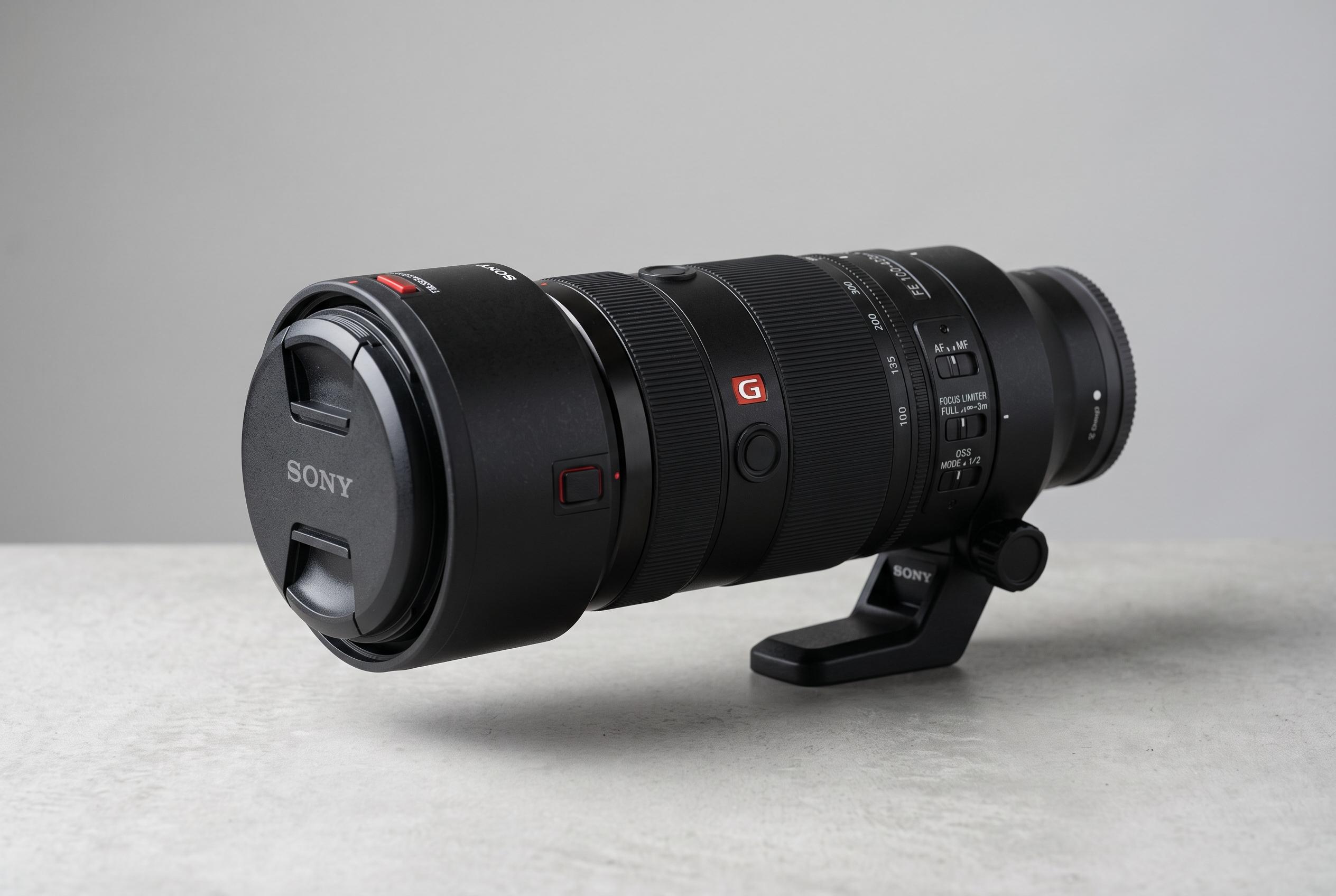

Steve Perry tests Sony’s affordable 100-400mm f/5.6-8 zoom, revealing how price influences performance, portability and usability for enthusiast photographers and wildlife shooters.
Steve Perry’s test of Sony’s inexpensive 100-400mm f/5.6-8 zoom lands on a simple but important point: a low price can solve one set of problems while creating others. Sony’s earlier FE 100-400mm f/5.6-5.6 GM OSS sits in a far higher price bracket, while the newer premium FE 100-400mm f/4.5 GM OSS is built as a much larger, much costlier professional option. Against that background, the $850 lens looks less like a direct substitute and more like a specialist compromise for photographers who value portability and reach over all-round performance. According to Digital Camera World’s product reporting, the lens was designed to be compact and affordable, weighing 654g and targeting hobbyists who want telephoto reach without the bulk.
Perry’s field results support that positioning. He found the zoom easy to carry and quick to react with, especially for unpredictable subjects such as raccoons appearing suddenly on a boardwalk. That mobility matters in real shooting, because a lighter lens can be raised, turned and reacquired faster than a heavy super-telephoto. It is also why budget zooms often appeal to travellers and wildlife shooters who need reach but do not want to devote a camera bag to one lens. The 100-400mm f/5.6-8 is therefore attractive less because it is the best optical tool and more because it is the lens you are most likely to bring.
The trade-off becomes clearer in low light. Perry noted that the lens reaches f/8 by about 205mm, which means much of the wildlife range is effectively limited to f/8 rather than the wider apertures many photographers want at the long end. In practice, that pushed him into high ISO values and slower shutter speeds in woodland conditions, where motion blur and noise quickly eroded detail. That is the central weakness of a variable-aperture telephoto: it can be useful in bright conditions, but it gives up light exactly where distant subjects are already hardest to hold steady. Sony’s newer constant-aperture 100-400mm GM addresses that problem by staying at f/4.5 throughout the zoom range, but it does so at a very different price and weight.
Sharpness results were mixed but not disastrous. Perry said the centre remained solid, while the corners improved at normal shooting distances. He also warned that close-up work on flat subjects exposes clear weakness in the edges, making this a poor choice for artwork reproduction or similar copy work. That is consistent with the broader distinction between premium telephoto glass and lower-cost options: the budget lens can be more than adequate for birds, wildlife and travel, but it is not engineered to deliver the same uniform frame-wide performance as Sony’s higher-end telephotos. Review round-ups of the premium 100-400mm GM also stress its stronger autofocus and more consistent image quality, which is why its much higher price remains part of the argument.
Perry was most positive about teleconverter use. With Sony’s 1.4x converter attached, he reached 560mm at f/11 and found the result slightly preferable to a simple crop. Even the 2x converter to 800mm at f/16 retained more centre detail than expected, although he made clear that such an aperture is not a practical wildlife setting in poor light. That leaves the lens in a fairly narrow but useful lane. Digital Camera World’s buying guide places Sony’s telephoto options in clear tiers: the cheapest lens suits bright-condition reach and travel, while heavier 100-400mm and 200-600mm class lenses are better for photographers who need more consistent results. In Perry’s view, the $850 zoom makes sense only when the shooting conditions match its limits.
Disclaimer: This content is intended for informational purposes only. Readers are advised to exercise their own judgement, conduct due diligence, or consult a qualified expert before acting on any information provided.