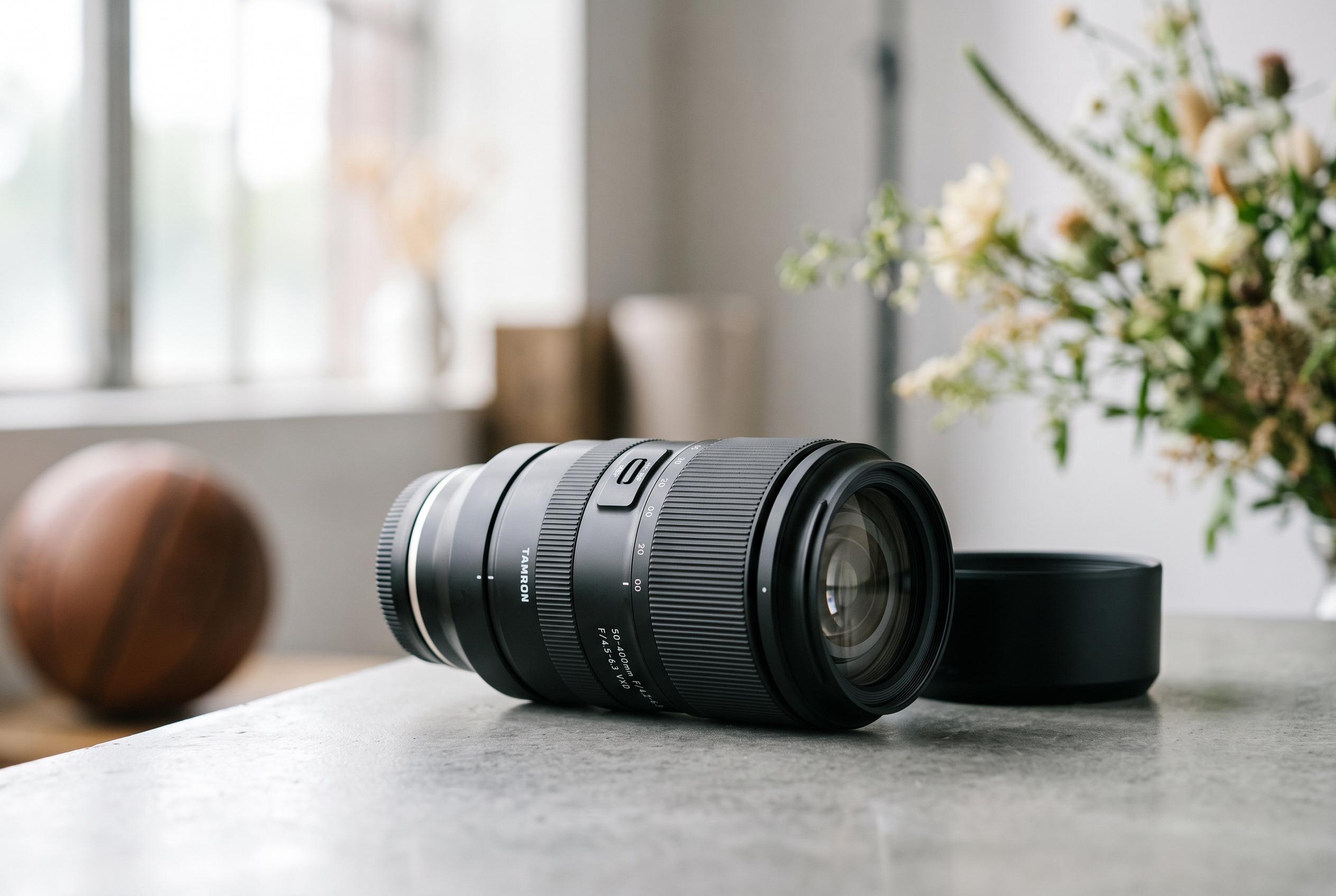

A detailed review of Tamron’s 50-400mm lens reveals its surprising versatility, from sports to macro work, prompting photographers to reconsider its category and capabilities.
What stands out in 35mmc’s month-long test of Tamron’s 50-400mm is not the headline flourish but the reviewer’s conclusion that, once the loan ended, he felt a genuine gap in his kit. That is a notable verdict from a photographer who says he normally prefers smaller, lighter and often pocketable equipment. The lens itself is no longer new: Tamron first introduced the 8x 50-400mm F/4.5-6.3 Di III VC VXD for Sony E-mount on 22 September 2022, and later brought the same A067 design to Nikon Z on 19 September 2024. (35mmc.com)
That reaction matters because the Tamron sits in an awkward category that usually invites compromise. In the 35mmc review, the lens was borrowed for women’s football, wildlife and family travel in Wales, yet ended up being used far more broadly than a specialist sports or birding optic. Other reviewers reached a similar conclusion from a different angle. Amateur Photographer described it as a distinctive solution for photographers who want everyday coverage beginning at 50mm, while PetaPixel argued it was “not your average all-in-one” and said it held up unusually well across the zoom range. The implication is that Tamron has built something closer to a long-range everyday tool than a conventional convenience superzoom. (35mmc.com)
The physical specifications help explain why that balancing act works. Tamron said at launch that the lens was intended to be the size of a conventional 100-400mm while offering a much wider starting point, and Cameralabs measured it at 1,155g and 183mm before hood or collar. In use, 35mmc found it substantial but manageable, even for someone accustomed to compact bodies, and said it proved less fatiguing over a football session than a Nikon 70-200mm f/2.8. There are trade-offs. The barrel extends as you zoom, the optional tripod collar adds extra weight, and Photography Blog noted that the A035TM tripod mount is sold separately rather than included. It also pointed out that the lens cannot be used with Tamron or Sony teleconverters. (tamron.com)
On paper, Tamron has given the lens a fairly serious specification. Both Tamron and Amateur Photographer describe a 24-element, 18-group optical design using XLD, LD and hybrid aspherical elements to control aberrations. Amateur Photographer also highlights Tamron’s BBAR G2 coating, which is intended to suppress ghosting and flare, and says the exterior finish was updated to improve scratch and fingerprint resistance. Operationally, the official launch material stressed the addition of a Focus Limiter within Tamron Lens Utility, while Amateur Photographer noted that the zoom ring travels from 50mm to 400mm in roughly 75 degrees, which is quick enough to make the large range genuinely usable in the field. (amateurphotographer.com)
The 35mmc test also suggests Tamron has largely delivered where it matters most for this type of lens: autofocus and stabilisation. The reviewer said the lens kept up well enough for football and for a dog running directly towards the camera, with the main caveat being that zooming and continuous autofocus at the same time could reduce hit rate. That broadly fits the design brief seen elsewhere. Cameralabs says the lens has built-in optical stabilisation, works in conjunction with in-body stabilisation on mirrorless bodies and offers two VC modes via a physical switch. The-Digital-Picture, meanwhile, notes that the lens is compatible with Sony E and Nikon Z cameras in both full-frame and APS-C formats, which helps explain why 35mmc could move it between a Nikon Zf and a Z50II without treating it as a niche one-body accessory. (35mmc.com)
Image quality is where the more technical reviews bring needed balance to 35mmc’s enthusiasm. PetaPixel was strongly positive, saying the lens avoids the usual pattern in which an all-in-one zoom falls apart at one end of its range. Cameralabs and Photography Blog agreed that chromatic aberration is well controlled, but both also reported noticeable vignetting wide open that is not fully cleaned up until around f/11. More importantly, both described “quite a lot of pin-cushion distortion” in JPEG and RAW files, making software correction advisable, and Photography Blog added that flare can appear when shooting directly into the sun even though stopped-down sunstars are attractive. In other words, the Tamron is not optically flawless; it is simply strong enough overall that its defects look manageable rather than disqualifying. (petapixel.com)
The lens’s most unusual strength may be its close-focus behaviour. Tamron’s launch material promoted half life-size reproduction, and Cameralabs says the 50mm end focuses down to 0.25m, delivering 1:2 magnification with a working distance of about 5cm; at 400mm, it still reaches roughly 1:4. Photography Blog confirmed the same headline figures, and PetaPixel went much further, calling the macro performance “incredible” and saying it was among the best macro experiences the reviewer had used. That matters commercially as well as creatively. The-Digital-Picture argues that the price starts to look much more reasonable if the lens can replace two separate optics, especially for photographers who need telephoto reach but also want credible close-up capability from the same bag. (tamron.com)
Taken together, the sources point to a clear conclusion. This is not the obvious choice for photographers who prioritise a true wide-angle starting point or pro-grade ruggedness above all else. It is, however, a more considered proposition than the superzoom label suggests: weather-sealed, broadly cross-platform, capable of half-macro work, and good enough optically that its distortion and vignetting feel like known costs rather than fatal flaws. For photographers who naturally gravitate towards longer focal lengths, 35mmc’s verdict looks well founded: the Tamron 50-400mm is not merely a curiosity, but a persuasive argument that one lens can cover sport, wildlife, travel and close-up work without collapsing into mediocrity. (cameralabs.com)
Disclaimer: This content is intended for informational purposes only. Readers are advised to exercise their own judgement, conduct due diligence, or consult a qualified expert before acting on any information provided.