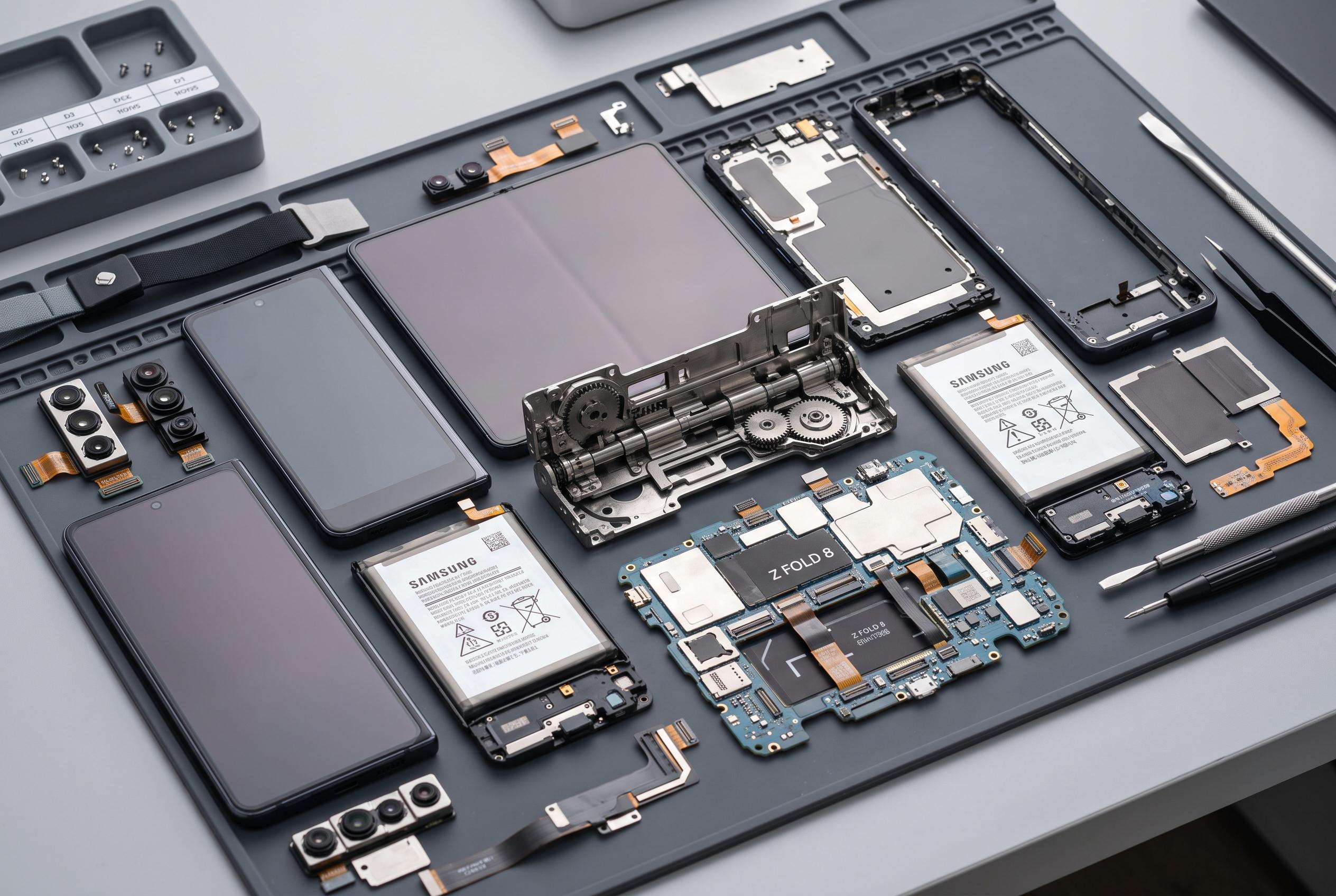

A detailed dissection of Samsung’s Galaxy Z Fold 8 exposes key compromises in its foldable design, questioning durability and repair costs despite technological improvements.
A teardown of Samsung’s Galaxy Z Fold 8 has offered a closer look at a handset that is meant to sell the future of folding phones, while also exposing the compromises that still define the category. The device’s engineering is undeniably ambitious, but the inspection also raises questions about how much of Samsung’s durability messaging translates into daily use.
According to Geeky Gadgets and JerryRigEverything, the outer panel appears more prone to visible wear than its marketing might suggest, while the inner folding display remains the component most exposed to damage. That matters because replacement is expensive: the flexible screen is said to cost $579 to replace, which turns a technical weakness into a significant ownership cost. The layered construction of the main display, which includes a permanent protector, plastic top layer, ultra-thin glass and an OLED panel, helps explain both its visual quality and its vulnerability.
Samsung has also leaned heavily on titanium in its recent foldable messaging, but the teardown leaves room for scepticism. Heat testing reportedly produced discolouration consistent with titanium, yet the absence of the honeycomb-style hollow layer seen in promotional material raises questions about how much of the material is actually present in the finished device. SamMobile has separately reported that Samsung’s Flex Titanium display technology replaces a polymer film with a titanium alloy film to improve stiffness and reduce the crease, but real-world performance remains to be proven.
The new hinge is another focal point. SamMobile reported that Samsung’s redesign makes the panel look flatter and the crease less obvious in normal use, although it can still be seen under strong light with the screen off. The same reporting says the hinge is rated for 500,000 folds and helps the phone open and close more smoothly, but it also offers fewer fixed open angles than earlier versions, which may limit flexibility for some users.
Internally, the Fold 8 continues Samsung’s effort to pack flagship hardware into a narrow chassis. The teardown points to a silicon-carbon battery with a rated capacity of 4,660mAh and an advertised figure of 4,800mAh, a design intended to improve energy density without increasing size. It also shows 20W wireless charging, 4.5W reverse wireless charging, stereo speakers and waterproofing elements. The camera package includes a 50MP main sensor with optical image stabilisation, but the lack of a telephoto lens narrows its photographic range. Thermal management also appears adequate rather than exceptional, which may matter during gaming, video editing or other sustained workloads.
Taken together, the Galaxy Z Fold 8 looks like a device that advances foldable engineering without eliminating the format’s basic trade-offs. Samsung has clearly refined the hinge, display stack and battery design, and the phone’s seven-year software support promise makes it more practical as a long-term purchase. But the teardown suggests that durability, repair cost and thermal headroom remain the areas most likely to shape how convincing this generation feels in everyday use.
Disclaimer: This content is intended for informational purposes only. Readers are advised to exercise their own judgement, conduct due diligence, or consult a qualified expert before acting on any information provided.