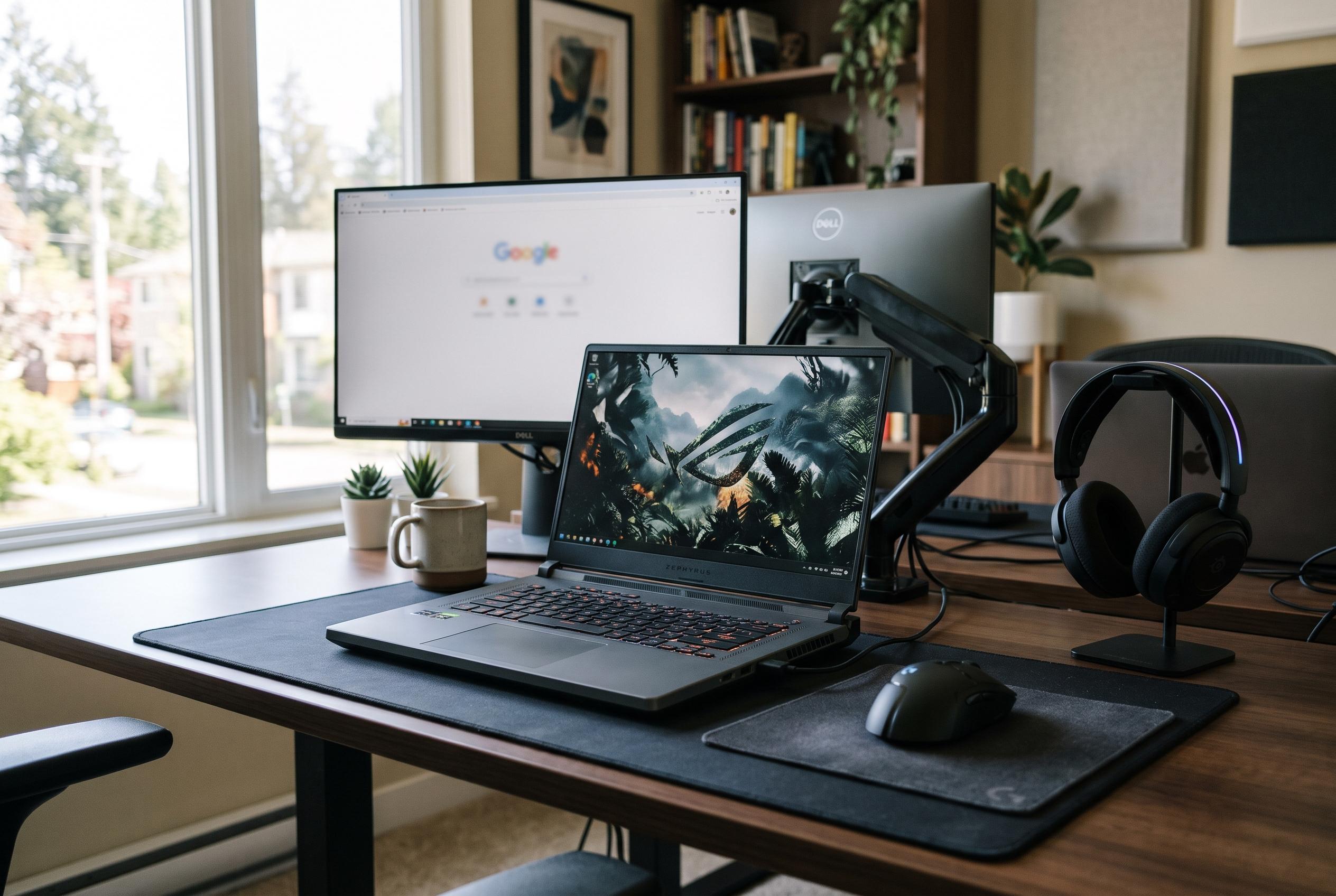

From discounted older models to premium RTX 5080 systems, the strongest 2026 gaming laptop buys depend on balanced performance, thermals and upgradeability rather than headline specifications alone.
Choosing a gaming laptop in 2026 is less about chasing the biggest model number than about matching hardware to use case. The market is crowded with machines that promise desktop-like speed but differ sharply in display quality, thermal behaviour, battery life and upgradeability. PC Gamer’s buying advice stresses the basics that still matter most: a balanced GPU, enough RAM for dual-channel operation, space for a second NVMe drive if possible, and a screen whose resolution and refresh rate are realistic for the graphics hardware inside. Those trade-offs are particularly important now, as laptop makers continue to raise prices while memory costs and component shortages keep pressure on the value end of the market.
That context helps explain why the cheapest models are not always the best bargains. Budget systems can look attractive on paper, but compromises often show up in the form of reduced GPU wattage, limited storage and intrusive cooling. A current example is the MSI Cyborg 15, which TechRadar notes is being sold with an RTX 5050, 16 GB of DDR5 memory and a 512 GB SSD at a sharply reduced price, yet still calls attention to the limits of 1080p gaming and the need to lower settings in heavier titles. The same pattern appears across other entry-level machines: once pricing is aggressive enough, buyers are usually trading away headroom rather than simply paying less for the same experience.
Mid-range value, by contrast, increasingly depends on spotting older stock or short-lived discounts. PC Gamer’s reporting on the current RAM shortage shows how quickly good deals can disappear, while older-generation gaming laptops can become unusually compelling when retailers discount them heavily. That is the logic behind models such as the Lenovo LOQ and previous-generation Legion 5 entries in the ranking, which pair serviceable GPUs with stronger all-round value when found below launch pricing. The same principle explains why some discounted HP Omen and Acer systems look tempting but still require close scrutiny of their RAM capacity, SSD size and true GPU power limits before they deserve a recommendation.
At the upper end, the most convincing machines are not always the ones with the most aggressive specifications, but the ones that sustain performance without becoming unpleasant to use. Large laptops such as the Acer Predator Helios 18 and Lenovo Legion 9 can deliver serious gaming and creative throughput, yet thermal comfort, fan noise and battery life remain major differentiators. Digital Camera World’s broader laptop round-up makes the same point about large-screen systems: they can offer more room for work and play, but bulk, portability penalties and battery compromise often come with the territory. For buyers willing to carry an 18-inch system, ergonomic details such as wrist comfort and palm-rest temperatures can matter as much as raw benchmark results.
This is where the strongest premium recommendations separate themselves. The ASUS ROG Strix SCAR 18 and Lenovo Legion Pro 7i aim at users who want sustained high-end performance, while the ASUS ROG Zephyrus G14 and G16 focus on portability without abandoning high-refresh OLED panels and capable RTX hardware. Tom’s Guide’s 2026 laptop recommendations also highlight the Zephyrus G14 as one of the best portable gaming systems in the wider market, reinforcing the idea that compact gaming laptops have become far more viable than they were only a few years ago. The best current designs combine efficient cooling, credible battery life and enough power headroom to keep modern games smooth at native panel resolutions.
Against that backdrop, HP’s Omen Max stands out because its value proposition is shaped by pricing as much as by hardware. In the ranking, its RTX 5080 configurations are presented as unusually competitive at a time when rival premium models from ASUS and Lenovo have drifted upwards in cost. That reflects a broader 2026 pattern: the most appealing gaming laptop is often not the fastest in isolation, but the one that delivers high-end graphics, sensible thermals and enough memory and storage to avoid immediate upgrades. For buyers comparing the current crop, the lesson is simple: assess the whole system, not just the GPU badge on the lid.
Disclaimer: This content is intended for informational purposes only. Readers are advised to exercise their own judgement, conduct due diligence, or consult a qualified expert before acting on any information provided.