
Viture’s Pro 2 offers a high-quality, lightweight augmented reality experience at just $299, integrating built-in diopter adjustment and strong display performance, defying expectations for its price point.
Viture’s Pro 2 arrives as a correction to the company’s earlier positioning. Despite its name, it is now the entry model in the firm’s XR glasses line, and that matters because the price has fallen sharply to $299. In practice, that lower cost does not read as a compromise product. Digital Trends found that the Pro 2 keeps the premium feel, strong display quality and useful vision adjustment that made Viture’s earlier glasses attractive, but trims the features that mattered less to everyday use.
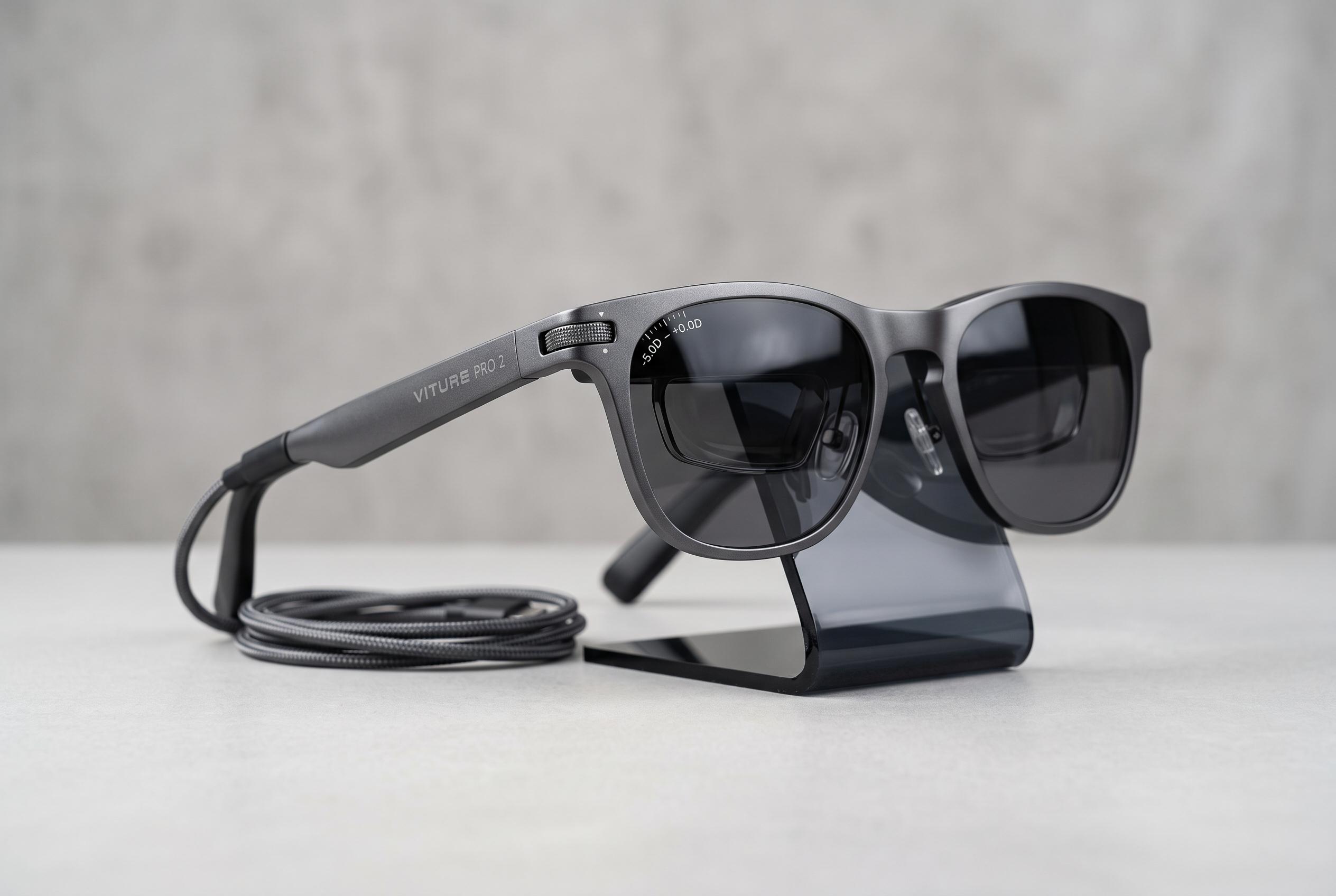
The most immediate improvement is physical. At 63g, the Pro 2 is lighter and thinner than its predecessor, and both Digital Trends and Tom’s Guide point to a more adaptable fit thanks to adjustable nose pads and temple arms. The glasses also look close enough to ordinary sunglasses to avoid drawing attention in public, while the carrying case, cable, lens cover and cleaning kit give the package a more complete feel than the price suggests. Viture has moved to a USB-C connection rather than the proprietary magnetic system used on pricier models, which makes the headset easier to live with.
The key selling point is the built-in diopter adjustment. Instead of forcing short-sighted users to order prescription inserts, the Pro 2 includes independent dials for each eye, covering myopia adjustment from 0 to -5.0D. That is a practical advantage over rivals in the same price band, including Xreal’s competing model, which does not include integrated vision correction. The trade-off is that some users with stronger prescriptions or astigmatism may still need inserts, but for many buyers the built-in focus control removes a costly extra step.
Display performance is where Viture has been most aggressive. The Pro 2 uses Sony micro-OLED panels at 1080p per eye, with a 120Hz refresh rate and a claimed 1,600 nits of peak perceived brightness. Digital Trends said that combination produces a sharp, vivid image with strong blacks, good text clarity and enough brightness for use in bright rooms or near windows. The 50-degree field of view and a reported 146-inch virtual screen make it useful for travel, films and light productivity, although the review also noted slight edge shimmer in spatial mode and the absence of HDR10 support. Geeky Gadgets likewise highlighted the strong brightness and colour performance, while noting that Viture has pared back features such as electrochromic dimming to keep the price down.
Software is the Pro 2’s less polished side. The glasses work as a straightforward external display over USB-C, but Viture’s SpaceWalker app is needed for the more advanced spatial features, including 3DoF tracking, 2D-to-3D conversion and head-tracked playback. Digital Trends said the app remains useful but imperfect, with drift, occasional crashes and some input problems. On Android, Mac and Windows, those features work without extra hardware, but iPhone users need Viture’s adapter, and console owners may need the Mobile Dock, adding to the real cost. Audio is acceptable rather than impressive, with open-ear speakers that are fine for casual use but short on bass and isolation. Even so, the overall result is a capable and unusually affordable pair of XR glasses that prioritise comfort, brightness and ease of use over premium extras.
Disclaimer: This content is intended for informational purposes only. Readers are advised to exercise their own judgement, conduct due diligence, or consult a qualified expert before acting on any information provided.