
From manual speedlights to wireless pocket strobes and Bowens-mount monolights, the best flash depends on workflow, space and consistency rather than headline power.
For product photographers, the most useful flash is rarely the most powerful one. It is the unit that delivers repeatable light, matches the camera system in use, and fits the working space. The roundup published by Modern Meeting Standard reflects that practical reality, separating compact speedlights, portable pocket strobes, monolights and complete studio kits according to how they are actually used in tabletop, e-commerce and still-life work. Related buying guides from ROI Hacks, B&H Photo and other photography sites make the same point: power, control, portability and modifier compatibility matter more than brand prestige when the goal is clean, consistent product images.
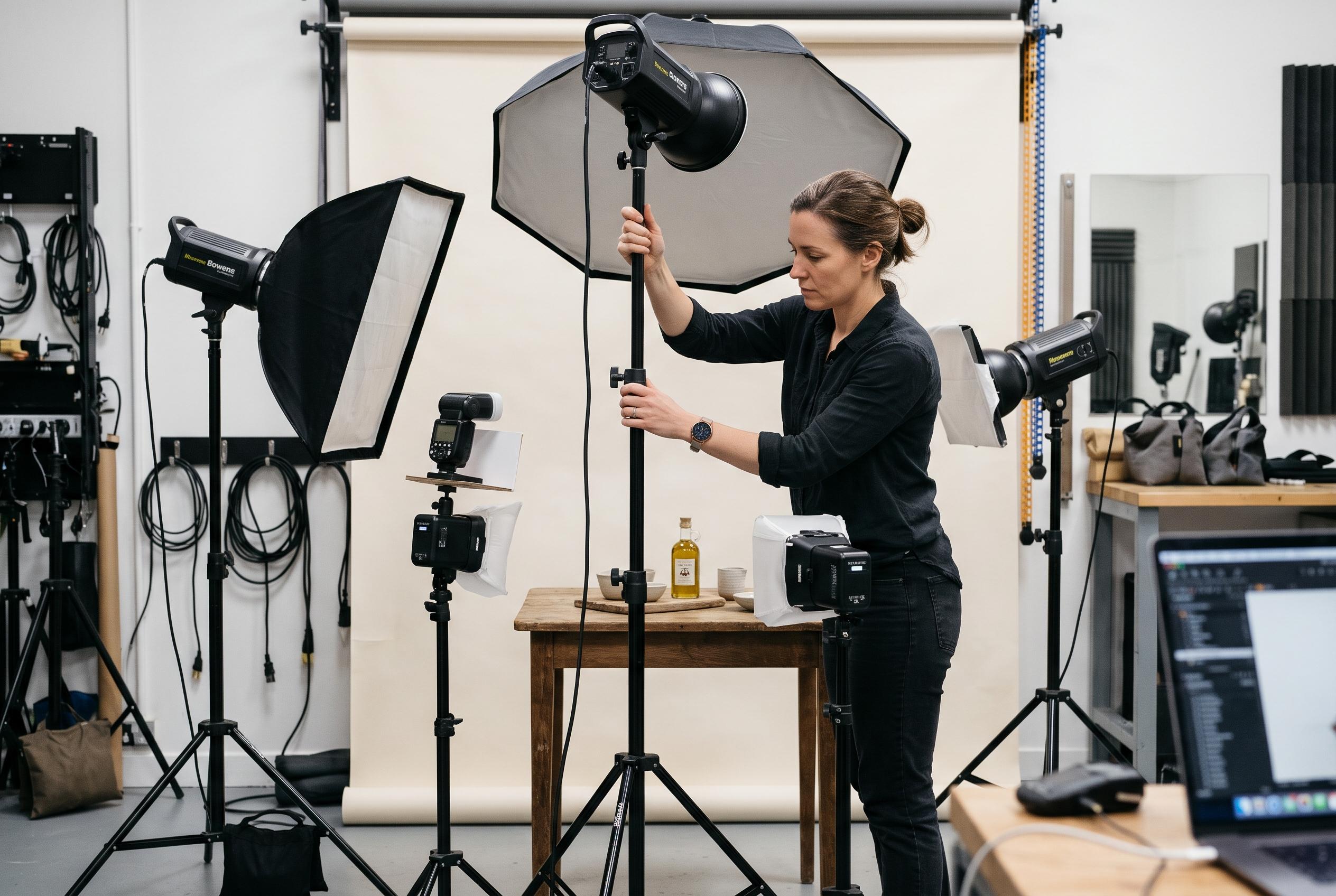
Among the studio-focused options, the Godox MS300V and the Godox K180A kit stand out for photographers who want dependable, mains-powered lighting for controlled indoor sessions. The MS300V is positioned as a compact 300W monolight with a Bowens mount and adjustable modelling lamp, which makes it useful for small studios that need to shape reflections with softboxes, grids or other modifiers. The K180A kit goes further by bundling two 180W lights with stands, softboxes and a trigger, reducing the time and cost involved in assembling a first two-light set-up. Independent studio-lighting guides likewise favour this kind of system for catalogue and e-commerce work, where repeatability is often more important than automation.
For photographers who need mobility, the list gives extra weight to battery-powered flashes with wireless control. The Godox AD200Pro II is the most flexible of the higher-output portable units included, combining 200Ws of power with interchangeable flash heads and TTL support, while the Godox V860III-C and V1-C provide faster handling for Canon users who want rechargeable power and built-in radio control. B&H Photo’s buying guide notes that modern detachable flashes are most valuable when they offer off-camera triggering and high-speed sync, and that point is especially relevant for product photographers who move between ambient light and more carefully staged studio looks.
The more budget-minded choices in the guide make a different trade-off. The NEEWER TT560 and PHOTOOLEX FK310 are both manual speedlights, which means the photographer must set exposure and flash power directly rather than relying on TTL automation. That limitation can be an advantage in product work, where the camera, light and subject often stay fixed for long periods. The FK310 adds a clearer LCD and more granular output steps, while the TT560 offers very broad compatibility and simple off-camera slave use. In practice, these models suit photographers who are comfortable working methodically and who value low cost over advanced automation.
The guide’s high-output manual options are aimed at larger subjects or more demanding modifier use. The NEEWER Q300, with its 300Ws output and Bowens mount, is designed for photographers who need stronger light for larger products, bigger softboxes or outdoor set-ups where ambient light has to be overpowered. That makes it closer to a compact studio strobe than a conventional hot-shoe flash. Similar advice appears in specialist studio-lighting round-ups, which emphasise that product photographers often need enough output to keep aperture, depth of field and diffusion under control without pushing the flash to its limit.
What separates the stronger recommendations from the weaker ones is not only power, but system design. Wireless triggering, battery life, modelling lights and modifier support all affect workflow. TTL is useful when working quickly or when subject distance changes often, but manual control remains preferable for fixed product arrangements, where consistency across a series matters more than automation. That is why the guide divides the options sensibly: compact manual flashes for low-cost entry, TTL speedlights for flexibility, pocket strobes for more power on location, and studio strobes or kits for repeatable commercial work.
Taken together, the selection reflects a straightforward hierarchy. Small accessories can be lit effectively with an inexpensive manual speedlight. Larger or more polished product campaigns benefit from a battery-powered flash with TTL and wireless control. And dedicated commercial workflows are best served by studio strobes that accept common modifiers and deliver stable output over long sessions. For photographers buying their first serious lighting tool, the most important question is not which flash is strongest, but which one best matches the scale of the product, the available space and the degree of control required.
Disclaimer: This content is intended for informational purposes only. Readers are advised to exercise their own judgement, conduct due diligence, or consult a qualified expert before acting on any information provided.