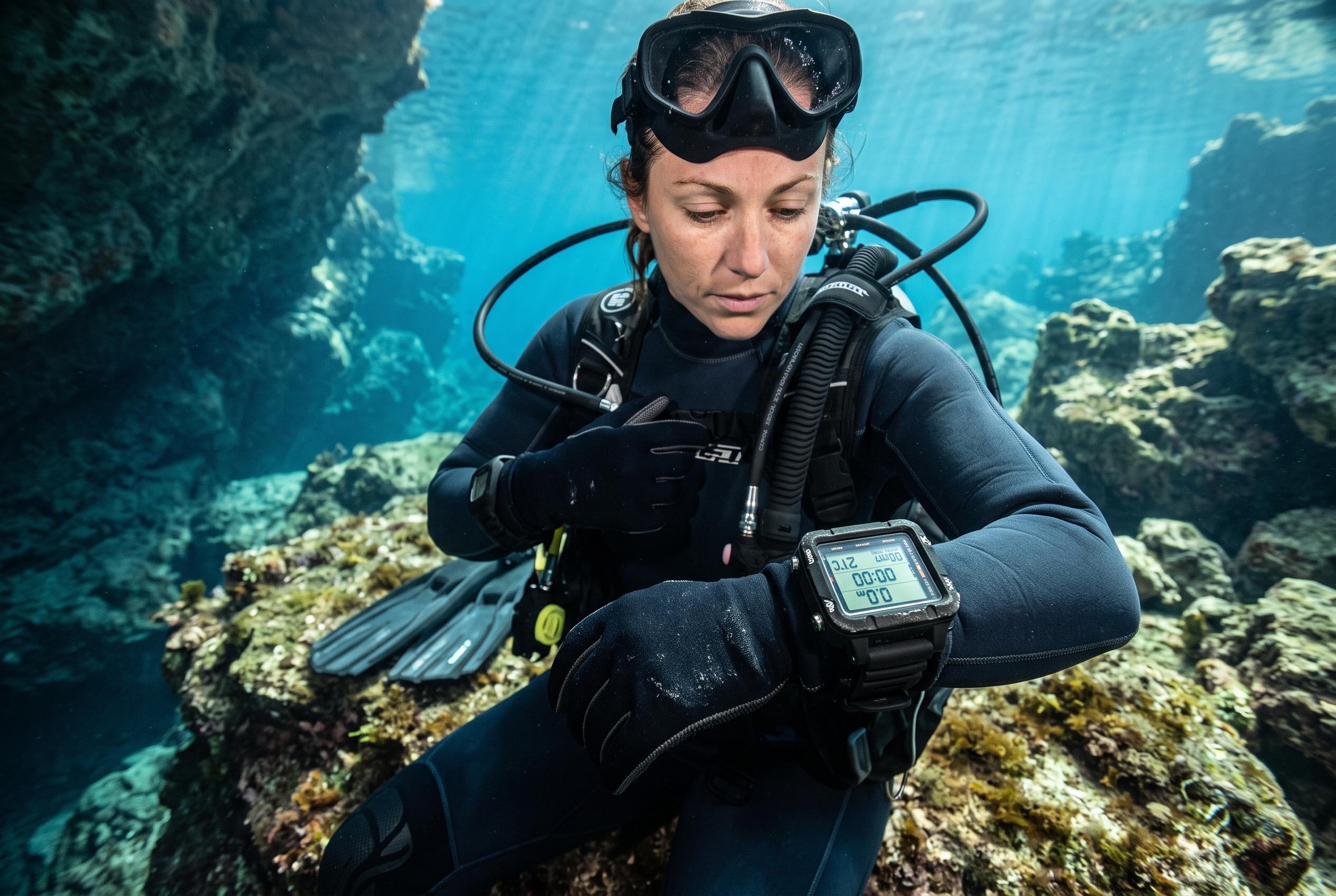

Clear displays, glove-friendly controls and dependable battery life matter more than a long list of features when choosing a dive computer for 2026.
Choosing a dive computer is less about buying the most feature-rich model and more about finding one that matches the way you actually dive. Across the current market, the main decision points are still the same: how easy the screen is to read underwater, whether the controls work with gloves, whether you need air integration, and whether you prefer a replaceable battery or a rechargeable one. Several buying guides aimed at divers in 2026 converge on that basic approach, arguing that the best computer is the one that supports your diving style without adding needless complexity.
For most recreational divers, the starting point is the display and the user interface. Readability matters more than novelty, particularly in low visibility or when the mask fogs up. Guides from Dive Addicts and Scuba.org both place clear screens and simple operation near the top of the list, while The Dive Warehouse notes that display type remains one of the main differentiators in the market, from basic monochrome LCD units to brighter colour and AMOLED models. If you dive in warm water, a simple interface may be enough; if you expect to progress into more demanding diving, a clearer display and more flexible menu system can become more valuable over time.
The next question is whether the computer should sit on the wrist or live in a console. Wrist units are now the default for many divers because the information is always visible and the computer moves with you rather than hanging from a hose. Console-style units still have a place, especially for divers who prefer a more traditional setup or want depth and pressure information grouped together. Buying guides also stress the importance of trying the unit with the exposure protection you actually use. A strap that fits a thin summer suit may feel useless over a drysuit sleeve, and that practical detail is easy to overlook until you are standing in a shop.
Air integration is one of the most common upgrade decisions, but it is not essential for everyone. It links a transmitter on the regulator to the computer so tank pressure appears on the same screen as depth and no-stop time. That can be convenient, and for some divers it reduces clutter. However, the guides make clear that this feature adds cost and sometimes complexity, because the transmitter is often sold separately. For single-cylinder recreational diving, a standard analogue pressure gauge can still be perfectly adequate. The feature becomes more attractive for divers who use multiple cylinders, sidemount, or more advanced gas planning.
Algorithm choice is another specification that matters more than many buyers realise. Several of the 2026 guides mention Bühlmann ZHL-16C as a common standard, alongside RGBM in some models, and they explain that these are the mathematical models the computer uses to estimate tissue loading and ascent limits. The practical point is not to become an expert in decompression theory, but to understand that conservatism settings, gradient factors and gas handling can vary between units. That is why many advisers recommend choosing one computer, learning how it behaves, and avoiding unnecessary changes to the default settings unless you are working with a dive professional.
Battery type, gas support and connectivity should then shape the final choice. A rechargeable unit can be convenient for regular use, but a user-replaceable battery may be more practical for long trips or liveaboards where charging opportunities are limited. Nitrox support is now close to standard, but the number of gases a computer can store still differs widely, which matters if you plan to move towards decompression, trimix or freediving. Bluetooth syncing, logbook apps and firmware updates are useful, but they are secondary to core functions. The most sensible buying advice across the sources is consistent: set a realistic budget, prioritise readability and usability, and treat extra features as worthwhile only when they fit your diving rather than the marketing brochure.
Disclaimer: This content is intended for informational purposes only. Readers are advised to exercise their own judgement, conduct due diligence, or consult a qualified expert before acting on any information provided.