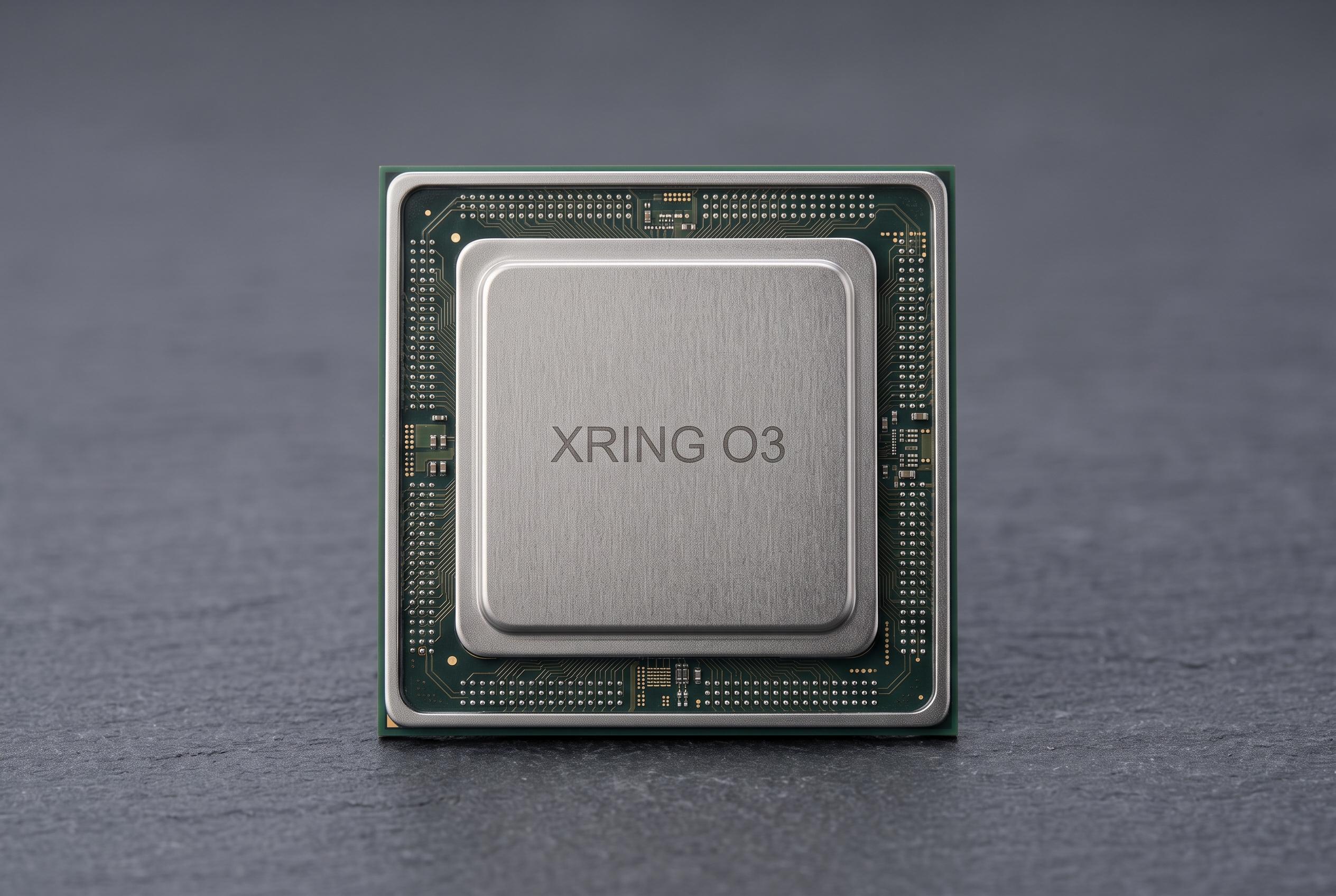

Xiaomi has unveiled its most aggressive mobile chip yet, the XRING O3, signalling a significant leap forward in performance and design that challenges established flagship processors for the 2026 cycle.
Xiaomi’s XRING O3 has emerged as one of the most aggressive mobile chip designs yet seen, according to a deep-dive by the YouTube channel Geekerwan and later reporting on the same silicon. The chip has been positioned as a direct challenge to the next wave of flagship processors expected in 2026, with Xiaomi skipping the O2 name and moving straight to O3. That choice underlines the company’s intent to signal a leap rather than an incremental update.
The design is notable first for its scale. Geekerwan said the development version already exceeds 130 square millimetres before baseband integration, making it larger than Qualcomm’s Snapdragon 8 Gen 5 and MediaTek’s Dimensity 9500 in the comparisons cited. The processor uses TSMC’s N3P node, but Xiaomi has reportedly leaned on metal-layer optimisation to compact the layout and improve circuit density. The CPU side adopts a 10-core configuration with two CE Ultra cores, four CE Premium cores and four CE Pro cores, backed by 16MB of shared L3 cache and 16MB of system-level cache.
Graphics and AI capability are equally ambitious. Reporting from Xenospectrum and other outlets said XRING O3 uses a new 16-core Mali Ultra-based GPU with NX units designed to accelerate tasks such as AI upscaling and frame generation. The chip also includes a redesigned NPU rated at 200 TOPS in INT4 workloads, while memory support extends to LPDDR6. In the test configuration described by Geekerwan, 96-bit LPDDR6-10667 delivered peak bandwidth of 113.8GB/s, giving the GPU a substantial data pipeline. The only clear limitation noted was Xiaomi’s continued use of conventional PoP packaging rather than a more advanced thermal solution.
Early benchmark figures suggest the architecture is delivering on its promises. According to the reports, XRING O3 scored 5,228,014 in AnTuTu V11 and reached 3,945 in Geekbench single-core and 15,221 in multi-core testing. Geekerwan’s SPEC CPU 2026 analysis indicated strong efficiency from the CE Ultra cores, with results said to compare favourably with Qualcomm’s Snapdragon 8 Gen 5 and MediaTek’s Dimensity 9500, and to approach Apple’s A19 Pro in some cases. The CE Pro cores also reportedly pushed beyond 15,000 in Geekbench multi-core testing, while GPU tests such as 3DMark Steel Nomad Light showed performance that was competitive with higher-power laptop and desktop-class parts.
Taken together, the results point to a mobile chip that is less about balancing performance and efficiency in the traditional sense than about overwhelming the usual class boundaries. Even so, the reports also make clear that the gains depend heavily on Xiaomi’s backend design work: cache size, memory bandwidth, layout optimisation and clock management all appear to be doing heavy lifting. If the production version matches the development sample, XRING O3 would give Xiaomi a genuine high-end platform for the 2026 flagship cycle.
Disclaimer: This content is intended for informational purposes only. Readers are advised to exercise their own judgement, conduct due diligence, or consult a qualified expert before acting on any information provided.