
XREAL’s new xbx a01 glasses promise an affordable, lightweight virtual screen, but its real-world usability and comfort raise questions about the future of portable cinema devices.
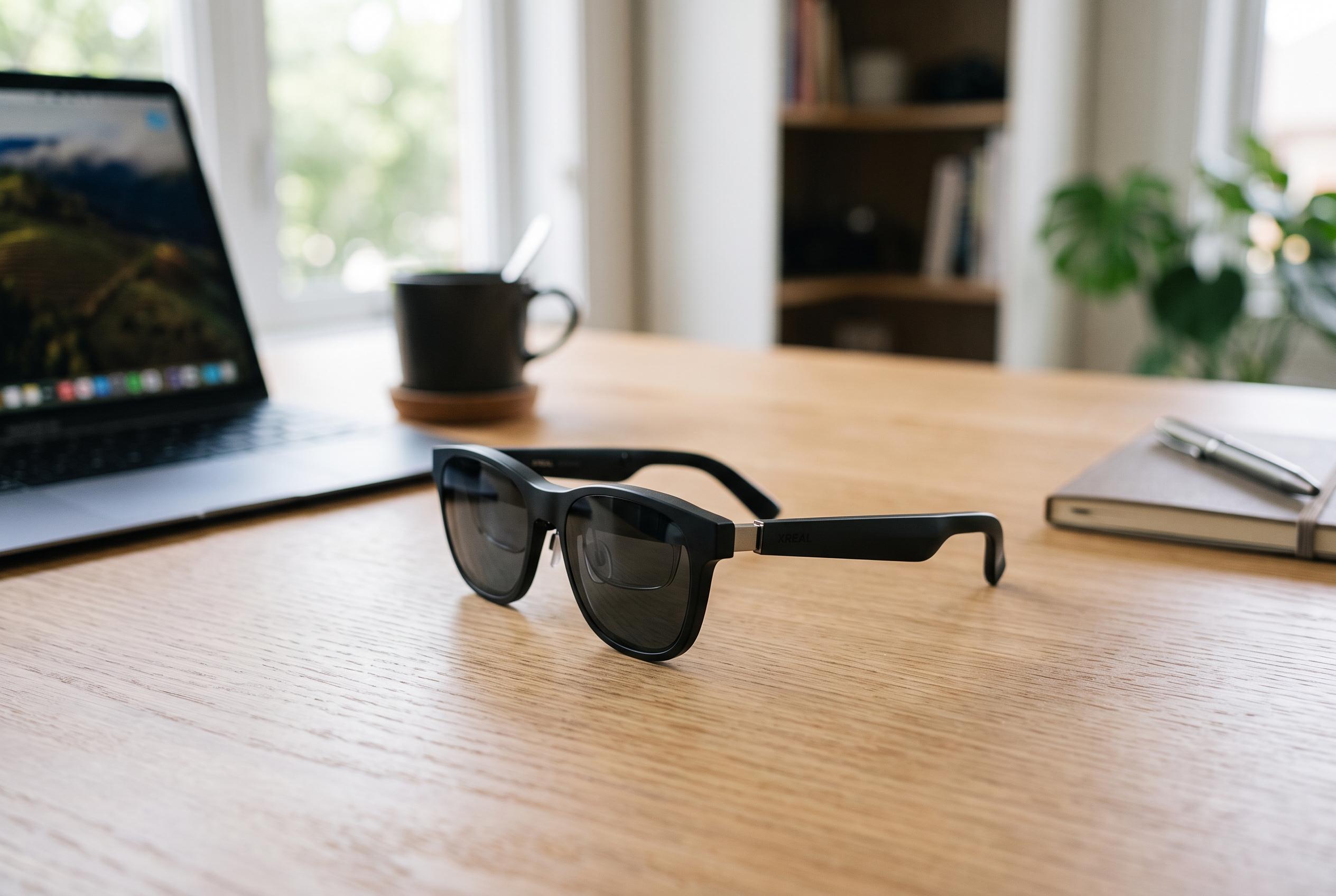
XREAL’s xbx a01 is pitched as an affordable entry into wearable displays, but it works best when treated as a very simple one. The glasses, which cost about $299 in the US, are designed around a single USB-C connection and do not include a built-in battery. In practice, they are meant to act as a portable screen for a phone, laptop, handheld console or PC rather than as a full augmented-reality computer. XREAL says the target use cases include gaming, films and general productivity, with a virtual screen size it places at 147 inches.
For film viewing, the hardware makes a stronger case than the concept does. The glasses use dual micro-OLED panels and, according to XREAL and product coverage from Android Central, can reach up to 1,600 nits of brightness. That produces a sharp, vivid picture that can feel closer to a compact projector than a conventional display, especially in a dark room. The presentation is impressive for a device this light, and at around 62 grams it avoids much of the bulk associated with earlier smart-glasses designs.
Yet the user experience raises a basic question: why watch something on glasses when the same film is already playing on a nearby laptop or phone? TechCrunch’s review found that the a01’s value proposition becomes clearer when the source device is less intrusive, such as on a train or plane, but even then the setup is still largely screen mirroring. The phone or computer must stay active, which undermines the neat idea of a truly standalone viewing system. For anyone hoping to work while wearing them, the glasses are also awkward because the display fills most of the field of view.
There are practical limits beyond the duplication problem. TechCrunch reported that the device warms up noticeably after a short period of use, creating a slight tingling sensation at the bridge of the nose. That is not unique to XREAL, but it is hard to ignore in a product worn directly on the face. The review also noted that the glasses are comparatively comfortable and light, especially when set against heavier smart-glasses models, but comfort alone does not resolve the broader question of whether this format is actually better for movies than a television or tablet.
XREAL appears to recognise those weaknesses. Its next device, Project Aura, is being positioned as a more capable step forward, with Android XR support, native hand tracking and access to Google Play. Unlike the a01, it uses a separate tethered puck for power and computing, which should make it easier to use away from a desk. For now, though, the a01 looks less like a finished answer to portable cinema and more like a useful signpost for where the category may go next: lighter, more capable and less dependent on whatever screen is already in front of you.
Disclaimer: This content is intended for informational purposes only. Readers are advised to exercise their own judgement, conduct due diligence, or consult a qualified expert before acting on any information provided.