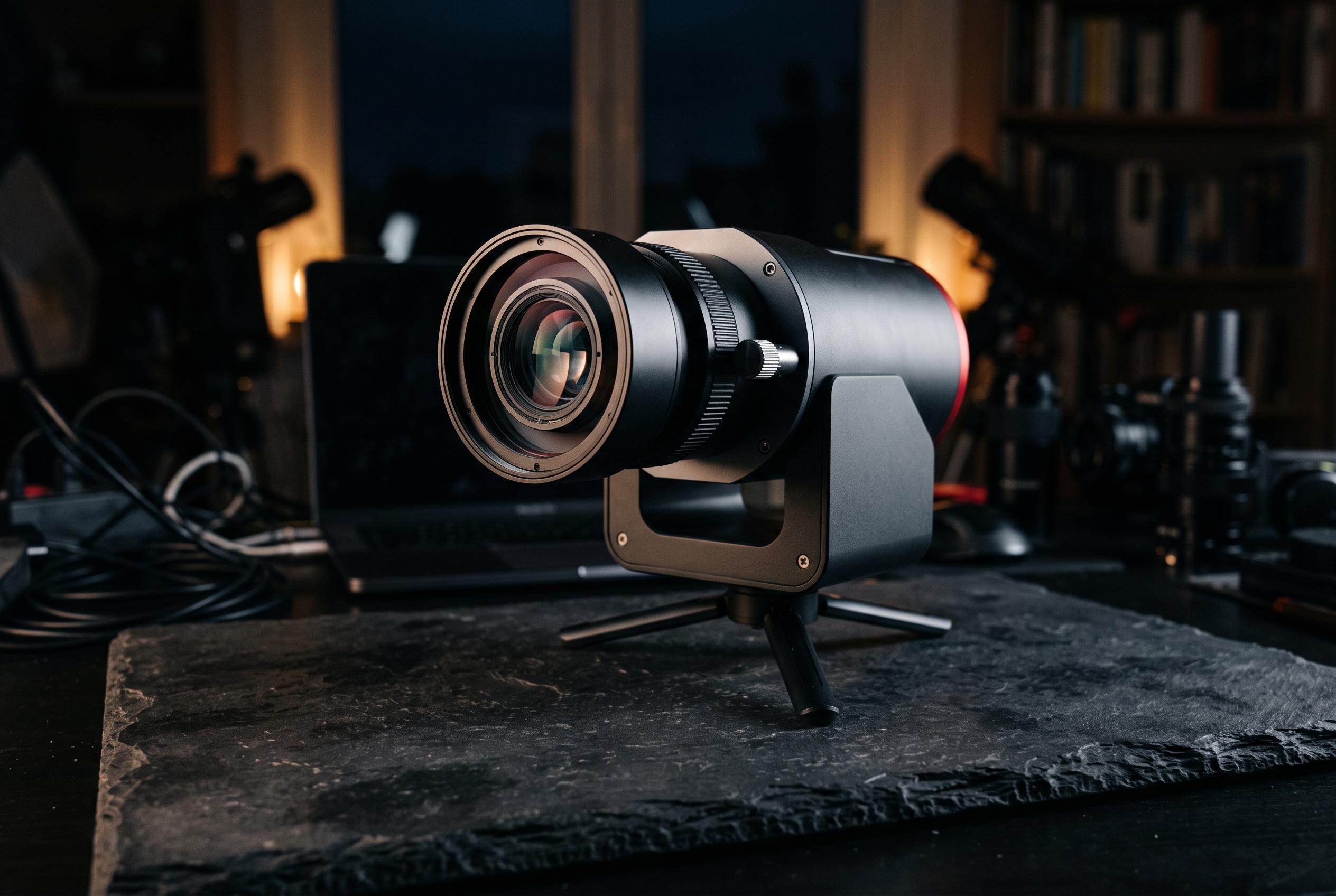

The ZWO Seestar S30 Pro combines sophisticated optics, automation, and portability to lower the barriers for deep-sky astrophotography, targeting both newcomers and experienced stargazers in a rapidly evolving market.
ZWO’s Seestar S30 Pro sits in a narrow but fast-developing corner of astronomy equipment: compact smart telescopes designed to make astrophotography far less technical. In practice, the appeal is obvious. The device combines automated pointing, image stacking and app-based control in a single unit, aiming to lower the barrier for newcomers without making the tool too limited for experienced users. Reviews by Telescope Advisor and other specialist outlets describe it as a value-focused option in a still-small market, with a particular strength in wide-field deep-sky imaging.
The hardware is more ambitious than the usual entry-level package. Smart World reports that the S30 Pro uses a Sony IMX585 sensor behind a four-element apochromatic optic with ED glass, a combination intended to suppress colour fringing and produce sharper star fields. AstroSpecs similarly notes the device’s 30mm aperture and the need for a separate head if the user wants an equatorial setup rather than the standard alt-azimuth arrangement. The telescope’s 4.6-degree field of view is a major part of its identity: it is wide enough to frame large nebulae and galaxies in a single capture, rather than forcing the user into mosaics.
That wide framing comes with clear boundaries. As Smart World points out, the S30 Pro is not designed for planetary work, where much longer focal lengths are needed. Instead, it is aimed at extended deep-sky targets and at users who want the software and optics to do most of the heavy lifting. The review also highlights the built-in filter system, including automatic dark-field and UV/IR cut functions, plus a manually controlled light-pollution filter. Together, these are meant to improve results under suburban skies, where contrast is often the main problem.
The software appears to be one of the product’s strongest arguments. Smart World says the app is arranged in a straightforward way, with a celestial atlas, object data, visibility charts and automatic GoTo alignment using plate solving. That makes the telescope feel closer to an appliance than a traditional observing instrument. T3’s review reaches a similar conclusion, praising the portability and ease of use, while also noting that the interface and automation are central to the product’s appeal for both beginners and more seasoned astrophotographers.
Practical extras matter here as well. Smart World notes that ZWO includes a padded carry case, a compact table tripod and a magnetic solar filter, which proved useful during eclipse testing. The same review also makes clear that users who want longer exposures in equatorial mode must buy the TH10 support separately, although third-party photographic tripods can be adapted with the right mount. That mix of convenience and compromise is typical of the category: the S30 Pro is not a universal telescope, but within its intended scope it offers a well-judged blend of optics, automation and portability.
Disclaimer: This content is intended for informational purposes only. Readers are advised to exercise their own judgement, conduct due diligence, or consult a qualified expert before acting on any information provided.