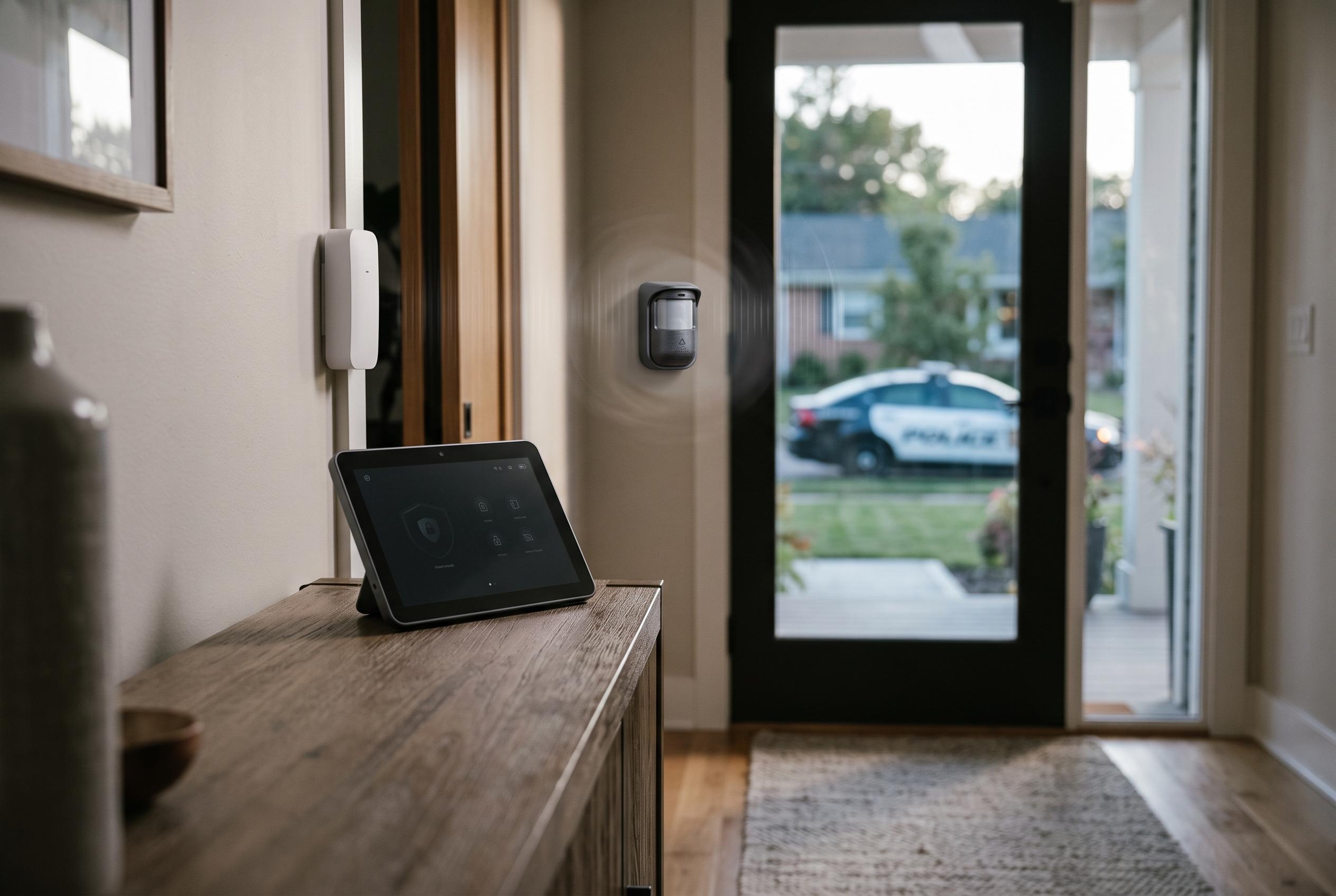

With up to 98% of burglar alarm calls being false, experts emphasise the urgent need for smarter detection systems capable of distinguishing genuine threats from mundane triggers, to reduce costs for police and households alike.
False burglar alarms continue to impose a heavy cost on both police forces and householders. A guide from the US Department of Justice’s Office of Community Oriented Policing Services says 94% to 98% of dispatched burglar alarm calls turn out not to involve a real break-in. It adds that, in some areas, false alarms can absorb 10% to 25% of total police call time, underlining how often scarce public resources are drawn into avoidable responses.
The burden is visible on the consumer side as well. Parks Associates says 62% of security system owners experienced a false alarm in the past year. Among those incidents, the triggers were more often mundane than criminal: pets, wind or even headlights from a delivery vehicle. Nearly half of system owners say their equipment goes off too frequently, suggesting that the problem is not confined to police dispatch data but sits inside the design and use of the systems themselves.
Phoenix offers a useful example of the scale involved. According to figures cited in the article, the city’s police department handled almost 50,000 alarm calls across 2018 and 2019, and fewer than 1,000 were linked to an actual crime. That implies that roughly 98 out of every 100 calls were false. At city level, that translates into large amounts of officer time spent on signals that did not warrant a criminal response.
The core issue is not simply whether cameras or sensors can detect movement. The more difficult task is deciding whether what they detect matters. A system that treats a neighbour walking past, a postman at the door or a pet moving through a room in the same way as a genuine intruder will produce high false-alarm rates, however advanced the hardware becomes. The problem is one of discrimination, not raw detection.
That points to the real engineering challenge: reducing unnecessary alerts by making systems more selective about what constitutes a credible threat. Better image quality or faster processing alone will not solve the issue if every presence triggers the same response. The article argues that progress depends on technology that recognises behaviour as well as presence, so alarms are raised only when conditions more closely match an actual break-in.
Disclaimer: This content is intended for informational purposes only. Readers are advised to exercise their own judgement, conduct due diligence, or consult a qualified expert before acting on any information provided.