
Apple is exploring a sophisticated four-speaker HomePod system with features such as room calibration and content-aware tuning, signalling a potential shift towards high-end home theatre integration , although a launch remains uncertain.
Apple appears to be testing its most ambitious HomePod cinema setup yet: software references in audioOS 27 beta 8 point to a four-speaker arrangement with dedicated front and rear channels, alongside a separate “Party Mode” aimed at ordinary stereo pairs. The important qualification is that this exists only in code. MacRumors, AppleInsider and Gadget Hacks all note that there is still no shipping interface in the Home app or on Apple TV for users to build such a system.
That would mark a clear change in scope for HomePod. Today, Apple’s home theatre mode stops at a single HomePod, a single HomePod mini, or a stereo pair of matching speakers used with Apple TV 4K. Gadget Hacks says the newly spotted files describe a genuine four-channel layout, not simply a louder or wider version of stereo playback, while AppleInsider stresses that nothing currently available to customers alters that limit.
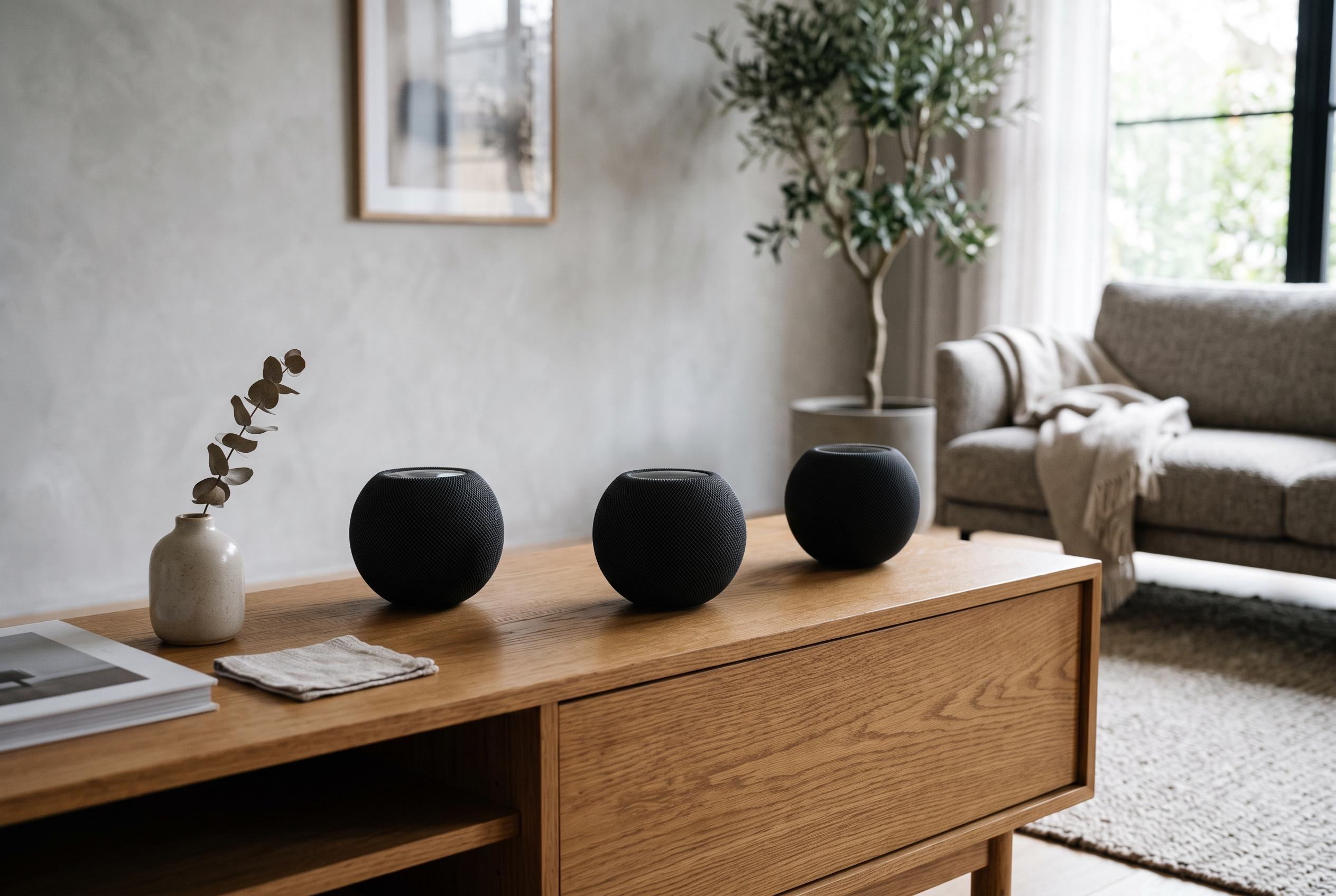
The technical detail suggests Apple is thinking well beyond adding two extra speakers. According to MacRumors and 9to5Mac, the system assigns four second-generation HomePods to front-left, front-right, rear-left and rear-right positions. 9to5Mac says the front pair would use left and right specific processing and compensate for placement near walls or corners, while the rear pair would use a more omnidirectional treatment to fill the space behind the listener. The same reports say Apple is testing automatic room calibration, speaker-position mapping, timing correction, bass management, equalisation, dialogue enhancement and separate tuning depending on whether the content is film or music.
Other references point to decisions Apple has not finalised. Tbreak reports that stereo material could either be spread across all four speakers or left on the front pair only. SoundGuys adds that the code appears to include a low-latency mode, while both SoundGuys and AppleInsider say Siri responses, system sounds and other non-media audio may also be given their own multi-channel treatment. If that survives into a product, Apple would be trying to make wireless speakers behave more like a tightly synchronised AV system than a conventional smart-speaker group.
The separate “Party Mode” appears to solve a different problem. Rather than building a cinema effect, MacRumors, Tbreak and Gadget Hacks describe it as a wider, more diffuse presentation for stereo-paired HomePods, intended to spread sound more evenly through one room instead of creating a single sweet spot in front of the speakers. Gadget Hacks also draws a useful distinction here: this is not the same as Apple’s existing multi-room AirPlay behaviour. In other words, the code suggests a new listening profile for two speakers in one space, not a new way to link speakers throughout a house.
The most intriguing clue may be the hardware Apple seems to be testing behind the scenes. MacRumors and 9to5Mac both say the beta includes a tuning system called Forklift, which pairs two second-generation HomePods with two speakers identified only as AID12007. SoundGuys says the same code also mentions an “SUV” arrangement using those unknown rear speakers. Because that identifier does not match any current HomePod, several outlets suggest it could refer to a future HomePod mini, a third-generation HomePod or another audio product entirely. AppleInsider and Gadget Hacks both caution, however, that there is still no evidence the existing HomePod mini is intended to act as a rear channel in this setup.
That uncertainty matters because the software evidence does not yet answer the basic buying question. AppleInsider says there is no sign that these features are tied to the public audioOS 27 release, and 9to5Mac notes that Bloomberg has separately reported work on a new HomePod mini and a new full-size HomePod, though the larger model is not thought to be close. 9to5Mac also points out that the current full-size HomePod first shipped in February 2023, which means Apple’s speaker range is due for a broader update whether or not this surround system appears soon.
For now, the sensible reading is that Apple is actively experimenting, not that a launch is imminent. Gadget Hacks is blunt that buying a third or fourth HomePod solely for surround sound would be premature, and that is hard to dispute when there is no supported setup flow, no device list and no announcement from Apple. Even so, the direction of travel is notable. If Apple can deliver a four-speaker wireless system with reliable timing, room correction and content-aware tuning, it would move HomePod from being an elegant television add-on towards becoming a serious alternative to soundbars and compact surround packages.
Disclaimer: This content is intended for informational purposes only. Readers are advised to exercise their own judgement, conduct due diligence, or consult a qualified expert before acting on any information provided.