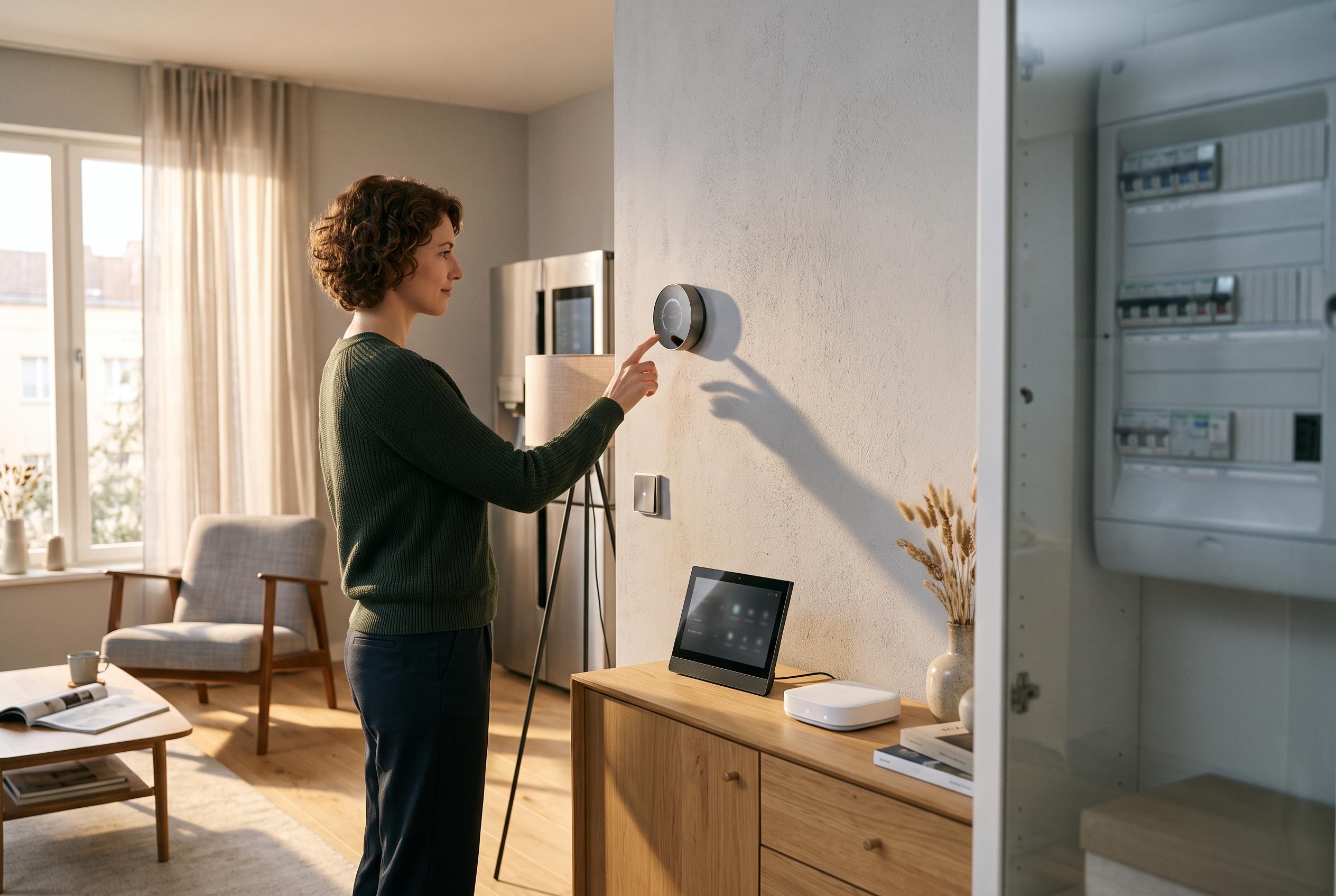

Leaked code suggests Apple is broadening its smart home ambitions by developing a ‘second-party’ accessory category, partnering with brands like LG and Schneider to create a curated network of integrated home devices beyond its own hardware.
Apple’s smart home plans appear to be widening beyond its own branded hardware and a previously reported LG tie-up. Code in iOS 27.2 points to a new set of Home accessories tagged as “second-party”, suggesting Apple is creating a class of products that sit between its own devices and ordinary third-party accessories. The designation appears to give these products special treatment inside the operating system, although Apple has not publicly explained exactly how that works.
Until now, the clearest evidence had centred on LG-branded accessories that Apple is believed to have co-developed for the Home ecosystem. Leaked images have already shown a smart lock, thermostat, temperature sensor, security cameras and a video doorbell, all of which are expected to ship under LG branding rather than as Apple products. That points to a strategy in which Apple broadens Home compatibility by working closely with outside manufacturers rather than bringing every device in-house.
The new finding suggests the effort is not limited to LG. According to the developer and leaker known as pdfu, iOS 27.2 also contains evidence of two Schneider-branded products carrying the same “second-party” label: a Home smart thermostat and a Schneider Electric temperature and humidity sensor. In the code, only the thermostat appears to have placeholder setup assets, and those assets mention proximity settings, which may hint at how the device is meant to behave during initial configuration or in everyday use.
If accurate, the discovery would imply a broader Apple strategy for the home market than previously understood. Rather than relying only on its own hardware launches, Apple appears to be building a curated network of closely integrated accessories from selected partners. That could help it offer a wider range of home products while still keeping a tighter level of control over setup, compatibility and system behaviour than it would with standard accessories. For now, however, the evidence remains rooted in leaked code and images, so the practical scope of the programme is still uncertain.
Disclaimer: This content is intended for informational purposes only. Readers are advised to exercise their own judgement, conduct due diligence, or consult a qualified expert before acting on any information provided.