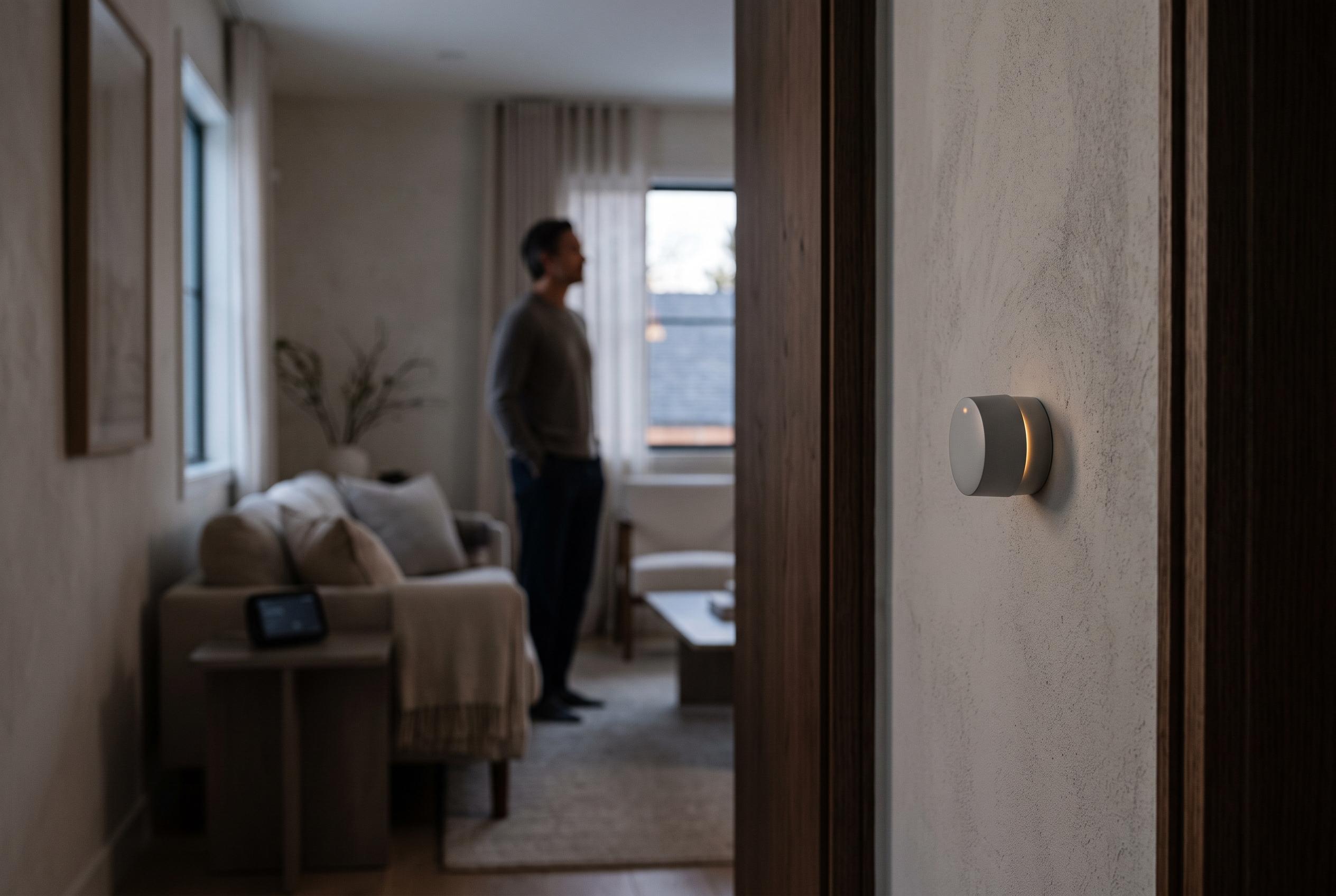

Apple is developing an AI-driven home security device that avoids traditional video recording, emphasising privacy and scene understanding through on-device analysis, signalling a disruptive shift in smart home technology.
Apple is moving towards a new class of home device that would not behave like a conventional security camera. According to reporting from Bloomberg, the company is developing an AI-driven home-security product that would sit alongside a wider push into smart displays, robotics and a redesigned Siri. The device is said to be aimed at understanding what is happening in a room without storing standard video footage, a direction that places privacy at the centre of Apple’s design pitch.
The latest descriptions suggest a compact sensor, rather than a typical camera, with low-resolution and low-frame-rate imaging used to feed on-device AI analysis. That would allow the system to identify activity, people or objects, while avoiding the kind of continuous video capture used by mainstream smart-home rivals. Recent reporting from The Apple Post said the device will not record video at all, instead analysing its surroundings and generating activity summaries. Apple appears to be pursuing a similar logic to the company’s broader “Visual Intelligence” approach, which relies on interpretation rather than traditional media storage.
This effort also fits into Apple’s wider smart-home roadmap. Bloomberg reported last year that the company was working on a range of AI products, including a tabletop robot, a smart speaker with a display and home-security cameras, with the display-equipped speaker expected as an entry-level home product. MacRumors later reported that Apple was testing a small sensor codenamed J450, described as a hybrid HomeKit camera and room sensor with facial recognition and infrared capability to determine who is present. That points to a system designed less for filming and more for presence detection and scene understanding.
The privacy challenge, however, is obvious. Apple has already stressed in support material for its newer watch features that audio and sensor data are handled inside a secure enclave, and that no raw audio is saved or synced. The company says users control what is retained, and that any saved text can be end-to-end encrypted when iCloud and two-factor authentication are enabled. Apple is likely to lean on the same security framing for its home devices, but the comparison with Microsoft’s withdrawn Recall feature shows how quickly AI-powered capture systems can trigger concern when they seem too invasive. The key question is whether Apple can persuade users that a device which watches activity without “recording” is materially different from a camera in the room.
Disclaimer: This content is intended for informational purposes only. Readers are advised to exercise their own judgement, conduct due diligence, or consult a qualified expert before acting on any information provided.