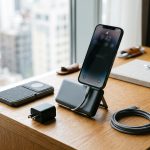
Aqara’s H2 EU smart plug combines connectivity options and energy monitoring, transforming a simple outlet into a versatile automation tool and a window into household power use, with implications for both existing Aqara users and the broader smart home market.
Aqara’s H2 EU smart plug is a reminder that a seemingly simple accessory can become useful once it is properly integrated into a home system. In the UK and European market, Aqara has positioned the device around two connectivity paths: Matter over Thread for direct use with major platforms, and Zigbee 3.0 for deeper Aqara-led automation. The plug is rated at up to 16A, or 3680W, and includes energy monitoring, overload protection and an RGB status light that can reflect power use at a glance, according to Aqara’s launch details and subsequent coverage.
That flexibility matters because it changes how the plug is deployed. In Matter over Thread mode, it can join ecosystems such as Apple Home, Google Home and Alexa without an Aqara hub, provided the household already has a Matter controller and a Thread border router. In Zigbee mode, it sits inside Aqara’s own ecosystem and can expose more advanced controls through the company’s hub, a distinction that reviewers have highlighted as one of the product’s main strengths.
The practical appeal lies less in switching appliances on and off than in the visibility it gives over electricity use. The plug records consumption data over time and uses its light to provide immediate feedback, which can help households identify devices that draw power continuously, even when they appear to be idle. That makes it useful for items such as televisions, broadband equipment, small heaters and chargers, where standby consumption or short bursts of heavy use are easy to overlook until they appear in the app.
Aqara has also built in scheduling and timer controls, which turn a basic outlet into a modest automation tool. Users can set the plug to cut power at a fixed time, run for a defined period, or switch off automatically when draw falls below a threshold. PCWorld noted that this makes the device particularly attractive for households already invested in Aqara’s hub-based ecosystem, although it also flagged the price and the size of the unit as possible drawbacks compared with cheaper alternatives.
There is, however, one point that merits clarity. Some online discussion around Aqara’s H2 family has mixed up the smart plug with the separate wall outlet version, and one user review of the socket variant complained that it was Zigbee-only and did not offer Matter over Thread. That criticism appears to concern a different product category, but it underlines a broader issue with Aqara’s naming: buyers need to check the exact model before assuming all H2-labelled devices share the same feature set.
Seen in context, the H2 EU is less about novelty than about consolidation. Aqara is trying to make a single accessory work in both a standalone Matter setup and a fuller proprietary system, while also tying it into a wider range of sensors, cameras, locks and climate products. For households already using Aqara hardware, that coherence is its strongest argument. For everyone else, the case rests on whether energy monitoring, scheduling and Thread support justify paying more for a plug that is aimed as much at automation as at simple power control.
Disclaimer: This content is intended for informational purposes only. Readers are advised to exercise their own judgement, conduct due diligence, or consult a qualified expert before acting on any information provided.