
A privacy-focused system combining radar, thermal sensors and smart plugs could identify emergencies and gradual health changes while helping older people remain independent at home.
Older people may soon be able to live independently for longer with the help of a new home monitoring system developed by Nottingham Trent University, which aims to detect changes in health and routine without relying on intrusive cameras or wearable devices.
The research, carried out with Integrated System Technologies Ltd, combines millimetre-wave radar, thermal sensors and smart plugs into a low-cost platform designed to track everyday activity while preserving privacy. According to the study published in Sensors, artificial intelligence is used to merge the data streams and identify patterns that could indicate a fall, a cardiac event, a stroke or another serious medical problem. Dr Yangang Xing, the lead researcher from NTU’s School of Architecture, Design and the Built Environment, said the technology is intended to support the growing number of older adults who want to remain in their own homes rather than move into residential care.
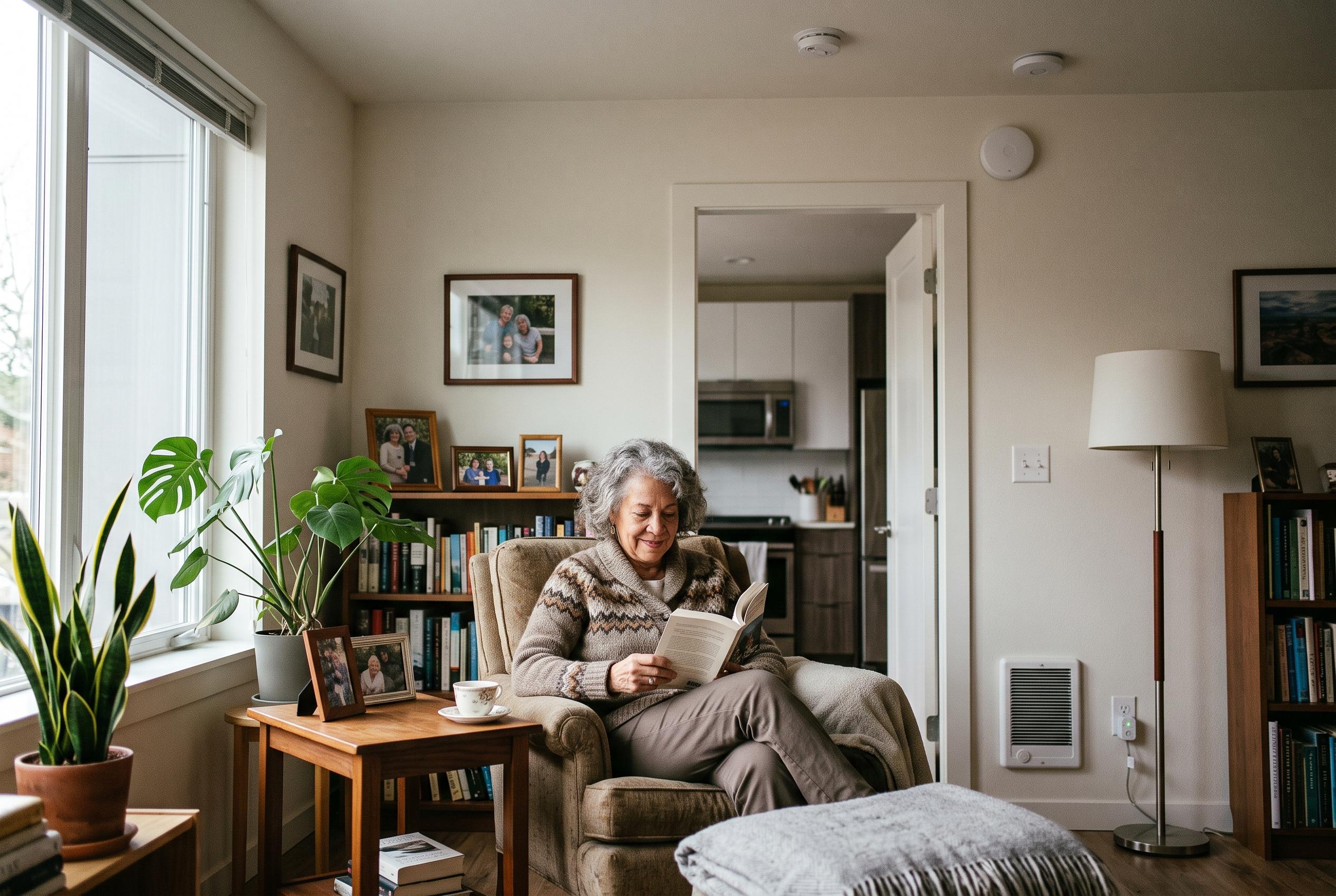
The system is designed around discreet ambient sensing. Radar units placed around a property monitor movement; thermal sensors register posture and basic motion such as sitting, standing, walking and lying down, while deliberately avoiding identifiable facial detail; and smart plugs record appliance use linked to daily tasks, such as making tea, preparing food or spending time at a desk. The thermal images are intentionally low-resolution and highly pixelated, reducing the risk of exposing personal identity.
The researchers say the software learns a resident’s normal behaviour over time and can then flag unusual changes. That could include an emergency event, but also slower shifts such as reduced mobility, altered sleep patterns or a break in routine that may suggest declining health. If the system detects a possible emergency, it can alert care professionals or relatives so that the person can be checked remotely or in person.
To test the approach, the team built a mock home environment with six room layouts, including bedrooms and living spaces arranged with different furniture configurations. They then recorded a series of activities to measure how accurately the system identified movement and posture. The results suggested that the combined sensor set performed better than any of the technologies used alone, reinforcing the value of a multimodal approach.
Integrated System Technologies’ chief executive, Dr Geoff Archenhold, said the platform could become part of an ambient assisted living model in which homes quietly monitor well-being in the background and warn carers when behaviour changes. He said shifts in mobility, prolonged inactivity, disturbed sleep or the absence of ordinary household routines could all point to emerging concerns. In his view, the long-term value of the technology is that it may allow older people to remain at home with more confidence, while still feeling protected.
Disclaimer: This content is intended for informational purposes only. Readers are advised to exercise their own judgement, conduct due diligence, or consult a qualified expert before acting on any information provided.