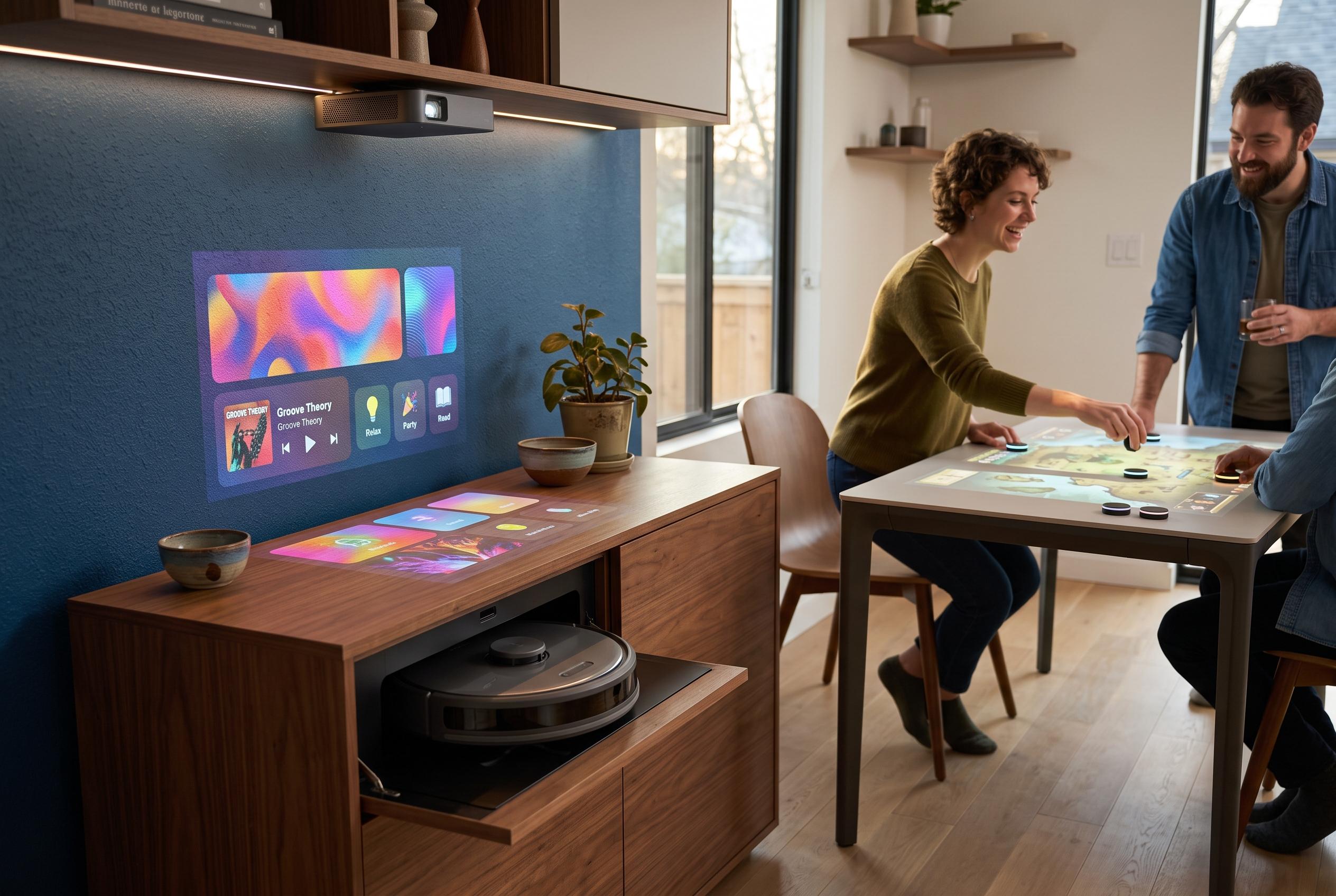

From concealed robot vacuum docks to projection-based control panels and interactive board game setups, these playful automations aim to enhance the style and fun of smart homes rather than their practicality.
Some Home Assistant projects solve a real household problem. Others are built because they are clever, theatrical and a little unnecessary. This weekend’s best ideas sit firmly in the second camp: they will not transform a smart home, but they can make one feel far more polished.
One example is a concealed docking bay for a robot vacuum. How-To Geek noted that the appeal is not just tidiness but convenience, with the cleaner hidden away until it is needed. A more detailed build published by Helletec shows how the idea can work in practice: an ESP32 running ESPHome controls the garage, while servos, indicator lights and sensor switches manage a hinged gate that opens for cleaning and closes again when the robot returns to charge. It is an elaborate answer to a small problem, but one that can keep a dock from being knocked out of place and can make the whole setup look much neater.
Another project swaps the familiar wall tablet for a projected dashboard. Home Assistant already supports casting dashboards to Chromecast-compatible devices, and its Cast integration can send a specific view to a chosen screen. The Area Card also gives users a cleaner way to organise controls by room, which suits a kitchen display well. In the version highlighted by How-To Geek, a small Android DLP projector throws the interface on to a pale cabinet surface, turning the worktop into a temporary control panel. The result can show timers, media controls, recipes and household information, then disappear completely when the projector is switched off.
The most niche idea is also the most playful: linking Home Assistant to the state of a board game. How-To Geek described a Frosthaven setup in which reed switches, an ESP32 and ESPHome track the position of elemental markers on a 3D-printed board. Home Assistant then changes lights and sound effects to match the game state, with fire, for example, triggering orange flicker and crackling audio. It is hardly essential, but it is a neat demonstration of what Home Assistant can do when physical objects and automation are tied together.
Disclaimer: This content is intended for informational purposes only. Readers are advised to exercise their own judgement, conduct due diligence, or consult a qualified expert before acting on any information provided.