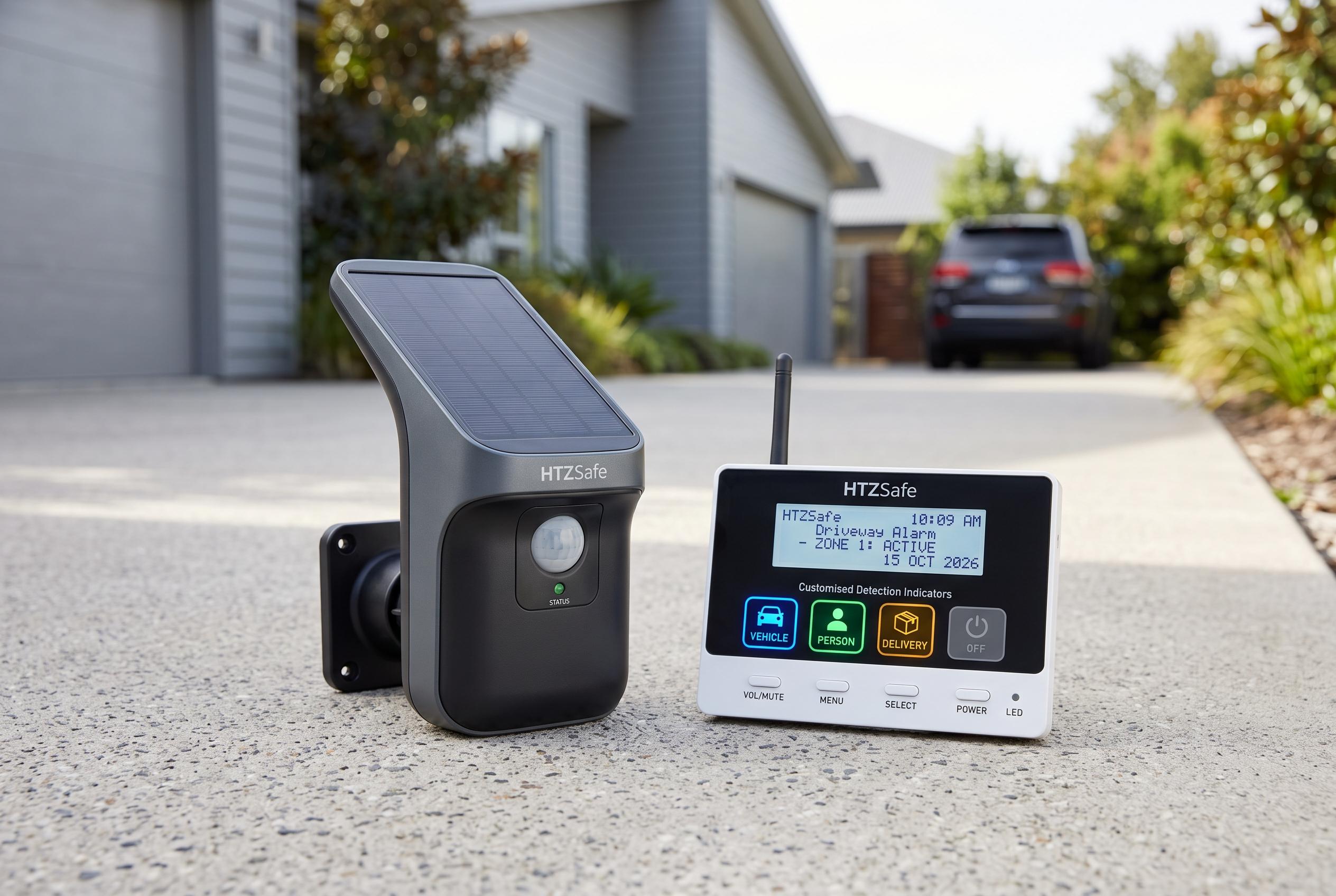

As the demand for reliable and low-maintenance driveway alerts grows in 2026, homeowners are prioritising systems that combine dependable detection, ease of installation, and energy efficiency , with the HTZSafe kit leading the way.
A driveway alarm can be a useful layer of home monitoring, giving households advance notice when a vehicle or person approaches the property. The best systems are not the most complicated; they are the ones that combine reliable detection, clear alerts and installation that does not become a burden. Reviews from Bob Vila, SafeWise and other home-security guides all point to the same practical priorities: range, power source, alert style and ease of setup matter more than marketing claims.
Among the strongest options in current roundups is the HTZSafe kit, which Bob Vila and Yahoo’s home-security coverage both highlight for its dependable detection, multiple sound choices and broad usefulness on larger properties. The appeal of this style of alarm is straightforward: it can cover a driveway, porch or gate with little configuration, while still allowing expansion when a home needs more than one sensor. For families that want a simple first line of warning, that mix of reach and flexibility is hard to ignore.
Solar-powered systems are also prominent in 2026 comparisons. SpruceRank and SafeWise both emphasise low-maintenance designs such as the eMACROS and other wireless solar alarms, which reduce the need for routine battery changes while still providing long-distance coverage. That makes them attractive for larger or more exposed properties, although real-world performance still depends on terrain, walls and tree cover. In practice, the best solar unit is the one that keeps working without creating extra chores.
The underlying sensor type matters just as much as the power supply. Silent Security explains that PIR motion sensors are versatile but can be triggered by movement you may not care about, while magnetic probe systems are better when the main concern is vehicle traffic. Pressure and break-beam options have their own uses, but they are less common for typical homes. That distinction is important because a family wanting alerts for every visitor needs a different setup from one that only wants to know when a car enters the drive.
That is why installation guidance is as important as product selection. Bob Vila and Yahoo both note that false alerts are often a placement problem, not a product failure, and SafeWise similarly stresses matching the sensor to the property. A clear line of sight, careful sensitivity settings and sensible mounting height can make a major difference. For long driveways, the advertised wireless range is only a starting point; the layout of the property decides how well that range holds up.
For most households, the best choice is the one that fits the property and the type of warning you actually need. A plug-in receiver with weather-resistant sensors suits easy indoor alerts. A solar model is better when upkeep must be minimal. A vehicle-specific system makes sense when the goal is to cut down on nuisance triggers. The common thread across the 2026 buying guides is simple: driveway alarms work best when they are chosen for real conditions, not just listed range.
Disclaimer: This content is intended for informational purposes only. Readers are advised to exercise their own judgement, conduct due diligence, or consult a qualified expert before acting on any information provided.