
Embedded SIM (eSIM) technology offers a vital fallback for smart home devices, ensuring continuous operation during network failures, especially for security and safety equipment. As compatibility and deployment evolve, test routines become essential for reliable remote management.
For smart home owners who travel, the real test of connected devices is not whether they work in the house, but whether they still work when the home network does not. Cameras, alarms, thermostats and locks are only useful at a distance if alerts and commands still get through. That is why a cellular fallback can matter as much as the devices themselves.
An embedded SIM, or eSIM, offers one way to build that fallback. Digi International says eSIM is built into the device and can be managed remotely, removing the need to swap physical cards. Eseye and Simplex Wireless describe the same model for IoT equipment, with carrier profiles provisioned digitally and updated over the air. In practical terms, that makes eSIM suitable for installations that are hard to reach, expected to run for long periods, or left unattended.
The strongest case for eSIM is not in everyday gadgets but in equipment that must stay reachable during an outage. RouterStore says eSIM routers are widely used in industrial and IoT settings because they support remote provisioning and can keep devices online without removable SIM cards. Mouser notes that embedded SIM modules such as STMicroelectronics’ ST4SIM-300M are designed for connected devices including surveillance systems, smart meters and other remote nodes. For home users, the same logic applies to security cameras, alarm panels, gate controllers and garage-door systems.
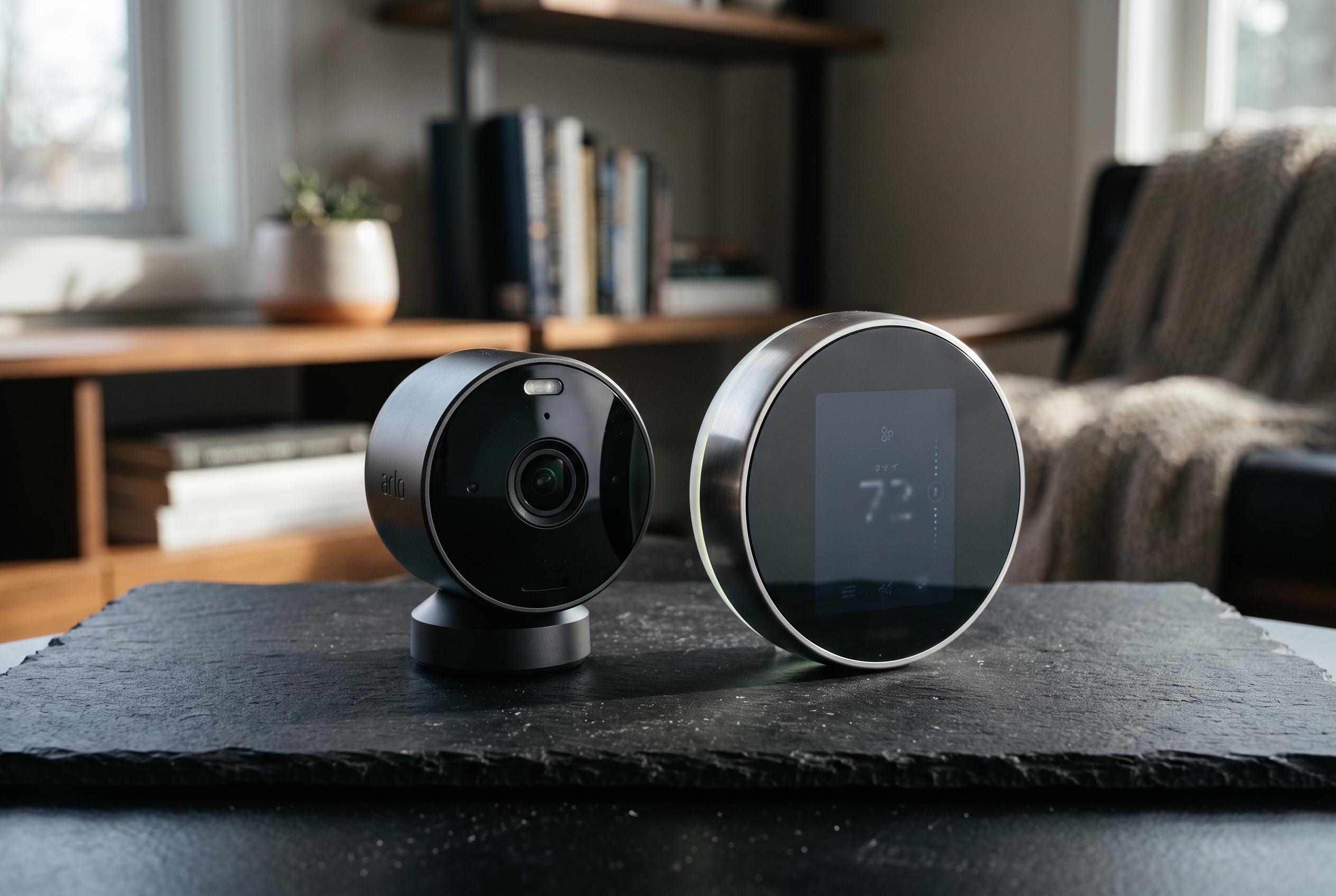
Cellular connectivity is also useful as a backup rather than a replacement. A smart home can run on broadband most of the time, then switch to mobile connectivity if the fixed line fails, provided the hardware supports that handover. That can be particularly important for leak sensors, smoke alarms and motion detectors, where the value lies not in constant streaming but in sending a warning immediately when something changes. It also helps for thermostats and smart locks, where remote status checks and commands can be more useful than continuous data transfer.
The main limitation is compatibility. Not every smart device supports eSIM, and not every plan or network will work with every module. Smart Home Service Pro’s compatibility guide underlines a broader point: residential automation depends on protocol support, hub design and cloud dependence as much as on the connection itself. Before leaving home, it is sensible to test the backup link, check that notifications arrive on time, confirm that the alarm and thermostat respond correctly, and make sure any reserve power supply is charged. In connected homes, reliability is usually decided before the trip begins.
Disclaimer: This content is intended for informational purposes only. Readers are advised to exercise their own judgement, conduct due diligence, or consult a qualified expert before acting on any information provided.