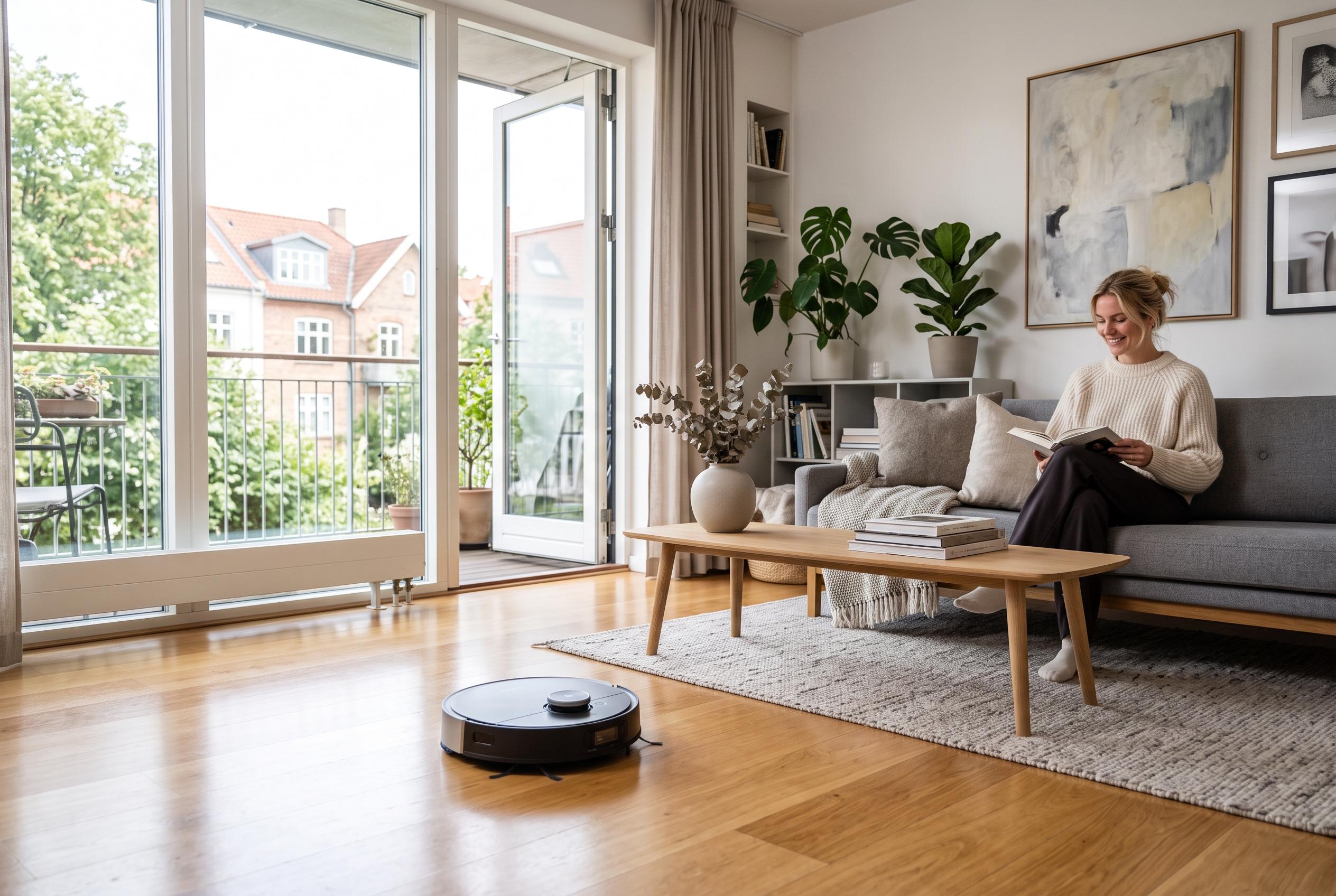

As the US tightens restrictions on Chinese-connected robot vacuums citing security concerns, Europe emerges as a prime market for brands looking to expand, potentially reshaping global competition in smart home devices.
Europe could emerge as the main beneficiary of Washington’s latest move against Chinese robot vacuums. The U.S. government has tightened restrictions on the import of certain advanced connected devices, including floor-cleaning robots that use sensors, navigation systems and internet links. According to Tom’s Guide and TechRadar, the measures are aimed at national-security and data-security risks, while existing devices already in homes are not affected.
The practical effect is to make it harder for new models from Chinese brands to enter the American market. Reuters has not reported on the measure in the supplied material, but the sources indicate that manufacturers such as Roborock, Ecovacs, Dreame, Xiaomi and Narwal may have to redirect supply to other regions if they cannot sell as planned in the United States. The South China Morning Post said Chinese companies already hold the top five positions in global smart vacuum shipments, led by Roborock with a 21.7% share in the first three quarters of 2025.
That makes Europe an obvious target. The region is already one of the strongest markets for these products, with Chinese brands taking more than 60% of sales in Europe and, in some Western European countries, over 80%, according to the supplied market summaries from Galaxus and Ad Hoc News. With a sizeable installed base, familiar brand names and affluent consumers, Europe offers scale without the same regulatory shutdown now facing the U.S.
For shoppers, the most immediate consequence may be lower prices. Analysts cited in the supplied reports say manufacturers could resort to sharper discounts, bundled accessories, self-emptying docks and longer warranties to move stock quickly. That would intensify competition with Samsung, Dyson and iRobot, the early market leader that has already been squeezed by Chinese rivals. The pressure on iRobot has become more acute after Picea Robotics acquired the Roomba maker, the South China Morning Post reported.
The biggest uncertainty is Brussels. The European Union already has strict rules on cyber-security, personal data, radio equipment and energy efficiency, but Chinese makers are currently selling at scale in the bloc and appear to comply with existing requirements. If the EU were to follow Washington with tougher restrictions, the expansion story could change quickly. For now, however, the balance of risk points the other way: a U.S. clampdown that may send more Chinese robot vacuums towards European shelves.
Disclaimer: This content is intended for informational purposes only. Readers are advised to exercise their own judgement, conduct due diligence, or consult a qualified expert before acting on any information provided.