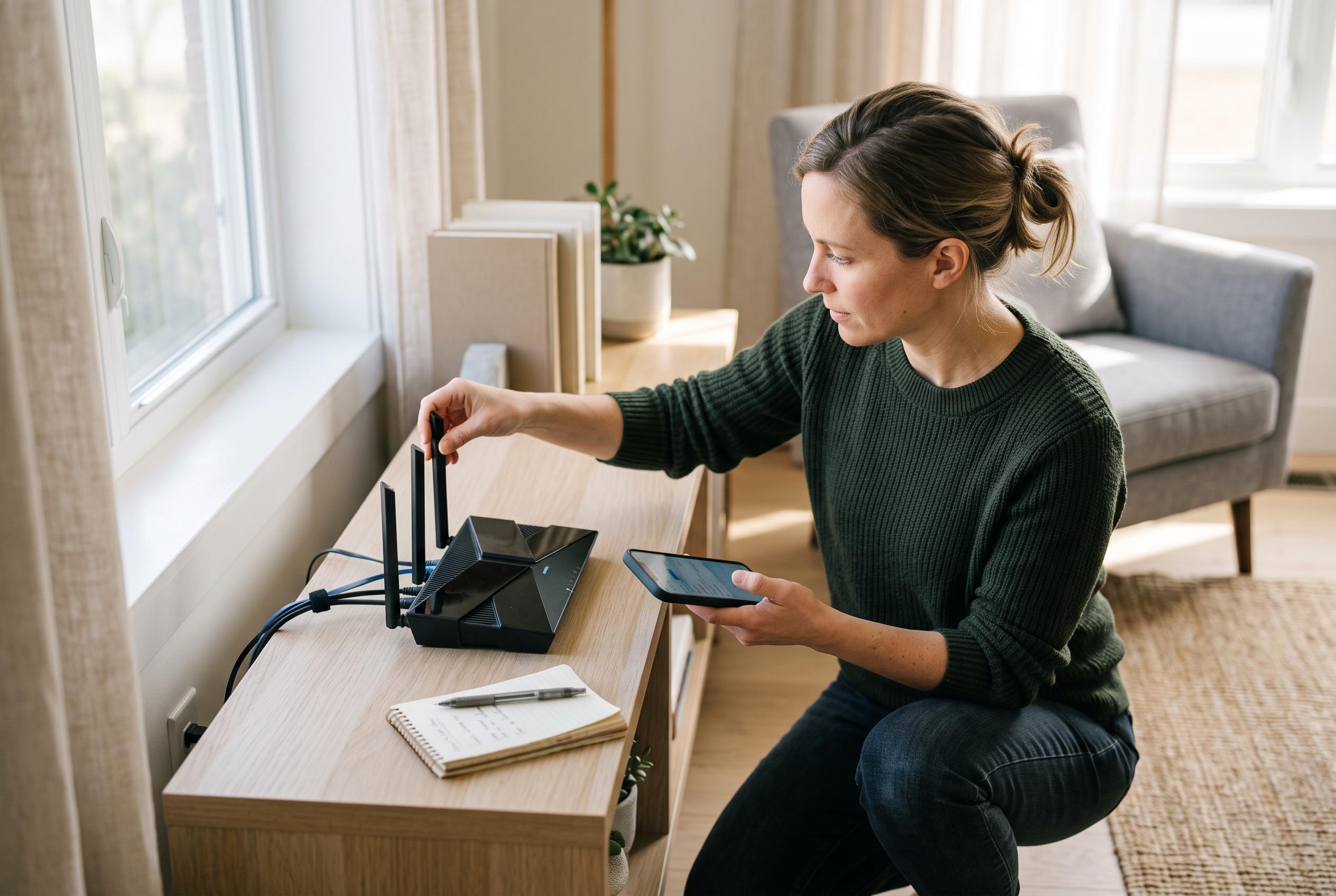

Technical specialists warn that popular social media tips for boosting home Wi-Fi, such as using aluminium foil or hiding routers, are unsupported by science and can worsen signal performance. Instead, expert advice emphasises strategic placement and configuration to optimise connectivity.
Social media continues to circulate quick fixes for weak home Wi-Fi, but many of the most widely shared tips do more harm than good. La Nación says technical specialists are pushing back against a series of viral claims that promise stronger coverage or faster speeds without any real engineering basis. Their main message is simple: wireless performance depends on placement, interference and network configuration, not on internet folklore. According to the report, understanding the difference between radio-frequency behaviour and online myth can save households time, money and frustration.
One of the most persistent claims involves putting aluminium foil behind a router’s antennas. The idea is that metal will bounce the signal into the right parts of the home, but engineers say the effect is far less controlled than the videos suggest. Rather than improving coverage, reflective material can create interference and disturb the link’s stability. Other specialists point in the same direction: routers work best in open, central, elevated positions, away from thick walls, mirrors and other objects that can weaken or scatter the signal. The University of Kent gives similar advice, saying that walls and floors can soften Wi-Fi strength and that central placement remains one of the simplest ways to improve reliability.
Another common mistake is hiding the router inside a cupboard or behind a television to keep a room tidy. That may suit the décor, but it usually reduces wireless range and can trap heat, which is unhelpful for the hardware over time. The same logic applies to other obstructions: TechRadar recently cited work from Broadband Genie suggesting that even houseplants can have a measurable effect, because moisture-rich soil and dense foliage can absorb or deflect signals. The article reported that moving a router away from plants produced a broadband speed improvement of more than a third in the study. While that result will not apply equally to every home, it reinforces the broader point that clear space matters more than cosmetic concealment.
Claims that mobile apps can clean a phone’s RAM and somehow accelerate Wi-Fi also lack technical support. Network speed is determined by the broadband plan, the quality of cabling, the condition of the router and congestion on the wireless channel. For that reason, experts tend to recommend practical measures rather than gimmicks: change the Wi-Fi channel in the router settings if nearby networks are crowded, and connect fixed devices such as games consoles or smart televisions by cable so the wireless spectrum is reserved for phones and laptops. Reviews of common Wi-Fi myths, including the idea that more signal bars always mean faster internet, make the same distinction between signal strength and real-world performance. The more useful approach is to treat home networking as a matter of configuration and placement, not magic tricks.
Disclaimer: This content is intended for informational purposes only. Readers are advised to exercise their own judgement, conduct due diligence, or consult a qualified expert before acting on any information provided.