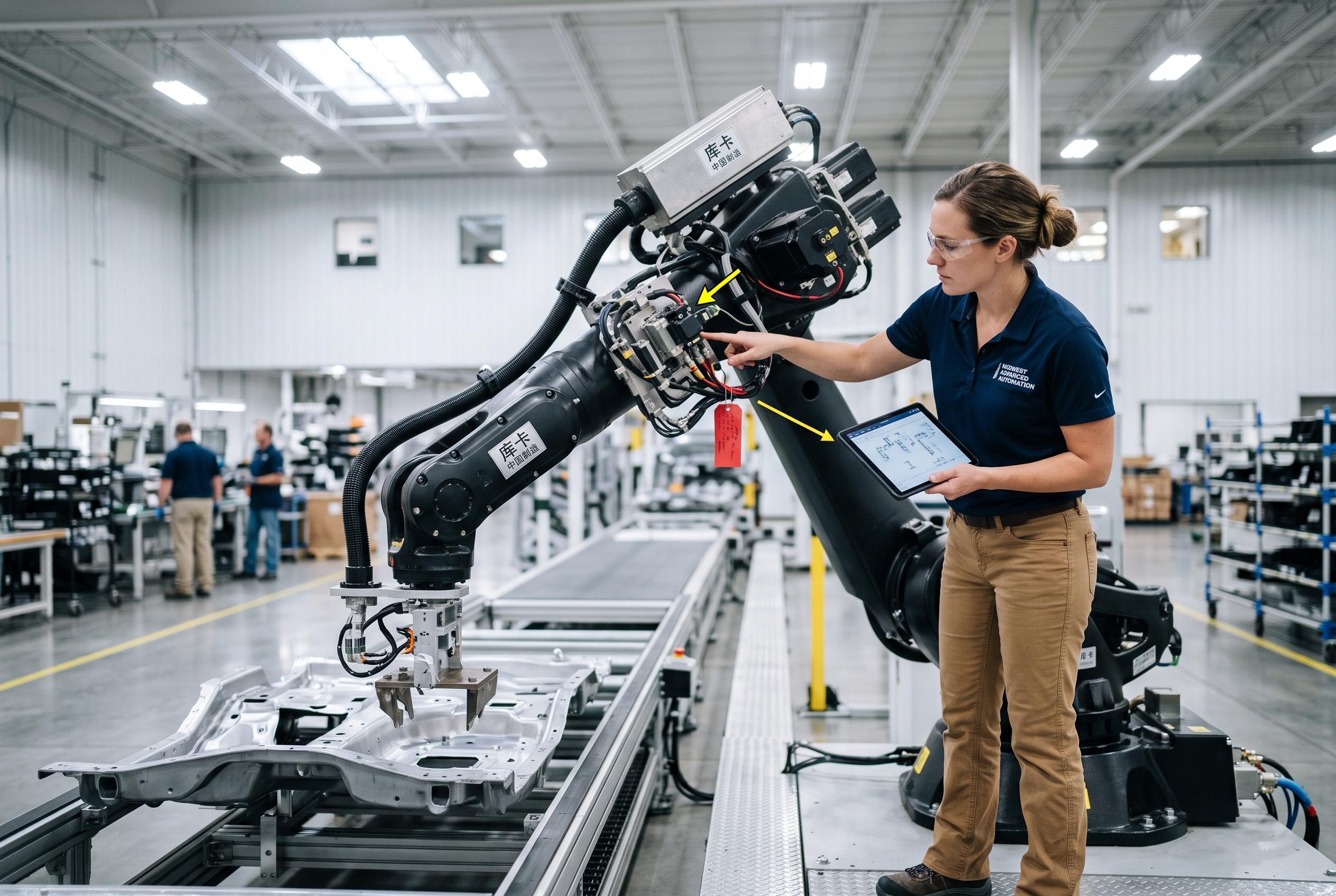

The FCC’s recent restrictions on Chinese-made robotics reveal not only national-security concerns but also the fragile reliance of the US industry on Chinese hardware, highlighting the need for a strategic industrial rebuild.
The Federal Communications Commission’s decision on July 28 to block new Chinese-made humanoid robots, quadrupeds and connected power inverters is best understood less as a simple trade move than as a test of industrial dependence. The agency added “advanced robotic devices” to its Covered List, citing national-security concerns and the risk that networked machines could be used to collect data or aid foreign surveillance, according to reports by The Guardian, The Washington Post and UPI.
That framing gives the ban a clear political logic. The immediate concern is obvious: robots with cameras, microphones and internet connections can expose homes, workplaces and critical infrastructure if they are poorly secured. A separate report by TechTimes said the move followed the discovery of a backdoor in a Unitree Go1 quadruped robot that allowed remote access through a cloud tunnel linked to China, a reminder that robotics is now inseparable from cyber risk.
Yet the larger problem sits lower down the stack. As robotics engineers have argued online, nearly every working system depends on Chinese hardware somewhere in the supply chain. High-torque actuators use rare-earth permanent magnets, precision motors and battery cells are sourced through concentrated Asian suppliers, and many joint components still come from Japan rather than the United States. China processes most of the world’s rare earths and makes the great majority of the magnets used in these systems, which means the ban targets the finished machine while leaving the deeper dependency largely intact.
That matters because the United States is not simply trying to stop imports; it is also trying to build a domestic robotics industry. But the timing is awkward. Banning finished devices before domestic production of magnets, actuators and battery cells is mature risks slowing the very companies Washington wants to encourage. A country can refuse foreign robots only after it has alternatives that are commercially viable, technically reliable and available at scale.
There are signs of progress. MP Materials remains the only operating rare-earth mine in the United States and is expanding domestic magnet capacity with Defence Department support. USA Rare Earth began magnet production at its Oklahoma plant this spring, while Niron Magnetics has started work on a Minnesota facility that uses no rare earths at all. These projects do not yet solve the problem, but they point to a broader industrial rebuild that is finally under way.
For hardware founders, the lesson is practical rather than abstract. A robot assembled in the United States may still qualify as foreign under the new rule unless domestic components make up at least 65% of its value, so the real question is not where the final product is screwed together but where each critical part comes from. In that sense, the FCC ban is less a clean break than a warning: the United States wants control over robotics, but it cannot claim that control until it can survive without the supply chain it is trying to escape.
Disclaimer: This content is intended for informational purposes only. Readers are advised to exercise their own judgement, conduct due diligence, or consult a qualified expert before acting on any information provided.