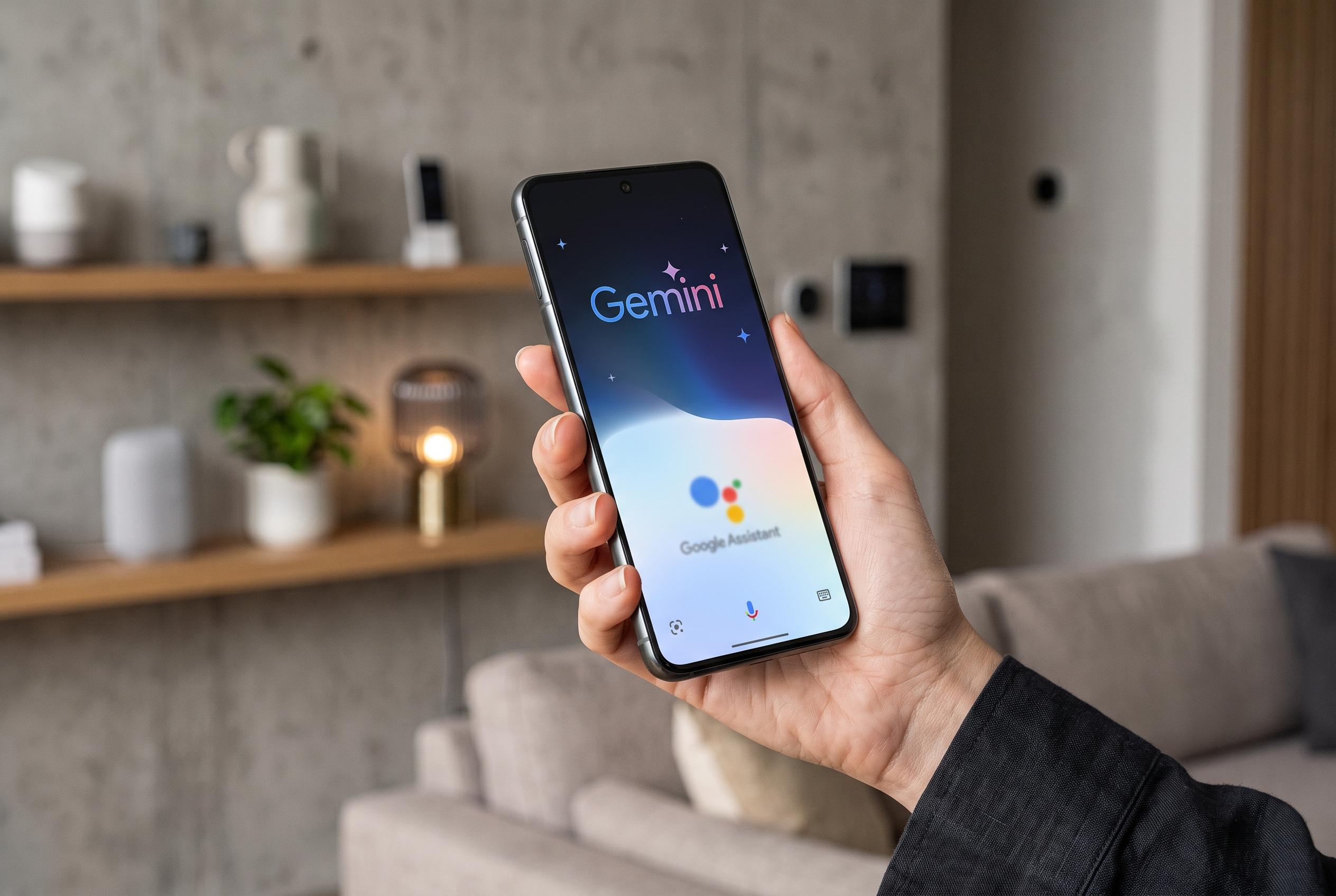

Google announces that its AI assistant will be replaced by Gemini on mobile devices from September 2026, prompting users to prepare for a phased transition involving app updates, routine reconfiguration, and potential feature gaps.
Google’s move from Assistant to Gemini is no longer a distant idea. According to Google’s support pages, the change will begin on mobile devices on 3 September 2026, after which Assistant will be discontinued on phones, tablets and other paired devices that draw their assistant experience from a handset. That includes Wear OS watches, headphones and Android Auto linked from mobile, although cars with Google built in are expected to keep Assistant for longer.
For users, the safest approach is to make Gemini the default assistant before the switch reaches a device. Google says this can be done in Android settings by changing the default digital assistant, or from within the Gemini app on supported phones. The company also notes that availability can vary by language, device, account and location, and that some Assistant features will not carry over everywhere.
That matters because the transition is not just a name change. Gemini must be reconnected to the apps and services people relied on Assistant to control. Google’s documentation says the app works with connected services such as Google Workspace and YouTube Music, while more recent Android updates have expanded Gemini’s reach inside Chrome for Android, where it can summarise pages, answer questions and link with tools such as Calendar and Keep.
In practical terms, the first step is to test the triggers people use most often. That means the power button, voice activation and any routines that depend on household devices. Google says users can control how Gemini opens, including removing it from the power button or turning off “Hey Google”, and can also switch back to Assistant in some cases through the app settings.
The bigger problem is that not every Assistant habit survives intact. Gemini currently depends more heavily on connected apps and scheduled actions, and Google’s own support material acknowledges that some Assistant-era features are unavailable in every market or on supervised accounts. Android coverage also points to gaps in home automation, media playback and certain smart-home routines, which makes a careful audit of routines and devices sensible before the migration becomes mandatory.
That leaves users in a familiar Google position: the platform is moving forward, but the transition period is uneven. Gemini is becoming the company’s centrepiece across Android, Chrome and connected devices, yet the assistant it is replacing still has years of accumulated reliability in daily tasks. The result is a staged handover rather than a clean cut, and for now the best preparation is to switch early, test thoroughly and expect a few rough edges.
Disclaimer: This content is intended for informational purposes only. Readers are advised to exercise their own judgement, conduct due diligence, or consult a qualified expert before acting on any information provided.