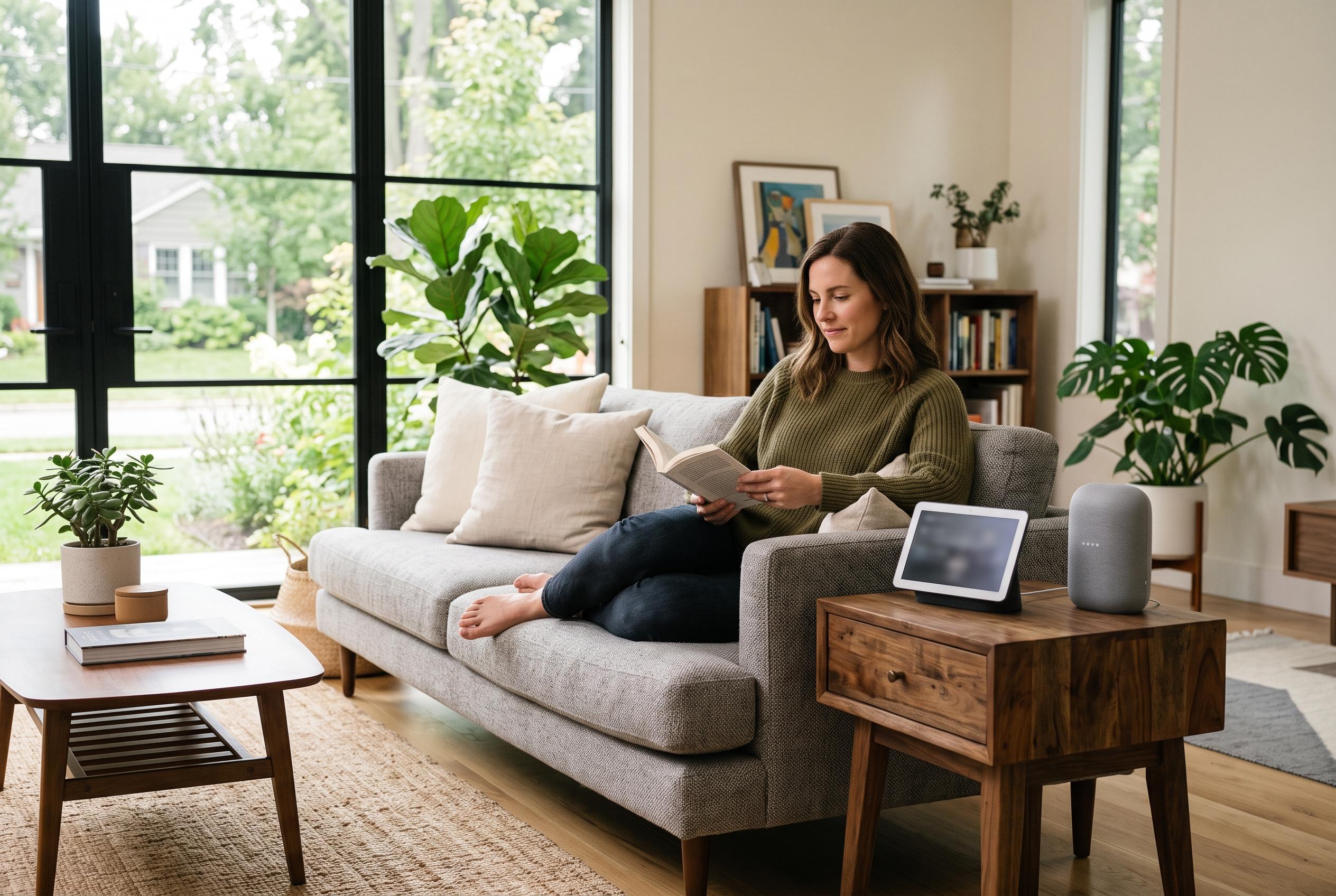

Google’s Nest Hub and Nest Audio remain practical choices for Android households, with broad Matter compatibility and continued software support helping the ageing product line compete with newer smart-home displays.
Google Assistant remains one of the strongest voice-control platforms for the connected home, particularly for people already invested in Android and Google services. It is built into some devices, while others depend on a phone, smart speaker or display to handle commands. In practice, the Google Home app is the central layer, letting users link compatible products, build routines and trigger actions with a phrase or schedule. Google’s own compatibility guidance says the service now works across products from more than 400 smart-home brands, and Matter support has made it easier for different devices to work together.
For households wanting a smart display, the Google Nest Hub remains the most practical starting point. Tom’s Guide continues to place the second-generation model among the best smart displays for Google users, largely because it combines a compact 7-inch screen with straightforward smart-home control. It can show calendars, weather and camera feeds, while the ultrasound sensing built into the device enables gesture control and some sleep-tracking functions. The trade-off is familiar: the screen is not especially sharp, and there is no camera, which limits its use for video calls.
For voice control through a speaker, the Nest Audio is still the clearest fit for Google’s ecosystem. The speaker was designed to improve on earlier Google Home models with louder output and fuller bass, while keeping Assistant responsive for music, timers and device control. Google has also continued to support older Nest speakers. TechRadar recently reported that the company is rolling out firmware version 3.79.550760 to models including Nest Audio, Nest Mini, Google Home and Google Home Mini, with performance, stability and Wi-Fi improvements. That suggests Google is still maintaining the speaker line rather than treating it as legacy hardware.
At the display end of the market, competition is getting sharper. Creative Bloq reported that Apple has introduced HomeView, a 7-inch smart home display with a domed speaker base, face recognition and compatibility with Matter accessories, underlining how central the category has become. Yet for Google users, the appeal of the Nest Hub and Nest Audio is less about novelty than consistency: both sit neatly inside the Google Home app, which remains the main route to automation, routines and multi-device control. For streaming, lighting, climate control, security and cleaning, the strongest Google Assistant products are still the ones that integrate cleanly, respond reliably and do not require a complicated setup.
Disclaimer: This content is intended for informational purposes only. Readers are advised to exercise their own judgement, conduct due diligence, or consult a qualified expert before acting on any information provided.