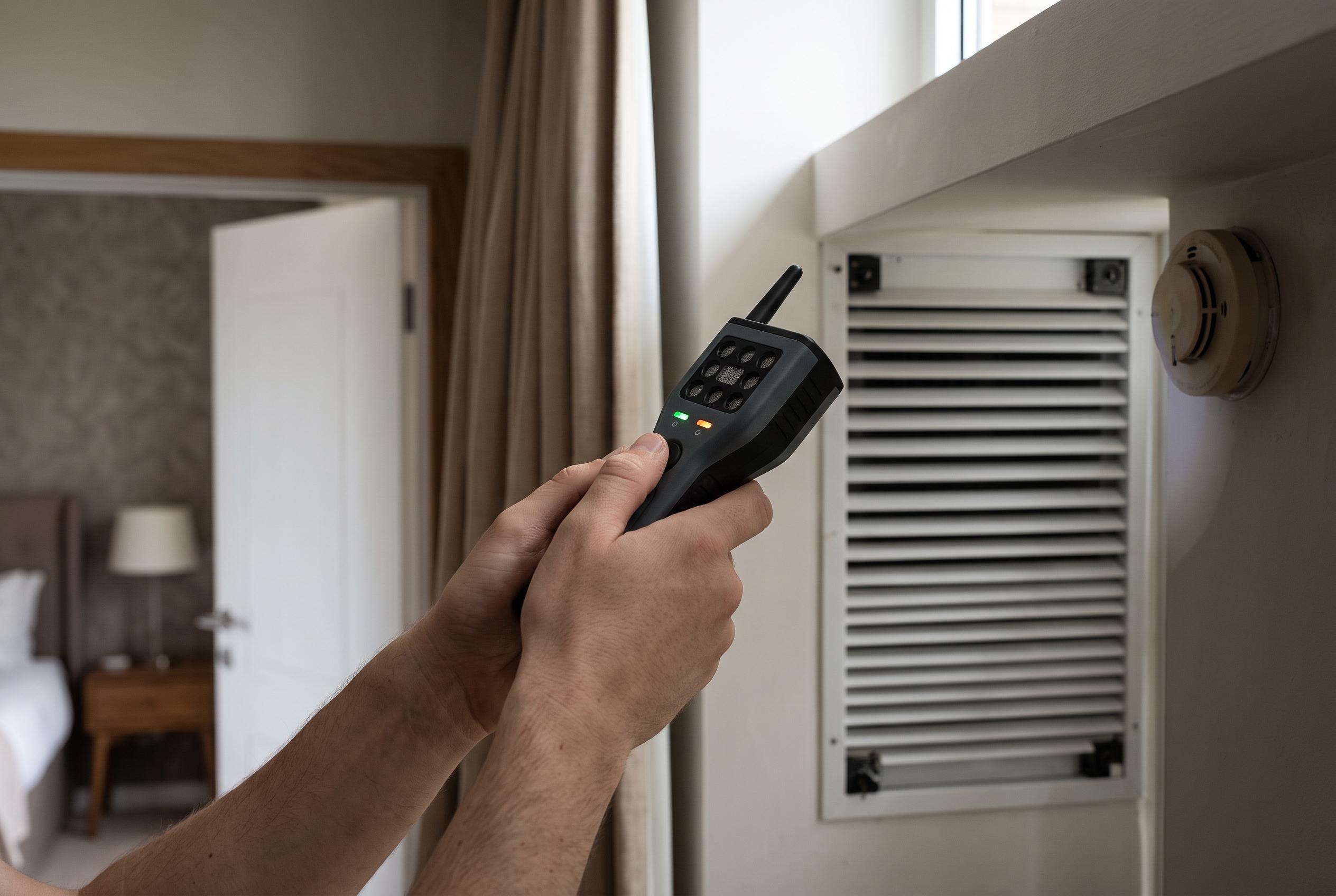

A University College London study reveals that consumer detectors for hidden cameras and microphones often fail to identify over half of covert surveillance devices, raising concerns about their effectiveness and potential risks for domestic abuse victims.
Consumer devices marketed to detect hidden cameras, microphones and tracking equipment may offer far less reassurance than buyers expect, according to a University College London study presented at the USENIX Symposium on Usable Privacy and Security. In tests with 34 participants and 19 commercially available detectors, users still missed 58.8% of concealed surveillance devices, only slightly better than the 66.7% missed by people searching with their eyes alone.
The research matters because covert surveillance hardware is now easy to obtain and disguise. Cameras, microphones and GPS trackers can be hidden inside everyday objects such as clocks, chargers, smoke alarms, picture frames and toys. UCL’s researchers said that this creates particular risks in domestic abuse cases, where covert monitoring can form part of coercive control and leave victims unsure whether they are safe.
The study suggests that the problem is not only detection power but interpretation. Many of the devices used in the trial produced signals, frequencies and technical read-outs without giving users clear guidance on what those readings meant or what action they should take. That made the tools difficult for ordinary users to operate in a realistic search environment.
By contrast, smartphone applications designed to identify Bluetooth trackers such as Apple AirTags performed markedly better. Participants using those apps missed 27.6% of devices and produced no false positives. The researchers said that the difference appeared to stem from usability: the apps could identify a recognisable device rather than simply flagging an anonymous wireless signal.
The findings also point to a more subtle harm. A detector that is confusing or misleading may create either false reassurance or unnecessary fear. Someone who believes they are being watched may continue searching without finding the source, while another person may wrongly assume a room is clear when it is not. For domestic abuse survivors, the researchers warned, both outcomes can be serious.
According to the UCL team, hidden-device detectors should be judged not just on technical accuracy, but on whether they are understandable, help users verify what they have found and explain uncertainty clearly. Senior author Dr Leonie Tanczer also said covert surveillance products themselves deserve closer scrutiny, because devices designed to look like ordinary household items are deliberately built to avoid detection. The practical conclusion is blunt: a consumer detector alone should not be treated as proof that a space is free from surveillance.
Disclaimer: This content is intended for informational purposes only. Readers are advised to exercise their own judgement, conduct due diligence, or consult a qualified expert before acting on any information provided.