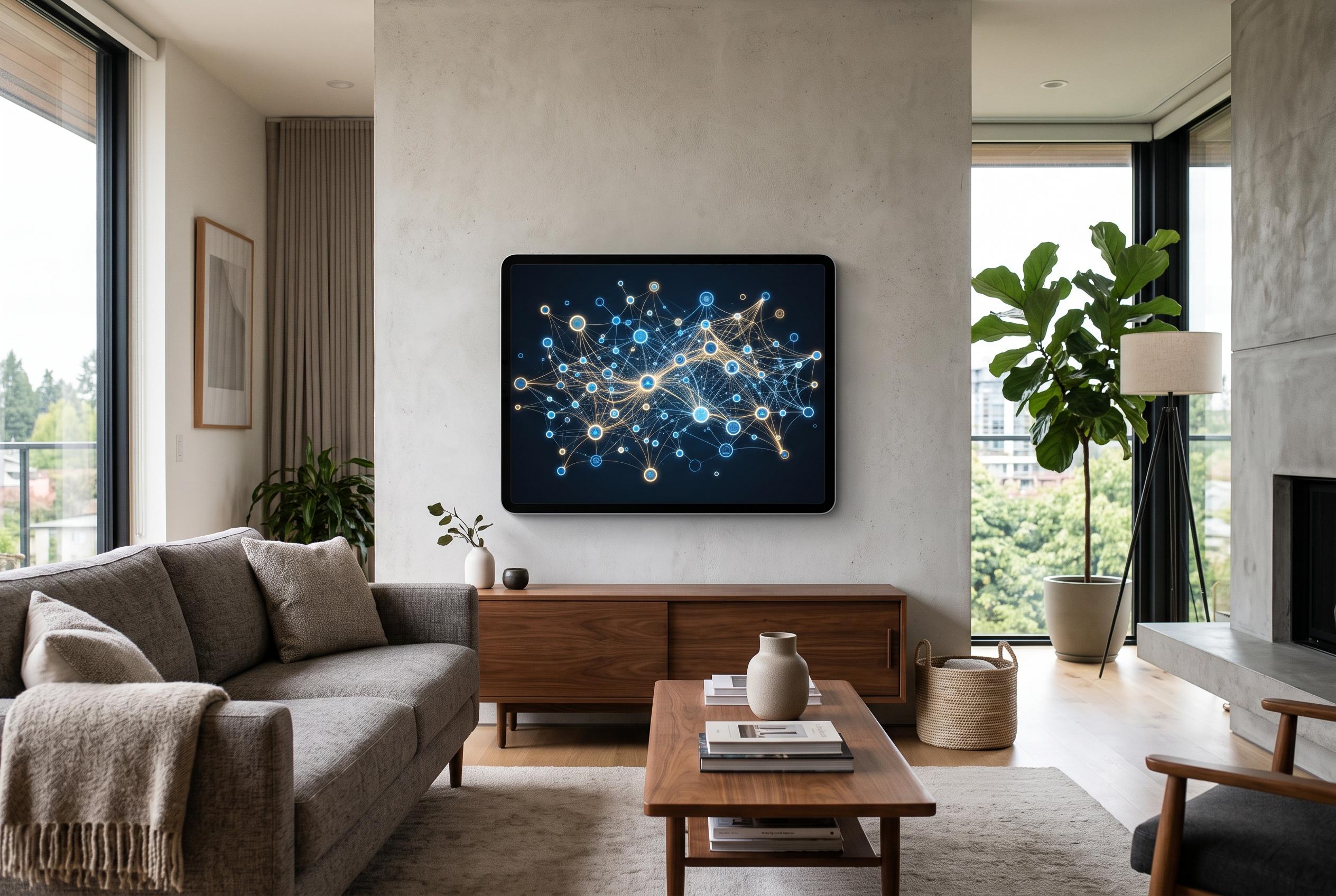

The September 2026 update to Home Assistant introduces a unified Matter network map into the main application, offering users detailed topology information to improve device management and diagnostics.
Home Assistant’s September 2026 release has moved Matter network visibility into the main application, giving users a single map for Matter devices running over both Wi-Fi and Thread rather than leaving that view buried in a separate tool. In its 2 September release notes, Home Assistant presented the addition as one of the principal user-facing changes in version 2026.9, alongside dashboard updates, activity tracing improvements and 13 new integrations.
What changed is partly about access rather than invention. Home Assistant and the Open Home Foundation had already documented that the Matter Server app contained a working visualisation for Matter-over-Thread and Matter-over-Wi-Fi, but it lived in the server’s own web interface, away from the main Matter panel that most users actually use. A roadmap item opened on 24 June described that as a clear gap, noting that Z-Wave and Bluetooth already had their own maps and calling for “a consistent graph experience across protocols”. Version 2026.9 is the release that closes that gap.
The map itself is more detailed than a simple device list. According to Home Assistant’s release post, it shows which devices are using Thread and which are on Wi-Fi, which nodes act as routers or Thread border routers, and how each endpoint reaches the Home Assistant controller. Synced, which reviewed the update separately, said the graph also identifies which border routers and access points are carrying traffic and indicates link strength. Home Assistant added that routers and access points are labelled with recognisable names such as host names or Wi-Fi network names rather than opaque serial numbers, making the diagram far easier to read at a glance.
The feature also arrives as Home Assistant reorganises its settings structure. Synced reported that Matter, Zigbee, Z-Wave, KNX, MQTT, Thread, Bluetooth, Serial, Infrared, RF, Insteon and Tags now sit under a common Connectivity section instead of being scattered across the interface. In practical terms, that means the new Matter visualisation is reached from the Matter panel via a “Show map” control, so the diagram is now where users would reasonably expect to find it rather than behind a specialist server interface.
Under the surface, the change is not only cosmetic. Home Assistant’s full Core 2026.9 changelog includes an entry for “Add Matter network topology WebSocket API”, indicating that the front-end map depends on new back-end data being exposed through Core. Walid ETTAYEB, writing about the beta that appeared on 31 August before the stable release, argued that this is what makes the feature meaningful for self-hosters: the platform is not merely redrawing icons, but surfacing topology information in the main interface and warning users if their installed Matter Server is too old to provide it.
That matters because Matter and Thread problems are often hard to diagnose from logs alone. ETTAYEB wrote that the most useful case is a device that repeatedly drops off the network: a topology view can show whether it is hanging from a weak Thread route, relying on an overloaded router, or sitting at the edge of the mesh. Synced made a similar point, saying the map helps answer the practical question of “why is that one slow” by reducing guesswork about which path traffic is actually taking through border routers and access points.
Early user feedback, however, suggests that the new visibility is not yet uniform across every installation. In a Home Assistant Community thread posted on 3 September, a user named Ian said the Matter map in 2026.9 was “much the same” as the older Thread map in his setup. He wrote that Home Assistant recognised three Thread border routers – an Apple HomePod and two Tado devices – and eight Matter-over-Thread end devices, comprising seven thermostatic radiator valves and one thermostat, yet “Neither the old Thread map, nor the new Matter map, show any of the border routers”. In the same discussion, another user, Michael Miller, said his own Thread border routers appeared “by default”, using ESP32 OpenThread Border Router hardware. The contrast suggests that the new map is real and functional, but that what it can display may still depend on the network design or on what individual border routers expose.
Even so, 2026.9 marks an important shift in how Home Assistant treats Matter. For months, the project’s own roadmap had described Matter as the protocol missing a first-class network visualisation in the main interface despite already having the underlying data elsewhere. By bringing that graph into the Matter panel, and by tying it to a new topology API in Core, Home Assistant has made Matter troubleshooting more discoverable and more consistent with the way it already handles other smart home protocols. The first reports from the field show there is still work to do before every Thread installation is mapped cleanly, but the feature is no longer hidden, experimental or secondary.
Disclaimer: This content is intended for informational purposes only. Readers are advised to exercise their own judgement, conduct due diligence, or consult a qualified expert before acting on any information provided.