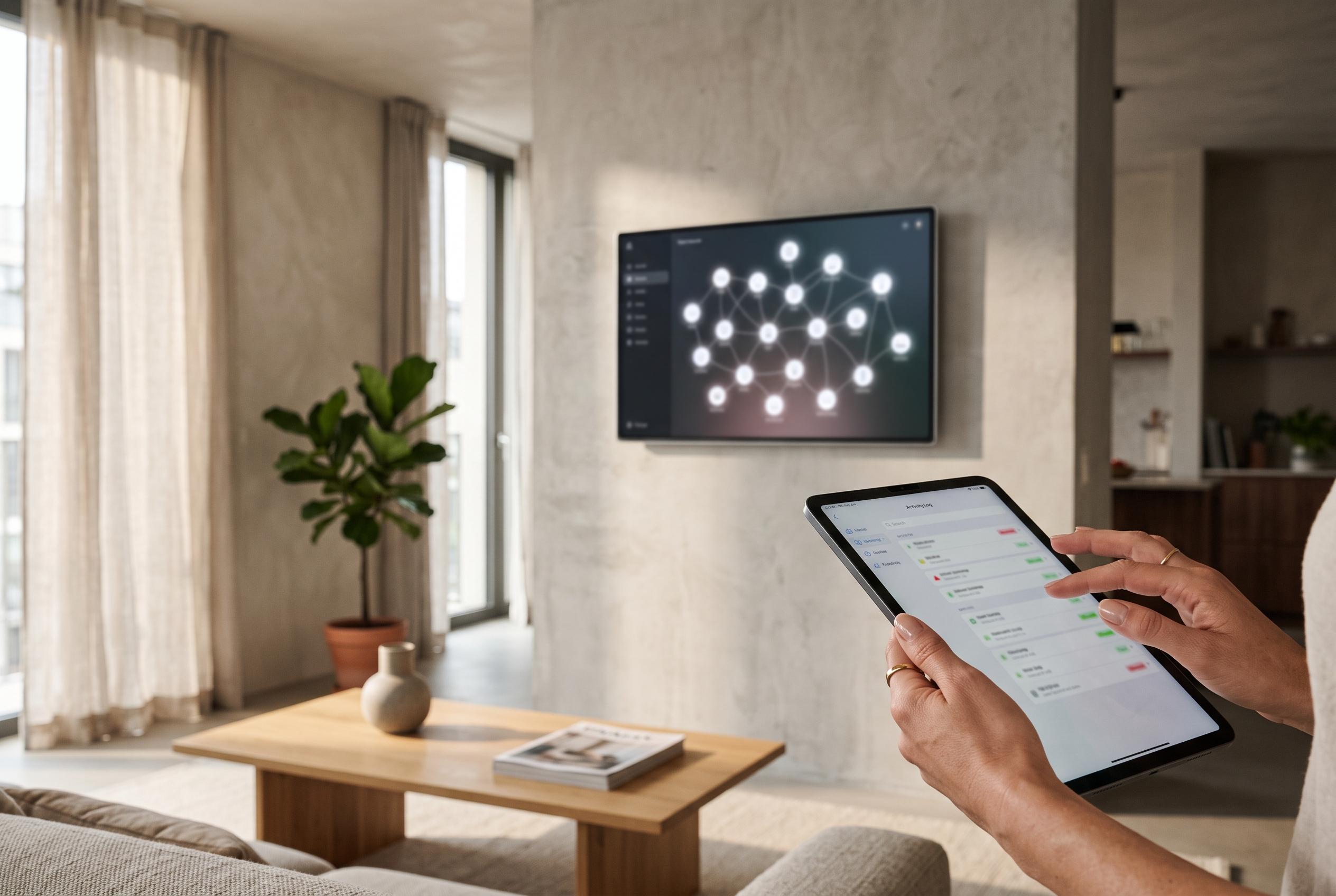

The September release of Home Assistant introduces clearer alerts, detailed activity logs, and an integrated Matter network map, aiming to simplify management of hectic smart home systems and improve troubleshooting.
Home Assistant’s September release focuses on reducing the uncertainty that often comes with managing a busy smart home. Version 2026.9 adds clearer alerts, a more informative activity log, and a built-in Matter network map, while also making some device setup tasks less technical for ordinary users. According to Home Assistant’s release notes, the aim is to move more of the platform’s complexity into the interface itself.
The most visible change is in the security dashboard, which now includes an Active alerts section and a new Favorites area. Users can choose which entities are allowed to trigger alerts and assign each one a severity level, separating routine warnings from more serious events. That means a door left ajar no longer needs to appear alongside a smoke alarm in the same urgency tier. The dashboard can also highlight commonly checked sensors, locks and doors so they are easier to reach.
Home Assistant has also made the Activity log far more useful. Until now, it showed what changed, but not the full chain of events behind it. The new version opens each entry into a more detailed view that helps trace which automation, script or event caused the action. History and Activity also gain a Sources pane, allowing filtering by entity type or integration. For people trying to understand why a light switched on or a sensor changed state, that should save time and guesswork.
The update also expands control options for Tile Cards. Compatible lights can now expose light effects, vacuum tiles can offer fan-speed control, and climate tiles can support a wider humidity target range. These are small additions, but they make dashboard controls more complete and reduce the need to jump between menus.
Beyond the interface, the release lowers the barrier to configuring Modbus hardware such as solar inverters, heat pumps and energy meters. Instead of hand-writing YAML registers, supported integrations can now build the setup through the user interface. Home Assistant says that should make a traditionally technical protocol more approachable, especially for users who want advanced energy and industrial devices without learning manual register mapping.
Matter support is also becoming easier to understand. The new release brings a network map directly into the main interface, replacing the need to use a separate Matter Server page for topology checks. The map shows Wi-Fi and Thread devices together with access points and border routers, giving users a clearer view of how their smart-home hardware is connected. Reporting around the update notes that this should make it easier to spot connectivity problems and understand the roles individual devices play in the network.
Taken together, Home Assistant 2026.9 is less about headline features than about visibility, control and lower-friction setup. It is the sort of update that should matter most to users who already run complex systems and want fewer blind spots when something stops behaving as expected.
Disclaimer: This content is intended for informational purposes only. Readers are advised to exercise their own judgement, conduct due diligence, or consult a qualified expert before acting on any information provided.