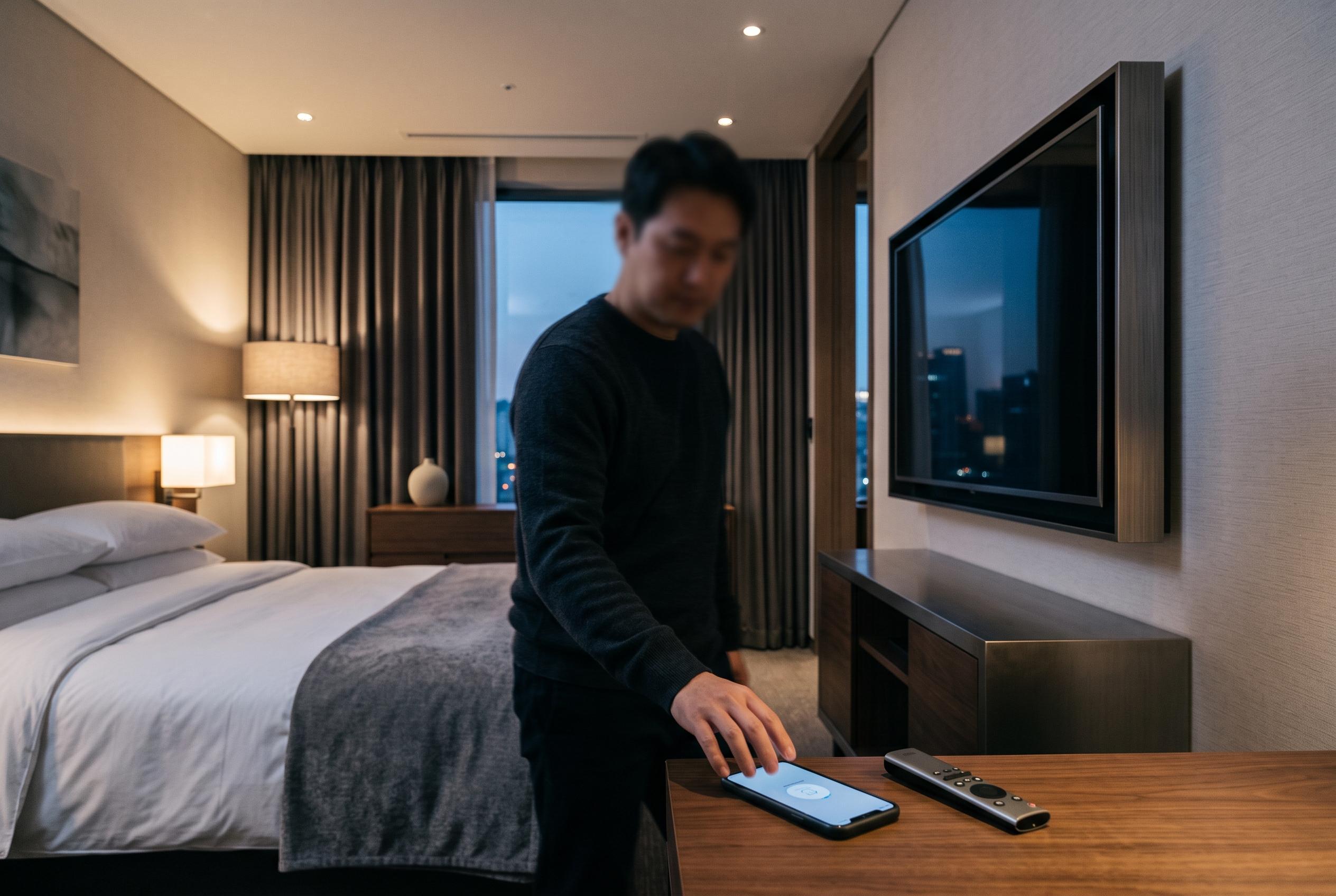

Guests risk exposing personal streaming account details and viewing history due to persistent sessions and privacy vulnerabilities on hotel televisions. Experts recommend using personal devices and secure connections to protect privacy during hotel stays.
Travellers who log into streaming services on a hotel television often assume the session ends when they switch the set off or check out. It does not always work that way. A hotel TV is a shared device, and if a guest signs in to Netflix or another service and fails to sign out, the account may remain live for the next occupant of the room. According to CyberGuy, that can expose profiles, viewing history and subscription access long after the stay has ended.
The central problem is that hotel televisions are not under the guest’s control. Some models save an active session so the app opens quickly the next time the set is used. That does not necessarily store a password in plain view, but it can leave the account accessible. Netflix has warned that televisions used in recent hotel stays can stay linked to an account, and its device-management tools allow users to review active sessions and remove them remotely. In some newer hotel systems, guests can cast from their own devices in a way that disconnects automatically at checkout, but that is not yet universal.
There are also broader privacy questions around smart televisions themselves. Some sets use Automatic Content Recognition, a system that identifies what appears on screen and compiles viewing data. The extent of that collection depends on the hardware, the software and the privacy settings in place. In a hotel, the television may be running commercial software rather than the same environment found in a private home, so the behaviour is not always identical to a household smart TV. Even so, it is a reminder that a room’s television should not be treated as if it were a personal device.
The safest approach is to use equipment the traveller already controls. CyberGuy recommends streaming from a phone, tablet or laptop where possible, then connecting to the hotel screen only if a secure casting option is available. If that is not offered, an HDMI cable can be an alternative, allowing a laptop or mobile device to mirror content without entering streaming credentials directly into the television. German technology site CHIP has separately warned that some hotel televisions may be tied into wider room systems, which means guests should be careful about what is displayed when using HDMI ports.
Hotel Wi-Fi brings its own set of risks, although the issue is different from logging into the television itself. Most major streaming platforms use HTTPS, which encrypts login details in transit, but the network still belongs to the hotel rather than the guest. CyberGuy says a virtual private network can add another layer of privacy by encrypting traffic between the device and the VPN server. That does not make a user invisible, but it can reduce what the hotel network operator can observe about browsing activity.
If a guest has already signed in on the room television, the answer is not panic but a quick security check before departure. The app should be signed out directly rather than simply closed, because switching off the television does not necessarily end the session. Netflix and other services typically allow users to review recently active devices, remove unfamiliar logins, change passwords and, where available, log out of all devices at once. That matters because a forgotten session is not just an inconvenience; it can become an account-sharing problem for whoever enters the room next.
Disclaimer: This content is intended for informational purposes only. Readers are advised to exercise their own judgement, conduct due diligence, or consult a qualified expert before acting on any information provided.