
Buyers of high-end homes prioritise integrated, durable smart systems like wiring, climate control, and security platforms, which enhance usability and longevity, with experts advising thorough documentation and demonstrations for optimal resale appeal.
In the luxury housing market, the smart-home features that matter most are the ones built into the fabric of the property rather than the gadgets scattered through it. Integrated lighting, motorised shades, zoned climate control, whole-home audio, robust networking, monitored security and mechanical protections such as leak detection and generator management are the systems that buyers are most likely to value because they shape everyday use and reduce risk. Marna Friedman, a real-estate agent in north-west metro Atlanta, argues that the strongest technology investments are also the least disposable: wiring, control platforms and professionally installed infrastructure tend to outlast consumer devices and carry far more weight at resale.
That distinction is especially important in estate-level homes, where comfort depends on how well multiple systems work together. Intelligent lighting scenes can make a large house feel more usable, while automated shades are particularly valuable in properties with extensive glazing and strong afternoon sun. Climate zoning also has a direct practical effect, because it allows a large home to be cooled and heated by occupied areas rather than treated as a single envelope. Industry guides from installation firms such as Regent5 and Expert Tech USA make the same point, describing lighting, shades and climate management as core features of high-end residential automation.
The least visible systems are often the most valuable. Water-leak detection with automatic shutoff can reduce the scale of a serious loss, while whole-home generators protect refrigeration, wells, sump systems and other critical functions during an outage. Security that combines cameras, keypads or smart locks, gate control and professional monitoring is more useful when it is unified in one platform rather than split across several apps. Several integrators, including Izzo Network and JE Technology, say the most successful luxury installations also depend on enterprise-grade Wi-Fi and structured wiring, because a large home is only as dependable as its network backbone.
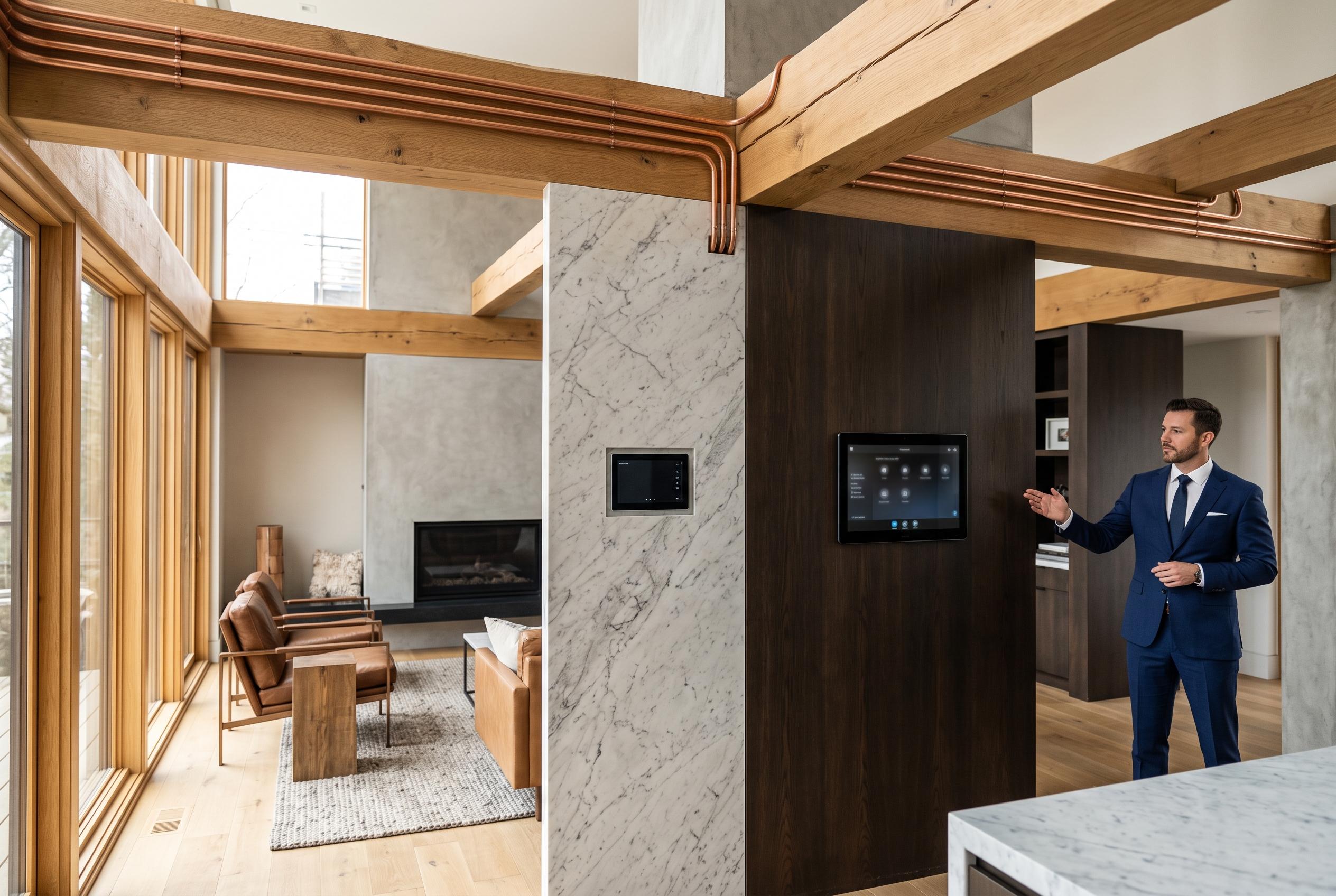
For buyers, diligence matters as much as specification. Friedman says purchasers should ask who installed each platform, whether the integrator will continue servicing it, what documentation exists, and which accounts or monitoring contracts must transfer at closing. That includes camera subscriptions, control-app ownership and any cloud-linked services. A proper demonstration is equally important: lighting scenes, shades, zones, audio, gates and generator functions should all be shown working before contracts are signed. If a system cannot be demonstrated, it should be treated cautiously in negotiations.
At resale, the value of home technology depends on condition, continuity and confidence. Current systems that are well documented and easy to transfer can strengthen a listing because they signal maintenance discipline, according to Friedman. By contrast, proprietary platforms that are ageing, half-working keypads and missing service records can turn automation into a liability. The most effective sale package is a clean handover: an inventory of equipment, clear account transfer arrangements, service history and, ideally, a visit from the integrator after closing so the new owner begins with systems that are understood, supported and under control.
Disclaimer: This content is intended for informational purposes only. Readers are advised to exercise their own judgement, conduct due diligence, or consult a qualified expert before acting on any information provided.