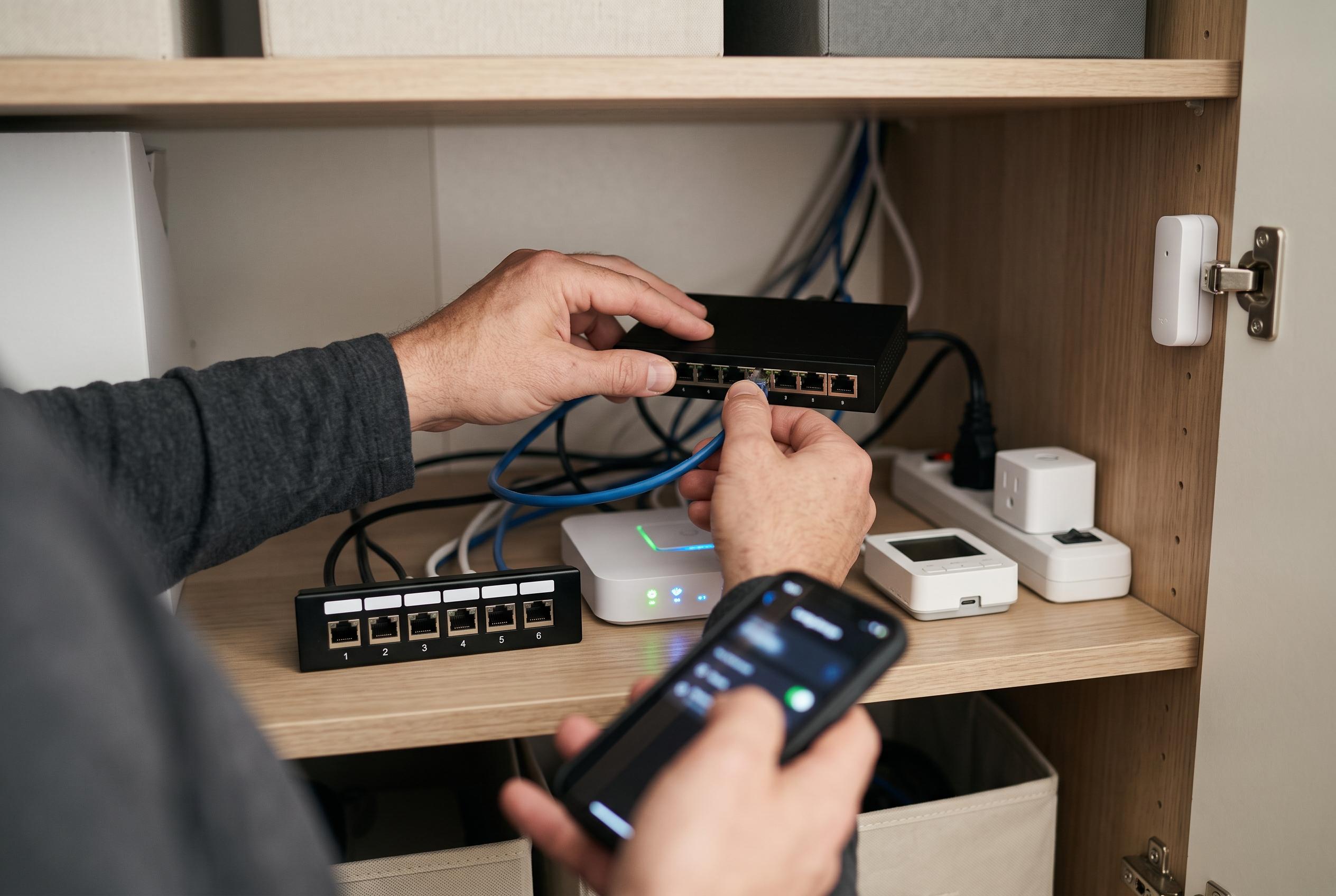

Segmenting smart device networks with VLANs offers a practical way to safeguard sensitive data by limiting device communication and reducing trust risks in connected homes.
A single network setting can make a home filled with smart devices markedly safer. The issue is not simply that connected bulbs, cameras, plugs and thermostats are convenient; it is that many are designed to remain in constant contact with vendor cloud services, sending status data and requests over the internet while sharing the same local network as laptops, phones and file servers. That creates an avoidable trust problem in homes where a cheap accessory may sit on the same flat network as a machine containing sensitive documents and family photos. According to XDA Developers, the practical answer is to place internet-of-things equipment on its own virtual local area network, or VLAN, and then use firewall rules to limit what that segment can reach.
The logic is straightforward. A VLAN separates devices at the network layer, so a smart plug or camera is no longer treated as part of the same trusted space as a desktop or network-attached storage box. Guides from Smart Wired, Modem Guides and other networking explain that this works best when the router or switch supports VLAN tagging and when the firewall is configured to control inter-VLAN traffic. In practice, that means an isolated IoT network can be allowed to reach a local home automation hub, such as Home Assistant, while being denied direct access to the wider internet and to the primary household network.
That distinction matters because many consumer devices are noisy by design. They frequently contact remote servers for telemetry, time synchronisation, cloud control or firmware checks, and not all of those dependencies are obvious when a device is first installed. XDA Developers notes that once firewall logging is enabled, users can often see repeated blocked outbound attempts from devices that are trying to reach external services. The same behaviour is highlighted by network setup guides, which stress that VLANs alone do not provide complete protection: firewall policy is what determines whether a device can talk, where it can talk, and in which direction.
There is, however, a practical limit to this approach. Some low-cost products are so cloud-dependent that they lose core functions when internet access is removed, or refuse to operate at all if they cannot contact an external time server or vendor backend. In those cases, a segregated VLAN can still reduce exposure, but the device may need to be replaced with something that supports local control, or flashed with firmware that does. For a home that uses local automation, the goal is not to break every smart device; it is to preserve convenience while ensuring that untrusted equipment cannot freely roam the rest of the network.
Disclaimer: This content is intended for informational purposes only. Readers are advised to exercise their own judgement, conduct due diligence, or consult a qualified expert before acting on any information provided.