
Security experts uncover evidence that LG’s webOS smart TVs may continue to record audio and map local networks while appearing off, raising concerns over privacy and security risks.
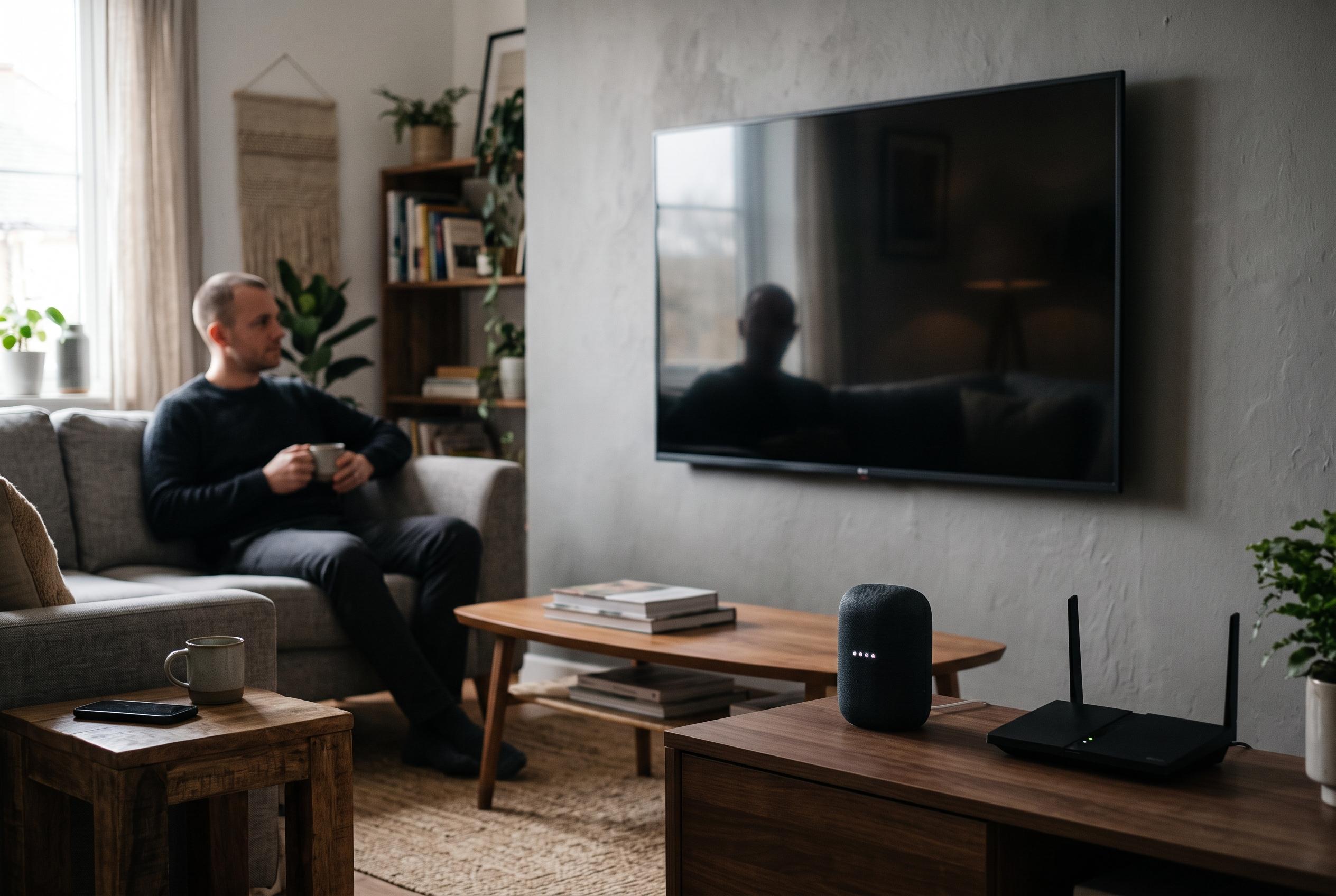
Security researchers working with Gamers Nexus say they have shown that a compromised LG television running webOS can continue using its microphone while the set appears to be off, and can keep those recordings on the device until internet access returns. Reports on the 7 September 2026 investigation say the testing covered retail OLED models, including sets in the G5 range, and that the team was supported by Level1Techs and independent researchers rather than relying on vendor-supplied hardware. (notebookcheck.net)
The clearest reason the findings matter is that they combine two different kinds of risk. Malwarebytes said some of the behaviour described in the investigation appears to be built into the normal operation of the TVs, such as automated content recognition and device discovery, while the more serious covert-listening scenario depends on remote-code-execution weaknesses that researchers say are still going through responsible disclosure. In practice, that means owners face both a privacy question about what the television is designed to collect and a security question about what an attacker could do after gaining control. (malwarebytes.com)
The network activity described by the researchers is broader than simple usage analytics. Notebookcheck, Recordere.dk and Malwarebytes each reported that packet captures and firmware analysis showed the TVs identifying other equipment on the same home network, including phones, PCs, printers, switches, smart-home hardware and wearables, while also collecting nearby Wi-Fi names, signal-strength data and internal network details. Recordere.dk said the mapping was documented with Wireshark, which matters because it suggests the traffic was observed directly rather than inferred from settings menus or policy wording. (notebookcheck.net)
That device discovery appears to sit alongside LG’s advertising machinery. Recordere.dk reported that the data is sent to LG Ad Solutions, the group’s advertising arm, and said LG has stated that it has sold about 216 million smart TVs worldwide. The same report added that the advertising division says it can reach 363 million secondary devices in the US by linking other hardware on the same household network to the television. It also noted that the TVs use automated content recognition, or ACR, to create digital fingerprints of audio and video so viewing can be identified across inputs. (recordere.dk)
The current allegations also fit a wider body of research on smart-TV tracking. In a 2024 study highlighted by UCL, researchers testing Samsung and LG sets in the UK and US found that ACR was enabled by default and could take snapshots of live television “many times per second”, including when content was being shown from an external device such as a laptop. UCL said opting out stopped the observed traffic in its experiments, but the researchers argued that the controls were too obscure for most users. The same report said one LG ACR domain belonged to Alphonso, which manages LG Ad Solutions. (ucl.ac.uk)
Legal scrutiny has already been building in the United States. In a petition filed by the Texas attorney general in 2025, the state alleged that LG’s ACR system captures audio and video from more than 45 million LG smart TVs in the US and saves a hash every 10 milliseconds. The filing also claims the tracking extends beyond built-in apps to cable, satellite, HDMI devices and gaming consoles, even when a TV is used simply as a monitor for a laptop. Those allegations are separate from the new standby-microphone claim, but they show why the latest report lands in an already hostile regulatory environment. (texasattorneygeneral.gov)
Frandroid said the investigation’s authors argue the microphone behaviour goes beyond capturing voice commands and could take in everything said near the set while the screen looks to be in standby. The French publication also stressed that LG is not the only television brand to face this kind of scrutiny, naming Samsung, Sony, TCL and Hisense as other manufacturers that have drawn similar accusations. It further recalled an earlier dispute in which Steve Burke, who runs Gamers Nexus, criticised LG over a monitor that installed an advertising application without user consent at start-up. (frandroid.com)
For owners, the most immediate advice is defensive rather than reassuring. Malwarebytes said users should treat a smart TV like any other internet-connected computer: apply firmware updates, review consent and privacy menus, and disable features such as ACR, viewing-information collection, personalised advertising and voice recognition where possible. Notebookcheck and Frandroid both reported that the investigation team went further, recommending that LG sets be disconnected from the internet altogether and used with an external streaming device instead. Separating televisions and other internet-of-things products onto a guest or dedicated network would not solve the underlying privacy debate, but it could limit what a compromised set is able to reach inside the home. (malwarebytes.com)
Disclaimer: This content is intended for informational purposes only. Readers are advised to exercise their own judgement, conduct due diligence, or consult a qualified expert before acting on any information provided.