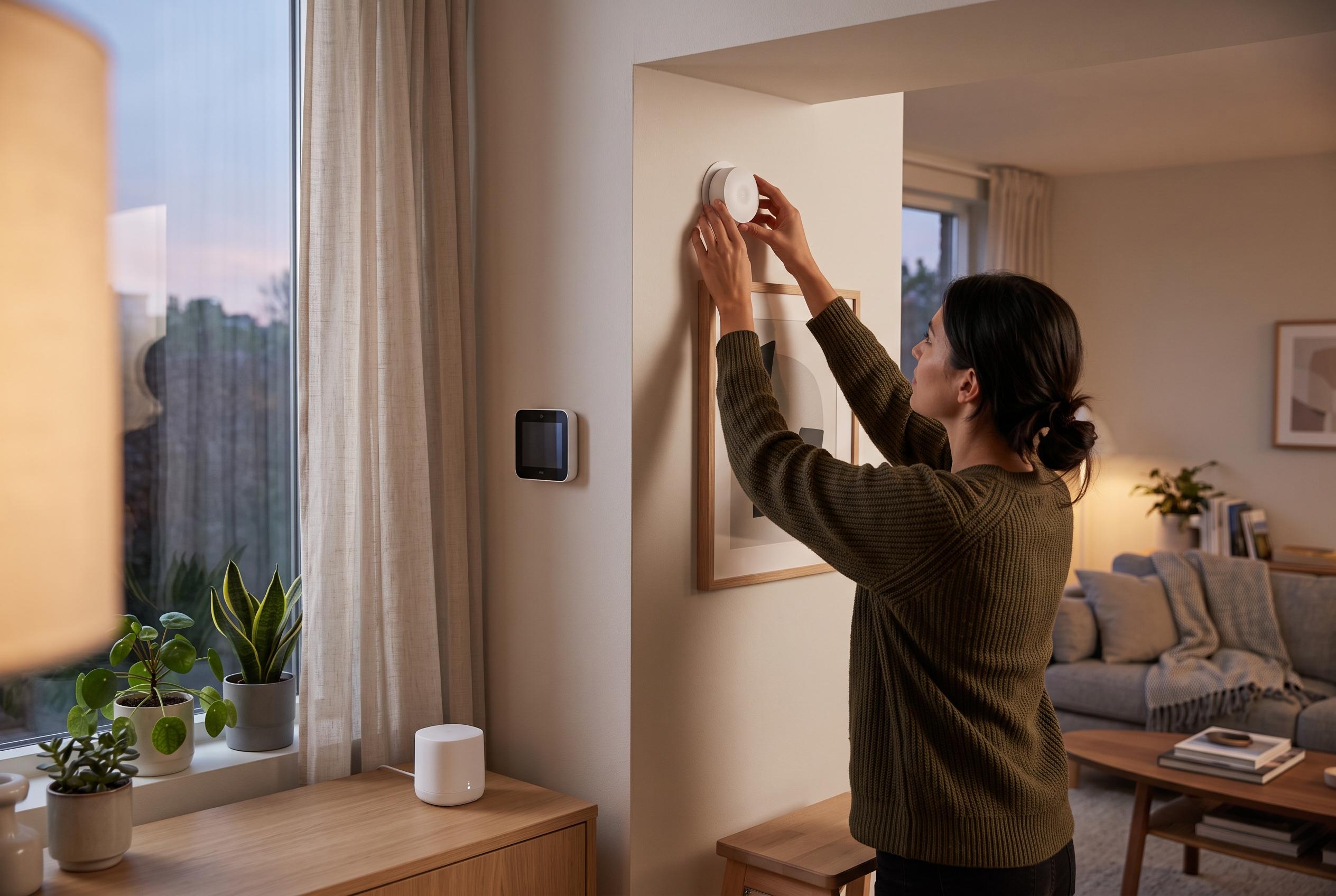

The LinknLink Emotion Air leverages 24GHz millimetre-wave radar for advanced presence detection, including breathing, combined with light and climate sensors. While innovative, its setup and sensitivity require patience, signalling a new step in home automation hardware.
The LinknLink eMotion Air is part of a newer class of smart home sensor that goes beyond simple motion detection. According to the product information and TechteamGB’s review, it uses 24GHz millimetre-wave radar to pick up tiny movements, including breathing, which makes it more suitable for presence sensing than conventional passive infrared sensors. That matters in rooms where people may be seated still for long periods, such as offices, living rooms and bedrooms.
Its appeal is not limited to detection. LinknLink says the device also combines light, temperature and humidity sensing, turning it into a compact environmental monitor as well as a presence detector. The company says it supports Zigbee and Bluetooth, with Home Assistant integration available through either Bluetooth or Zigbee/ZHA, depending on the user’s hardware. LinknLink also describes a battery life of around 1.5 years from three AAA batteries, which is notable for a radar-based device.
The hardware is designed to be easy to place and move. LinknLink says the sensor is battery powered and can be mounted magnetically or on a wall, making it suitable for flexible positioning around the home. The company also highlights a physical smart button for scene control, which adds a simple local trigger to automations. In practice, that makes the eMotion Air more versatile than a standard occupancy sensor, particularly for lighting, heating and cooling routines.
There are, however, clear trade-offs. TechteamGB found that setup can be cumbersome, with the need for a proprietary app and account creation adding friction before the device can be used. The review also noted inconsistent sensitivity at times, delays before re-detection, and temperature readings that may not always match other sensors exactly. LinknLink’s own troubleshooting guide acknowledges that vacancy timing and detection behaviour may need careful tuning. The result is a capable but not entirely polished product: strong on features, but one that appears to reward patient configuration more than plug-and-play simplicity.
Disclaimer: This content is intended for informational purposes only. Readers are advised to exercise their own judgement, conduct due diligence, or consult a qualified expert before acting on any information provided.