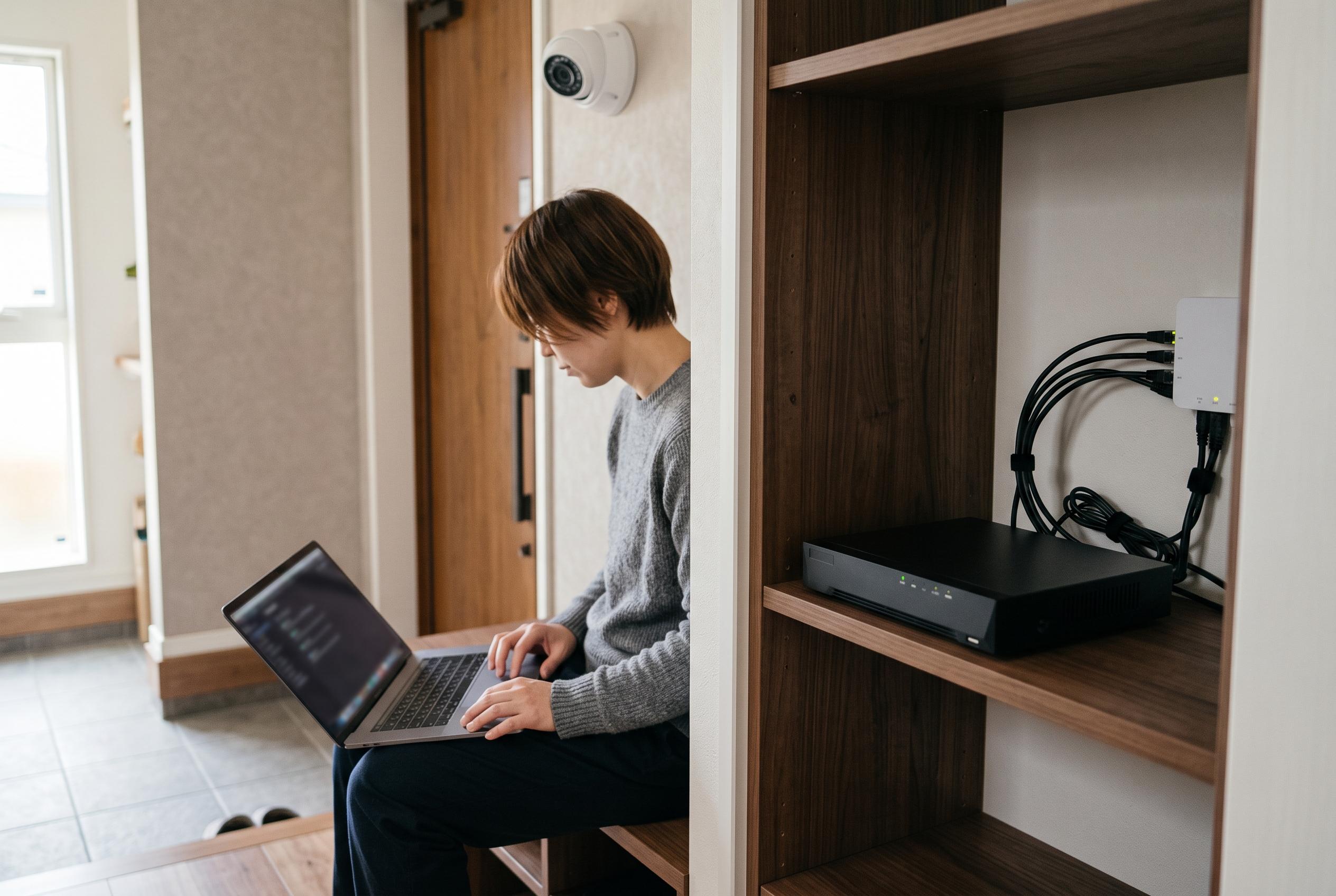

A new wave of home surveillance leverages local AI and open-source tools like Frigate NVR and Home Assistant to deliver privacy-focused, smarter, and adaptable security without reliance on subscription cloud services.
Subscription cameras have made home surveillance deceptively convenient. The hardware is often cheap upfront, but the real cost lies in the cloud lock-in: video is routed off-site, compressed, and then surfaced through monthly plans that control access to the very footage the owner paid to record. The alternative now gaining attention is a fully local stack built around RTSP-capable PoE cameras, Frigate NVR and Home Assistant, with vision models running on equipment inside the home. According to XDA Developers, that approach keeps footage on the premises while replacing generic alerts with richer, more useful summaries.
At the centre of the setup is Frigate, an open-source network video recorder designed for real-time object detection on local hardware. Frigate’s own documentation says it processes video feeds within the home network, integrates closely with Home Assistant and can record based on detected objects rather than constant full-time capture. It also supports RTSP re-streaming, combined camera views and configurable detection zones, which helps reduce the number of connections to each camera and limits unnecessary processing.
The basic appeal is straightforward. Rather than relying on a vendor’s app and cloud analysis, the system can identify people, cars, pets and parcels on the user’s own machine. XDA Developers notes that this opens the door to more useful context, such as distinguishing a delivery driver leaving a package from a neighbour walking past the gate. Frigate’s documentation also highlights local privacy masks and zone controls, allowing owners to exclude public pavements, roads or other areas they do not want to monitor.
What makes the approach more ambitious is the addition of local vision models. XDA Developers describes a second layer, built with Home Assistant integrations such as LLM Vision or local models through Ollama, that can examine snapshots and short clips to produce natural-language descriptions. In practice, that means a notification can say something close to what a person would observe on a live feed, rather than simply reporting that movement was detected. Frigate’s site says this kind of local processing can also reduce false positives compared with cloud-based analysis.
There are clear constraints. Local AI needs capable hardware, especially if the system is expected to run vision-language models as well as object detection. XDA Developers says a Coral TPU can handle lighter detection workloads, while more demanding inference may require a mini PC with stronger integrated graphics or even a dedicated GPU. Network design also matters, since dual-stream RTSP setups can become bandwidth-heavy; a low-resolution stream can be used for continuous detection, while a higher-resolution stream is saved only when an event occurs. Guides published by HomeAutoCentral, NoCloudNest and other Home Assistant communities describe the same pattern as a practical way to balance performance, storage and responsiveness.
For users willing to assemble the pieces, the result is a surveillance system that is more private, more adaptable and potentially more informative than many subscription products. Frigate’s documentation and third-party setup guides all point to the same conclusion: with the right cameras, local compute and Home Assistant automations, it is possible to build a fast, cloud-free pipeline that keeps footage under direct household control. XDA Developers argues that this is the real shift, because it replaces the idea of paying indefinitely to inspect your own property with a system that keeps the data where it was created.
Disclaimer: This content is intended for informational purposes only. Readers are advised to exercise their own judgement, conduct due diligence, or consult a qualified expert before acting on any information provided.