
Lumeward emerges as a versatile hardware and software platform, redefining custom lighting devices with integrated visitor interaction features that prioritise privacy and reliability, paving the way for more connected domestic products.
The maker world has long been organised around hardware ecosystems rather than isolated boards. Arduino, Raspberry Pi and Flipper have each grown into platforms with accessories, software stacks and communities around them. In that context, Lumeward is an attempt to do the same for a custom lamp: to turn a single device into a reusable hardware and software base for domestic products.
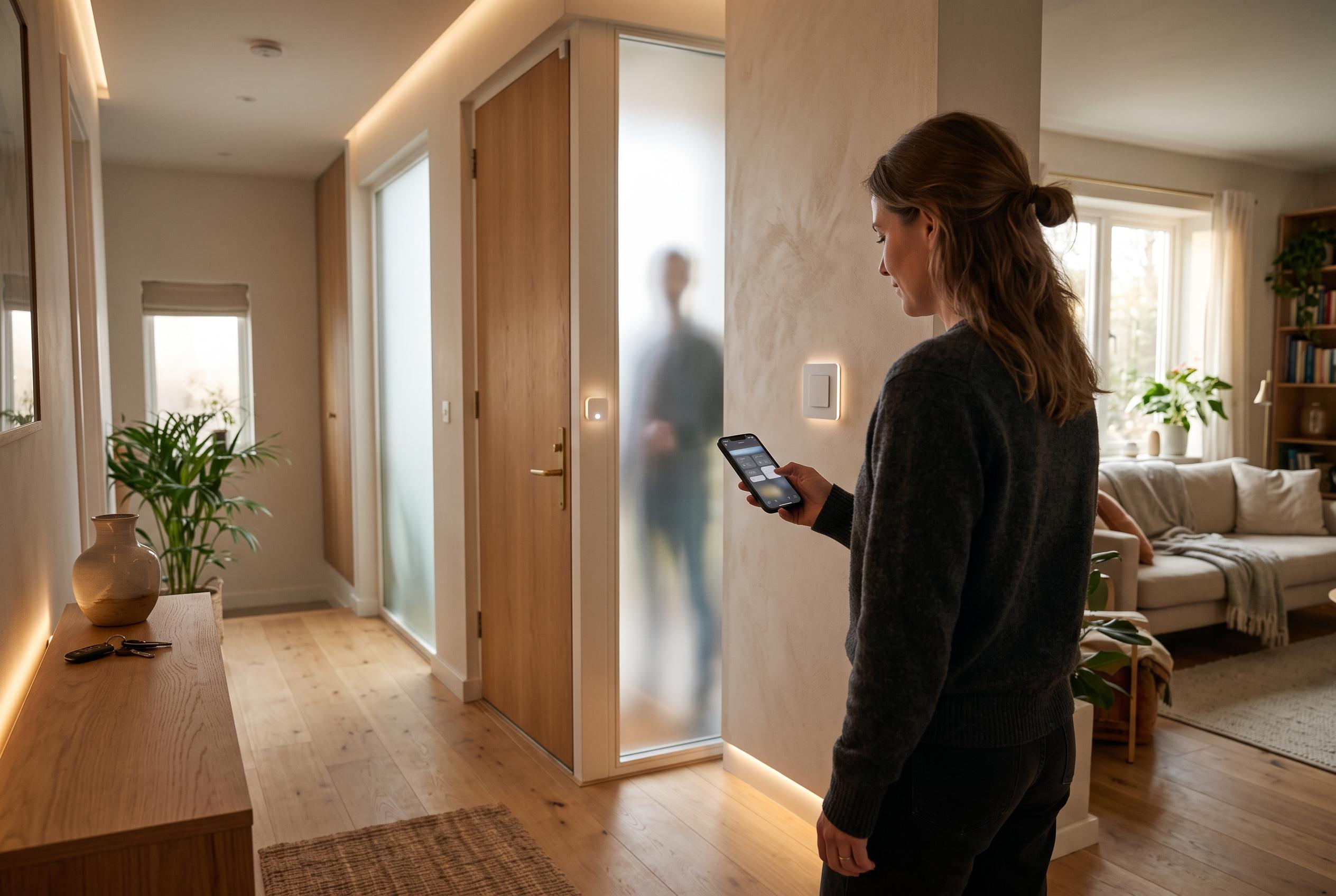
The first application in the Lumeward line is a door answering machine built into a light fixture. Its purpose is straightforward: when nobody is at home, the device should greet a visitor, invite them to speak, record a message and deliver it to the owner without using a camera. The author says the aim is to preserve privacy while still making sure a caller is not lost to a note on the door or a silent missed visit.
Detection is deliberately selective. The system does not trigger merely because someone walks past. A radar sensor must see a person standing in the response zone for a configured period before the scripted reply begins. The firmware also supports infrared presence sensing, sound, vibration, barometric change and light control, but those inputs are treated as auxiliary triggers for illumination rather than for the full voice workflow.
Once a visit is confirmed, the device prepares everything before playing a single sound. It checks storage, opens the recorder and sets up the codec in advance, so a failure cannot interrupt the interaction halfway through. Only then does it switch on the light, play a spoken invitation in one of five languages and emit a tone that allows the visitor to speak. Recording ends on silence, a time limit or a lack of response.
Delivery is handled as a queue rather than a best-effort upload. Each visit produces an audio file in the cloud and a message sent by email with a link to that recording. If the visitor leaves without speaking, the owner still receives a notice, but the link points to a note about the visit rather than to audio. The queue survives reboots and lost connectivity by being stored on the SD card, and failed tasks remain queued until delivery succeeds.
The audio path is configurable as well. The device stores mono WAV files and supports PCM16, IMA ADPCM and G.711 uLaw, with sample rates from 8 kHz to 48 kHz. By default it records uncompressed PCM at 8 kHz, which the author says is better suited to later transcription. The storage policy is also adjustable, with limits for file count, total size and retention time.
The hardware is split across two compact boards that stack together. The main module uses a Renesas Synergy S7G2 processor, external SDRAM, flash, Wi-Fi, BLE, LoRa, audio hardware, sensors, battery management and a real-time clock. A separate adapter board handles the practical lamp connections: speaker amplifier, radar power switching, LED matrix control and headers for the radar, infrared sensor, microphone, lights and battery.
Power management is a major design focus. The firmware can shut down unused subsystems, reduce clock speed and enter Software Standby, while the MAX17262 fuel gauge measures current and battery state without processor involvement. The author reports that the full assembly can be reduced to around 1.3 to 1.5 mA in deep sleep, and that brightness control follows a quadratic scale to match both current draw and perceived output. A separate schedule can also switch the entire unit off and back on automatically.
The software is organised as a reusable framework plus a device-specific application. Development tools expose the radar, recorder, network stack and delivery queue through browser-based panels, a local web interface and a BLE phone app. Configuration comes from a single parameter database, while firmware updates are signed and encrypted before installation. The broader message is that Lumeward is not just a lamp with extra features, but a platform intended to support more embedded products built on the same core.
Disclaimer: This content is intended for informational purposes only. Readers are advised to exercise their own judgement, conduct due diligence, or consult a qualified expert before acting on any information provided.